Lucia Mannarelli dials in from Zurich, between meetings at UBS’s global headquarters. She laughs about her own zigzag path: born in Germany, childhood in Spain, bachelor’s in Lausanne, and then Madrid for the Master in Sustainability & Business Transformation.
Today she’s part of a graduate program at UBS that sits right where the climate conversation gets real: the buildings the bank owns, manages and powers every day. For Lucia, sustainability in business isn’t an abstract value. It’s square meters of office space, electricity bills, ISO audits and CO₂ reports that need to stand up to regulators and investors.
What does a sustainability role at UBS actually look like?
Lucia joined UBS through a competitive graduate program that blends learning with real responsibility. “I’m currently doing a graduate program, which is like a mix between an internship and a full-time position,” Lucia explains. “Within the graduate programs, the vast majority of us have a master’s degree.”
Her team sits in Group Real Estate and Supply Chain – GRESC – a global function that manages the properties UBS owns and operates. “Basically, it covers the corporate buildings of UBS. So it’s not so much for investors, but the buildings UBS operates in.” That means branches, large office buildings, and the infrastructure that keeps them running.
Within that structure, Lucia works in the sustainability section for buildings.
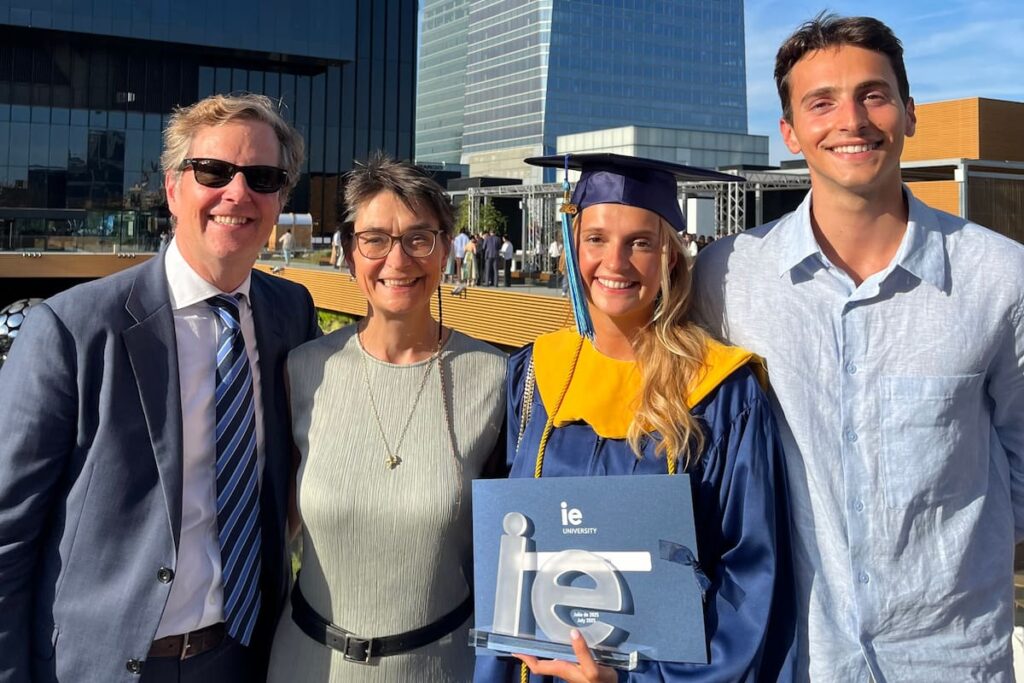
Her rotations have ranged from shadowing a business manager to taking ownership of projects around paper reduction, emissions reporting and standards alignment. “More recently it’s about targets and goals that UBS sets, and preparing the reporting that needs to be done for the year end.”
Why do banks care so much about sustainable buildings?
From the outside, sustainability can look like branding. From Lucia’s seat, it’s anything but. “Sustainability is becoming a big part of everything, and buildings are huge emitters.” UBS has a large global footprint. “In Switzerland we have over 300 properties, so it’s a lot to deal with.”
Every time a lease is renewed or a building contract is reviewed, sustainability is in the room. “We always have to consider: is it a sustainable building? Is it helping us reach our goals? If we can’t reduce how it’s operated or improve energy efficiency, what are the alternatives? Sustainable aviation fuel? Carbon credits?”
Behind that sits a hard edge: regulation. “It’s regulatory more than anything else. These changes create real constraints.” The pressure is increasing, from the Paris Agreement to evolving European rules. “We have to meet them ahead of the market, and it’s a chance for UBS to stay ahead and set an example.” Efficiency matters too. “If a building is very unsustainable, it’s probably not good for your finances as a company.”
What skills does a sustainability transformation actually require?
One surprise for many prospective students: how quantitative this field has become. Lucia describes her role in terms of datasets. “There are specific goals you try to reach. Reducing CO2 emissions, reducing waste, saving water. Each company has its own set of targets.”
To hit those targets, teams need visibility. “It’s a very data-heavy and data-focused job because you’re gathering a lot of numbers. How many kilowatts a building uses, its water usage, waste, everything.”
From there, strategy becomes concrete: where to implement renewable energy, how to adjust operations, and how to track progress for audits.
For Lucia, that creates a talent gap and a career opportunity. “A lot of people still don’t know enough about it, so it’s good to know about it.” Companies need people who understand regulation, measurement and emissions scopes, not just the narrative around climate. “You need knowledgeable people in the industry who can actually make this change within a company and have an impact.”
Why did Lucia choose Switzerland, UBS and this path?
“I did my bachelor’s in Switzerland, so I was quite familiar with the country to begin with,” says Lucia. Zurich, with its financial sector and international environment, felt like a smart launchpad. “Career-wise, Switzerland is a pretty good place to start out in.”
The UBS graduate program demanded early commitment. “I applied in December last year – graduate programs are very competitive and you have to apply super early.” The process required patience. “Their response time was very slow. I didn’t hear back for quite a while, and then I got the job in March, so I was set quite early in the master without even having properly finished my studies yet.”
Looking back, that decision removed a lot of uncertainty from her final months in Madrid. “If you apply early enough and secure your spot, it becomes less of a worry later.” Once inside UBS, the environment matched what she wanted: a large, global organization with room to grow. “So far so good. I’m really liking it. It’s a lot of information, and it’s a huge company with a strong reputation.” The pressure is balanced by culture. “A lot of networking, a lot of social events, relatively young too… good, diverse team.”
How did the Master in Sustainability & Business Transformation shape her path?
“My bachelor was in hospitality business management, which isn’t totally correlated,” says Lucia. “I chose an elective on sustainability because I thought it was interesting and it was becoming more and more popular.”
That guided her master’s decision. “I didn’t want to do a master just to have a master of management. I thought that was too standard.”
“I wanted something more concrete to set my application apart when looking for a job.” The Master in Sustainability & Business Transformation offered that: a focused sustainability degree with business depth. “Sustainability nowadays is a nice add-on even if your role isn’t 100% in sustainability.”
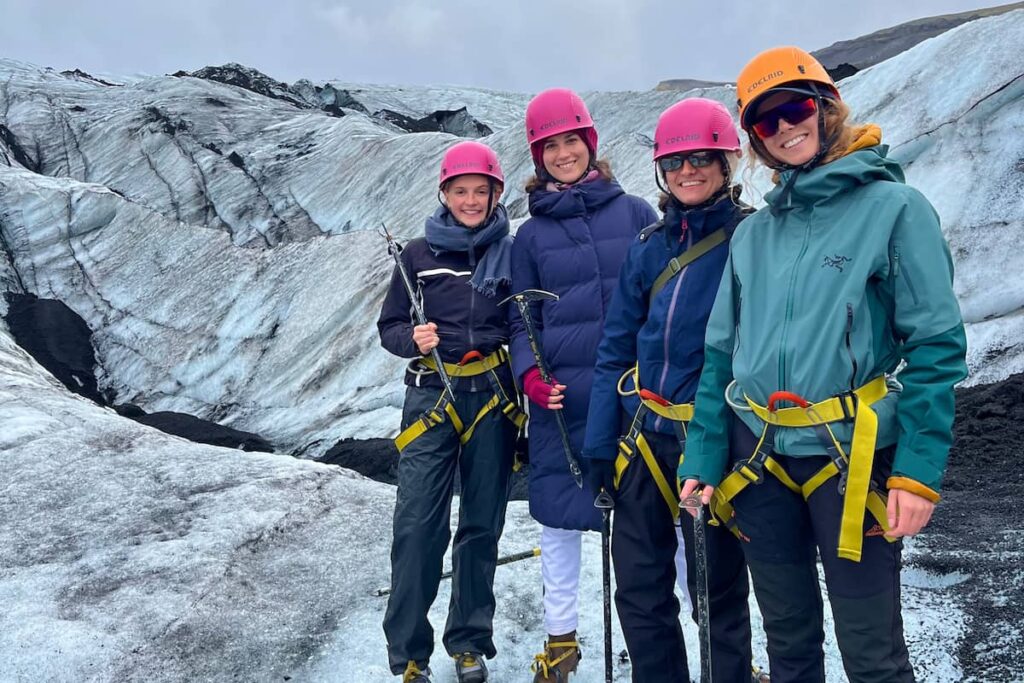
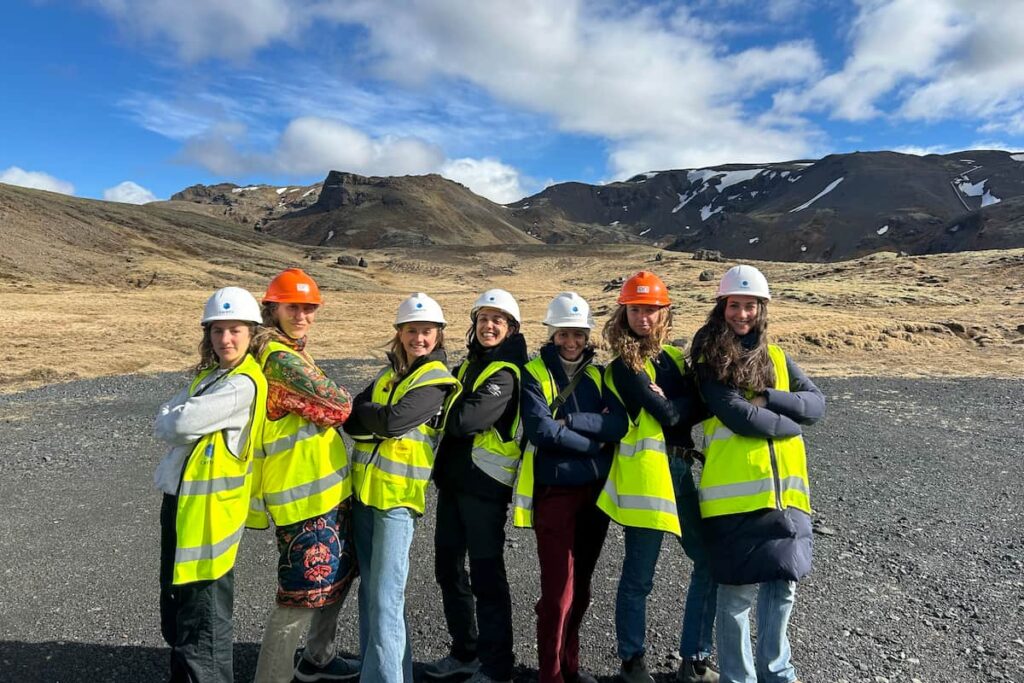
Her verdict on the program is clear. “Overall it was a great program. I definitely enjoyed the classes.” The mix mattered. “Very knowledgeable professors, a good balance between financial business courses and sustainability – social entrepreneurship, impact investing.” Immersion Week left a strong mark. “We had an immersion week in Iceland, which was super interesting.”
How did the master change Lucia’s mindset about impact?
For Lucia, the program strengthened an interest she already had. “This is something I’m genuinely interested in, and I want to help drive change in established companies.” She knows the work can be demanding. “It might be tough to be in sustainability, but I’m willing to make the change, and I think it’s worth it.”
In Zurich, she sees the value of what she learned. “I’ve understood the steps and processes to transform companies, and I’m ready to apply it in real life.” Her role requires technical knowledge, awareness of regulation and solid communication skills.
For students unsure about the impact of a specialized sustainability degree, Lucia’s path is one example.
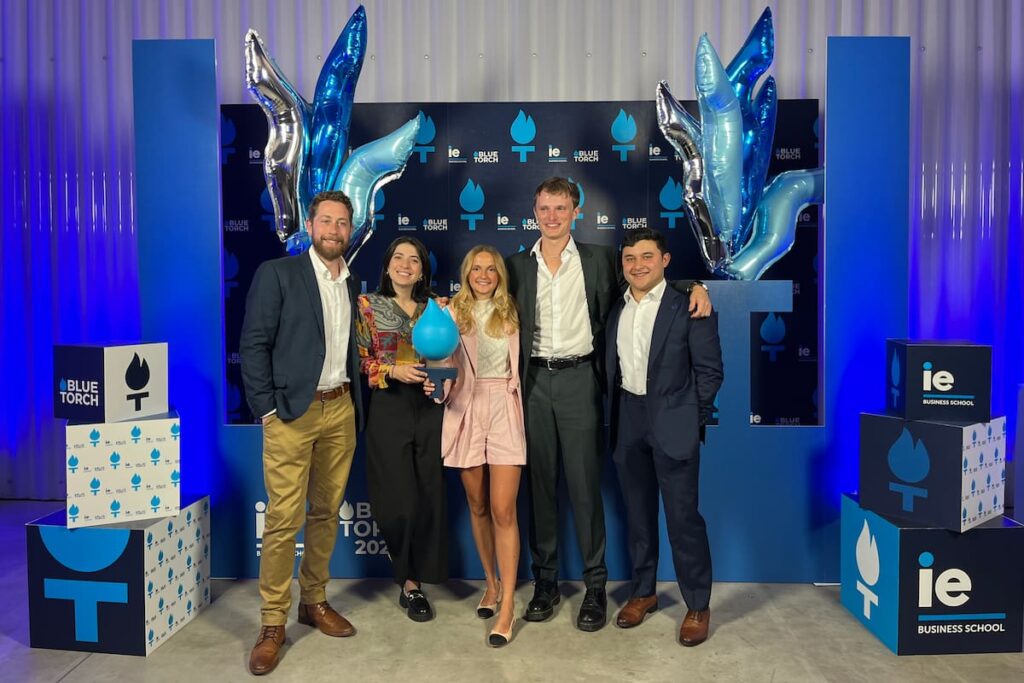
She now works at a major European financial institution, helping shape how hundreds of buildings use energy, water and resources. Her choices follow one clear direction: get closer to the decisions that influence how companies operate.