Madrid is not a postcard city like Paris or Rome. But give it a day or two and something shifts. The rhythm, the late dinners, the way entire afternoons unfold in plazas. If you’re searching for the best things to do in Madrid, you’re really asking a bigger question: how do you experience the city properly and truly make the most of your vacation in Spain?
This guide is brought to you by IE Summer School, part of IE University in Spain’s capital. You’ll read through essential Madrid sightseeing to more unique things to do in Madrid that give you a feel for the city beyond the obvious.
Let’s get into it.
What are 10 things to do in Madrid
Narrowing it down, here’s our core list. Note it down, then keep reading the article for a deeper insights on which suits what you’re looking for.
1. Walk through the historic center
2. Stroll Gran Vía
3. See the Royal Palace
4. Visit the Prado Museum
5. Explore Reina Sofía
6. Complete the art triangle at the Thyssen
7. Spend time in the Retiro Park
8. Head to Casa de Campo
9. Experience El Rastro
10. Enjoy rooftops
What are the best things to do in Madrid if it’s your first time?
The first thing to do is go for a walk and get to know the area. Start in the historic center. It’s the easiest way to get your bearings and one of the most rewarding ways to experience Madrid sightseeing. Walk through Puerta del Sol, where the city quite literally begins at Kilometer Zero. From there, drift into Plaza Mayor.
Admittedly, it’s a little touristy. But Plaza Mayor is one of the most iconic places to visit in Madrid for the first time.
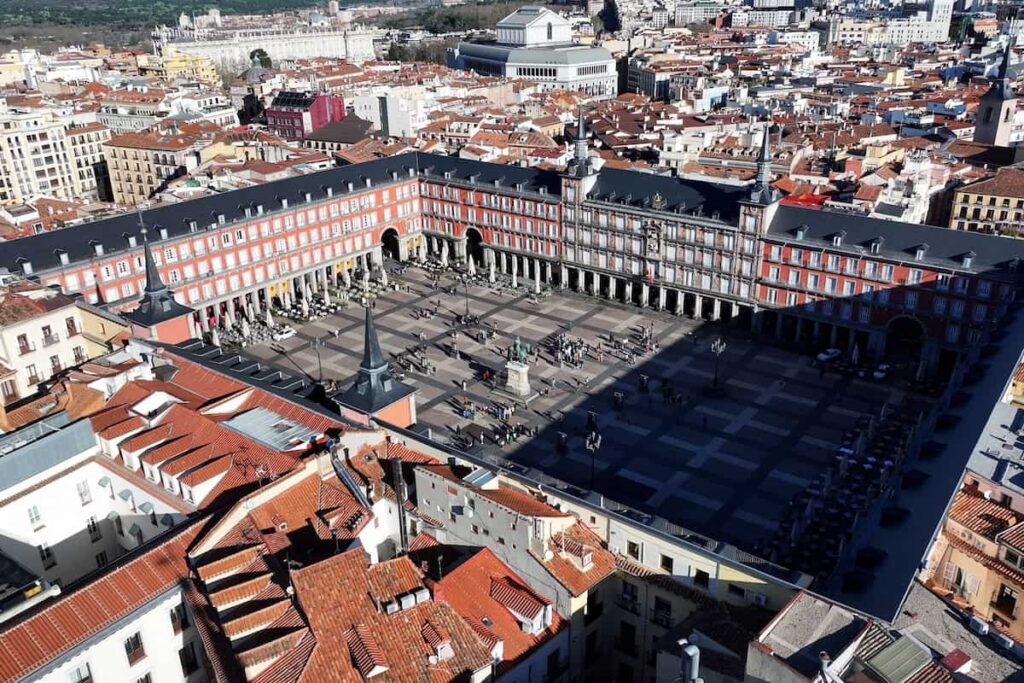
You should then head towards Gran Vía. This is where Madrid shifts gears. Big architecture, constant movement, a mix of old theaters and modern energy. If you’re looking for cool things to do in Madrid, just walking this stretch at sunset is enough.
Finally, go back down to Ópera and proceed through the Austrian area to the Royal Palace. Even from the outside, it gives you a sense of scale and history that anchors the whole city. You’re also well-placed to take a stroll through the Sabatini Garden, which is a bit of an oasis in the hubbub of the city.
Which museums should you visit in Madrid?
Madrid quietly has one of the strongest art scenes in Europe. If you’re interested in things to do and see in Madrid beyond the surface, this is where you go deeper.
The Museo del Prado stands out for the concentration of major works in a relatively compact space. You move quickly between defining pieces like Las Meninas by Diego Velázquez and the late works of Francisco Goya, alongside paintings by Hieronymus Bosch and other European masters. The collection gives you a clear view of how art, power and belief developed across centuries, with enough depth to make each room feel distinct.
The Reina Sofía brings things forward in time.
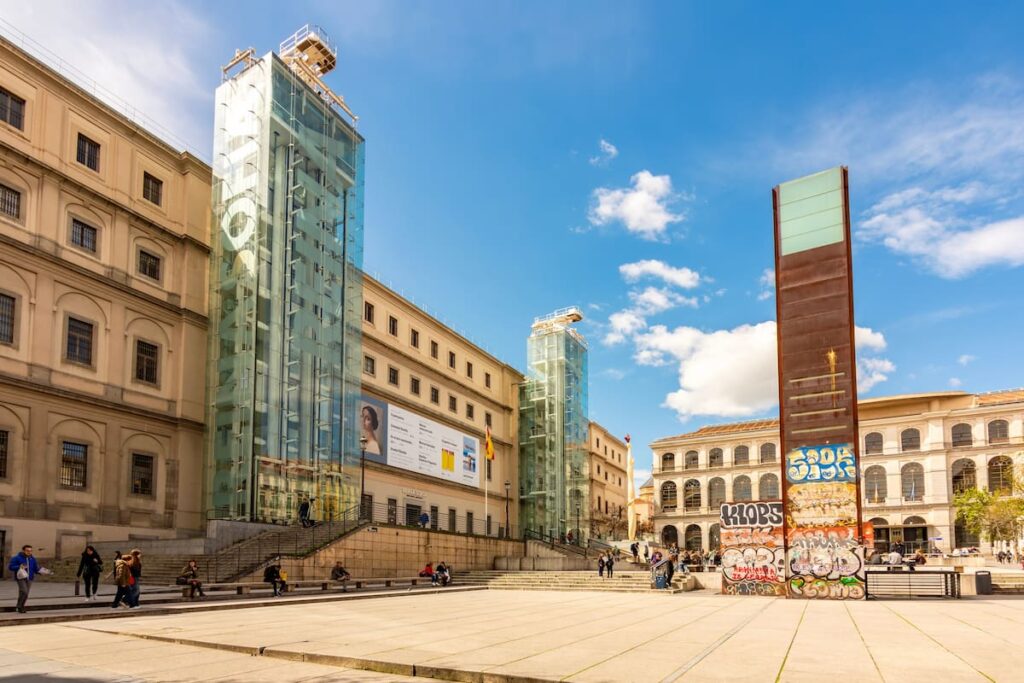
It focuses on modern and contemporary art, anchored by Guernica by Pablo Picasso. The collection moves through key 20th-century movements with works by Salvador Dalí and Joan Miró, giving you a clear sense of how Spanish artists responded to conflict, politics and social change. The layout keeps the focus tight, so each piece sits within a broader narrative you can follow as you move through the museum.
Then there’s the Thyssen-Bornemisza, which fills in the gaps between classical and modern art, with a collection that moves cleanly from Renaissance works through Impressionism to early 20th-century painting. You pass from artists like Caravaggio and Rembrandt to Claude Monet and Vincent van Gogh in a single, coherent route. The result is a clear timeline of European art, where each room builds on the last and helps you see how styles and ideas evolve across centuries.
Where can you experience Madrid’s parks and outdoor spaces?
Madrid does something unusual for a capital city: it gives you space. You’re never far from somewhere you can step out of the pace of the streets and reset for a while. The city is built in a way that makes these breaks feel natural, whether you have ten minutes between plans or a full afternoon to wander.
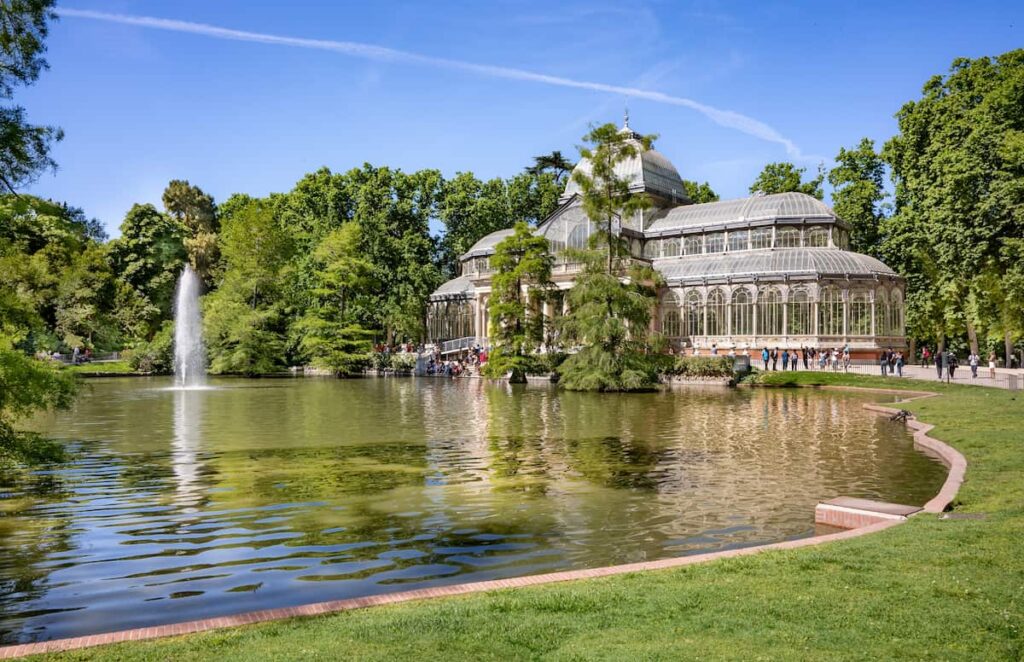
El Retiro Park is the obvious starting point. You can rent a rowboat on the lake, walk past the Crystal Palace, or find a bench under the trees and switch off for a while. It draws a mix of locals, students and visitors, but it rarely feels overwhelming.
It’s one of the easiest ways to experience Madrid at a slower rhythm without leaving the center.
If you want something bigger, head to Casa de Campo. It’s less polished and more expansive, with trails, open space and viewpoints that look back over the city skyline. You’ll see runners, cyclists and groups of friends spending entire afternoons there. These are the moments where Madrid slows down, and where the city starts to feel lived in rather than visited.
What are the most unique things to do in Madrid?
Some of the best things to do in Madrid aren’t structured at all. The city rewards time without a plan, where you move between streets, follow the noise or stop when something catches your attention. A lot of what makes Madrid memorable happens in these unplanned stretches.
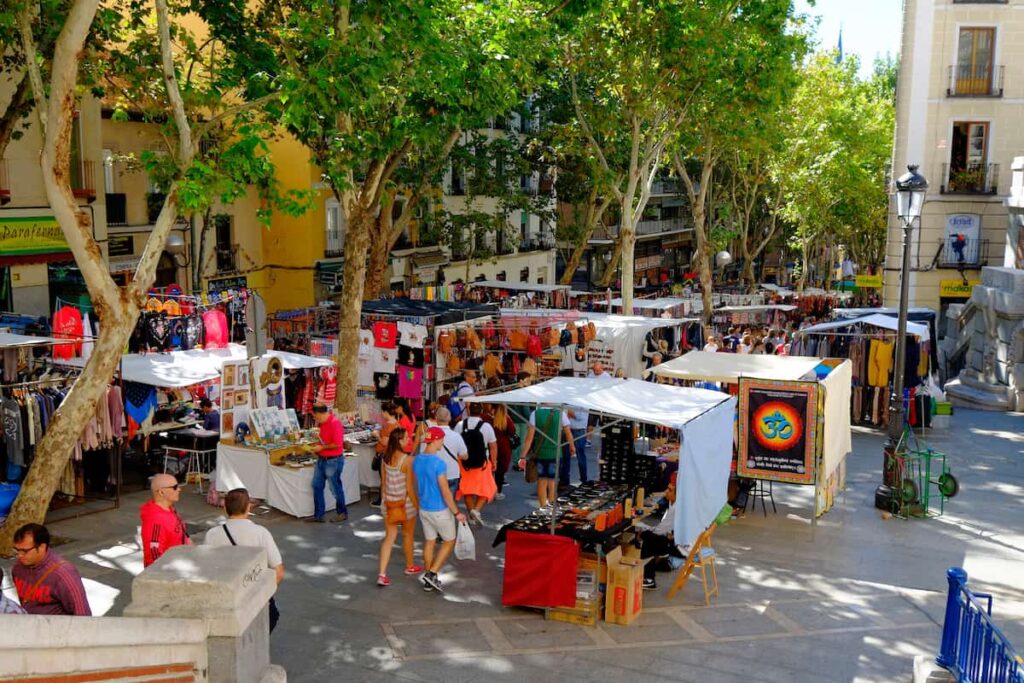
On Sundays, El Rastro takes over entire streets. It’s chaotic, loud and full of personality, with stalls selling everything from antiques to second-hand clothes. You move with the crowd, stop when something stands out and drift between nearby bars once it starts to thin out.
You may not even buy anything, but soaking in the atmosphere is worth the outing.
Rooftop bars give you another angle on the city, especially as the light fades and the temperature drops. Then there are neighborhoods like Malasaña and La Latina, where small cafés, independent shops and late-night energy shape the experience. This is where you find the details that make the city feel distinct, without needing to look for them too hard.
What can you do in Madrid for free?
Madrid is surprisingly generous if you’re on a budget. A lot of the city’s best experiences are open by default, so you can fill your time without needing to plan around tickets or entry fees. It makes it easy to explore at your own pace and still feel like you’re getting a full experience of the city.
Many museums offer free entry at specific times, including the Museo del Prado and the Museo Nacional Centro de Arte Reina Sofía, usually in the evenings. El Retiro Park costs nothing and can easily take up half a day if you walk, sit, and move between different areas.
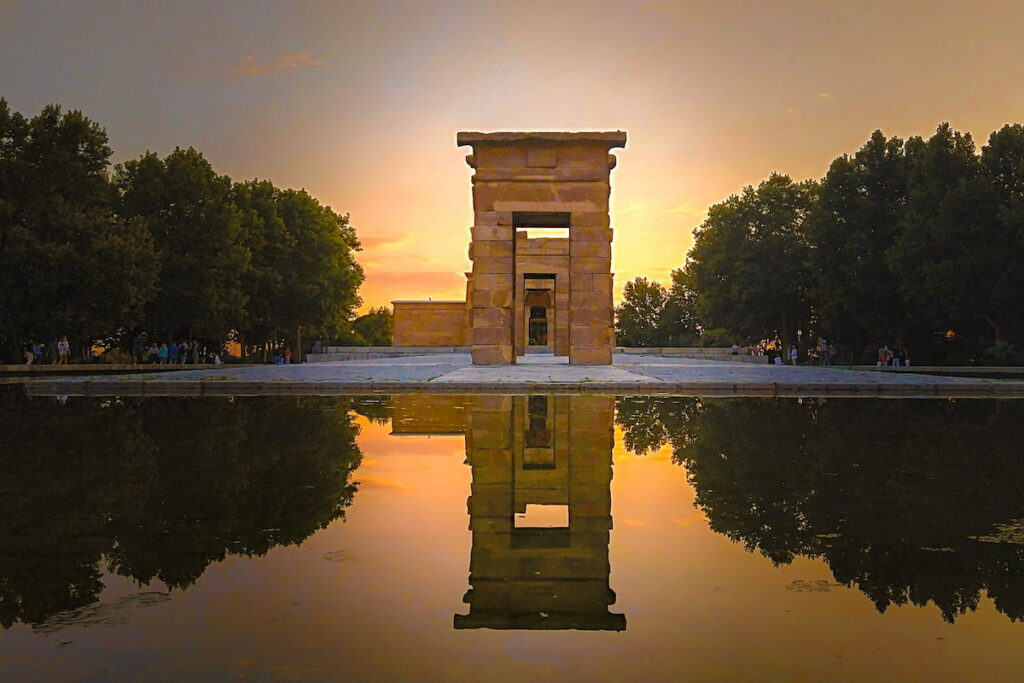
The Temple of Debod is another strong option, especially at sunset, with open views across the city and a quieter atmosphere than you’d expect.
If you want to find more free plans, platforms like Meetup and Eventbrite regularly list free events, language exchanges and local meetups happening across Madrid. Beyond that, walking does a lot of the work for you. Some of the best things to do and see come from moving through different neighborhoods with no fixed route and letting the city build the day around you.
How can you experience Madrid while investing in your personal growth?
Madrid reveals itself over time. The longer you stay, the more the city opens up—through its neighborhoods, its pace and the small details that sit between the main landmarks. IE Summer School places you at the center of that experience, giving you the time and structure to engage with the city while developing new skills.
Your days combine practical learning with real-world application across areas like business, technology, creativity and leadership. Sessions are designed to be interactive and applied, so you’re constantly building and testing ideas. Beyond the classroom, Madrid becomes part of the process. Museums, parks, cultural spaces and everyday city life all feed into how you observe, think and connect with others.
By the end of the program, you’ll have true perspective on your next steps.
Want to make the most of your summer? Follow the link below and start planning a special time abroad in an international environment. This is how you engage with Madrid while moving forward personally and professionally at the same time.

Benjamin is the editor of Uncover IE. His writing is featured in the LAMDA Verse and Prose Anthology Vol. 19, The Primer and Moonflake Press. Benjamin provided translation for “FalseStuff: La Muerte de las Musas”, winner of Best Theatre Show at the Max Awards 2024.
Benjamin was shortlisted for the Bristol Old Vic Open Sessions 2016 and the Alpine Fellowship Writing Prize 2023.