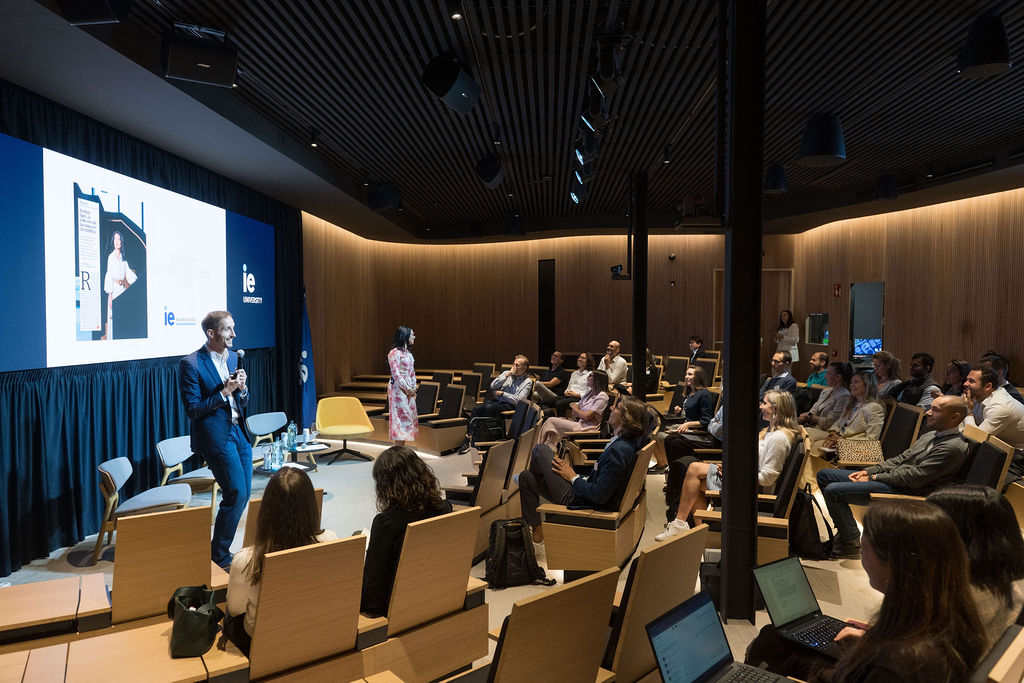

The three-day international conference brought academics, investors and ecosystem builders from around the world to Madrid to explore the forces reshaping impact investing and strengthen the connection between research and practice.
On 14 October, IE Business School opened the 8th edition of the Impact Investing Days, an international conference that began in Copenhagen in 2018 and has since travelled to Beijing, Barcelona, San Francisco and Nantes.
This year Madrid hosts three days of panels, research sessions and a PhD workshop, chaired by Rachida Justo, Associate Professor at IE Business School and Director of the IE Chair in Social Entrepreneurship and Impact Investing.
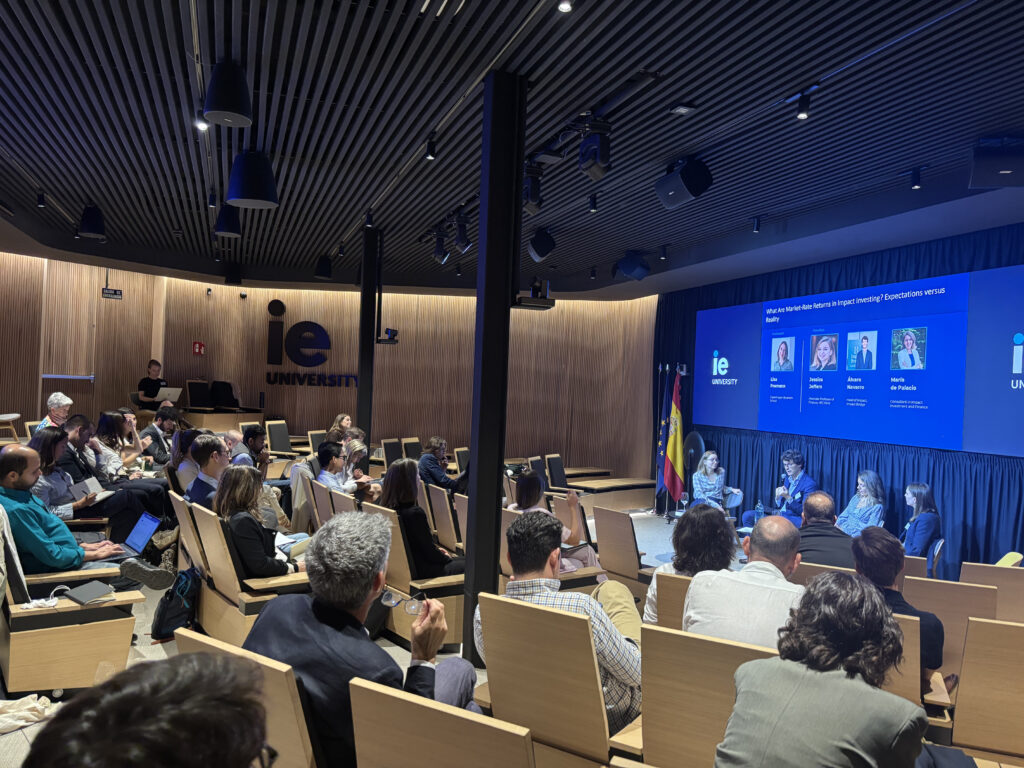
On the first day, leading academics from institutions such as Wharton, HEC Paris, King’s College London, the University of Glasgow, Emory University, Copenhagen Business School, Politecnico di Milano, Esade, ESCP, Audencia and KEDGE shared the stage with investors and ecosystem builders including SpainNAB, Impact Bridge, Phitrust, Opes-LCEF, Three Hills and Somos Stewards. Around 50 participants from different countries attended.
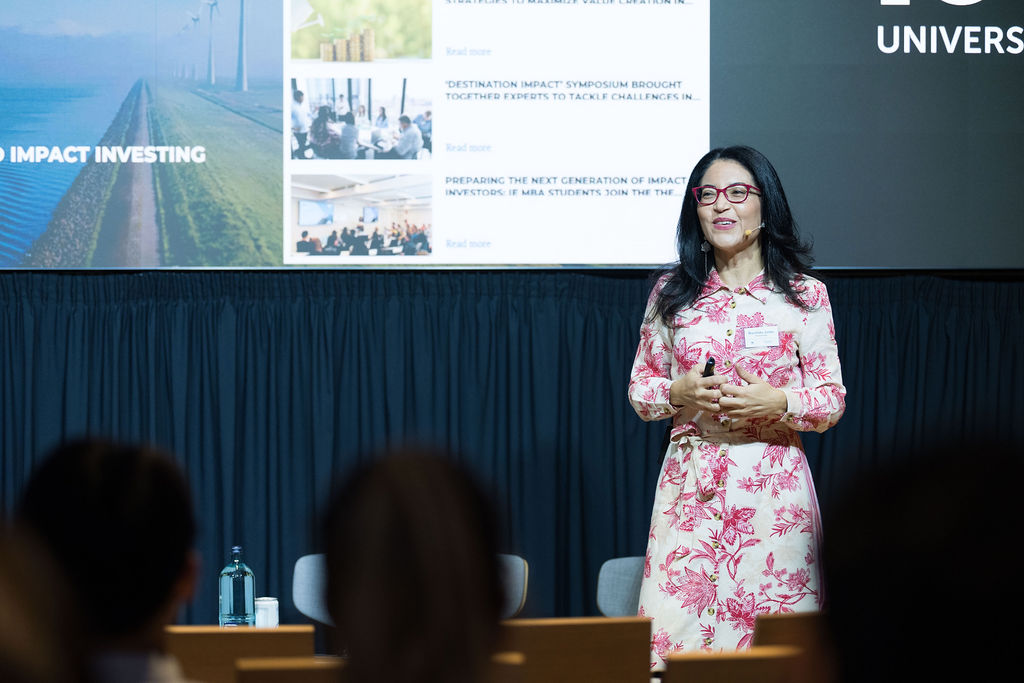
The program
Day 1 brought together practitioners and scholars in five panels, around the following themes:
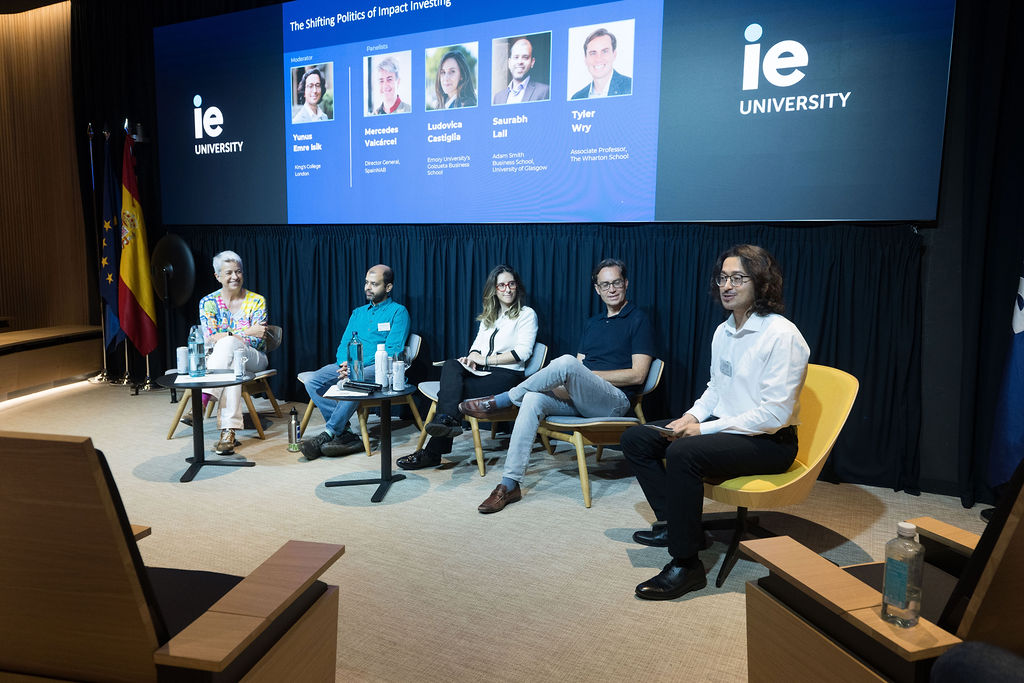
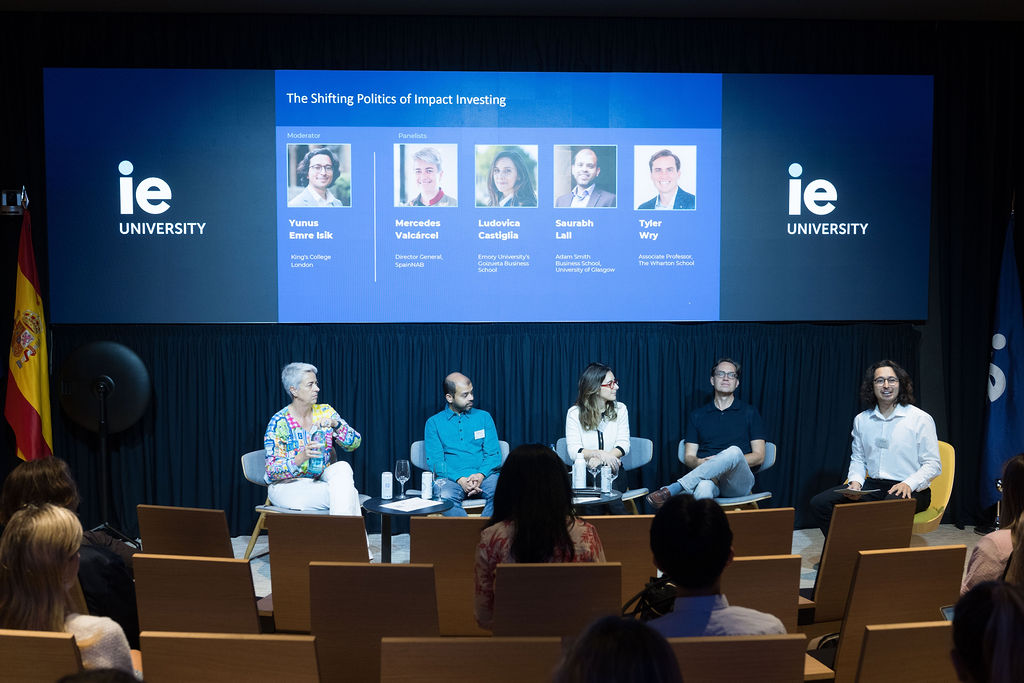
- The Shifting Politics of Impact Investing, on how polarization and changing public priorities are reshaping the field.
- Measuring What Matters, on artificial intelligence and the new frontier of impact data.
- What Are Market-Rate Returns in Impact Investing?, comparing return expectations with realized performance.
- Co-designing Pathways to Impact, an interactive session using the Theory of Change to shape joint research between academics and practitioners.
- How Can Impact Survive Exit?, on steward ownership as a way to preserve mission when ownership changes.
Six ideas that shaped the conversation
1. Research as a backbone for practice
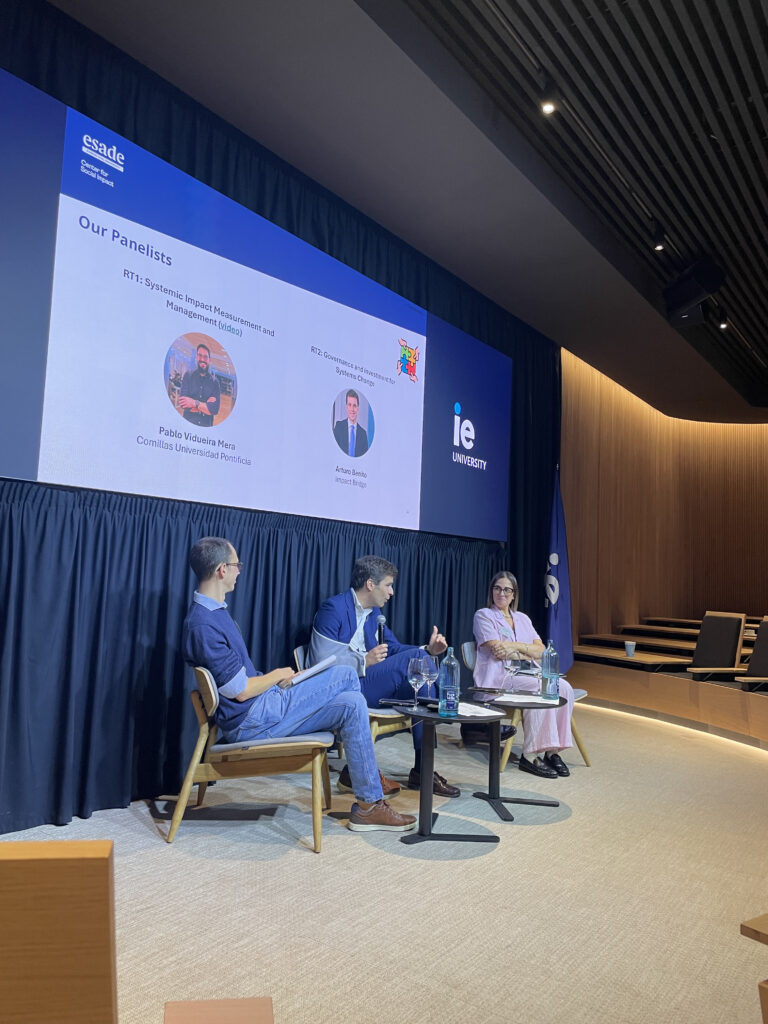
Across the panels, practitioners emphasized how useful academic research is to guide their decision-making. Arturo Benito, CEO of Impact Bridge, said there is a real hunger for academic literature in the field, as guidance and data-driven evidence for better decisions. For their part, academics emphasized how much they value access to data provided by practitioners, as well as the insights that practice brings to inform their research questions.
2. Who gets to decide what is Impact?
A well-known challenge in Impact Investing related to impact measurement, including the lack of a shared set of comparable impact indicators, and whether and how the complexity of impact can be condensed into numbers. Several panelists suggested however that, while we tend to focus on the technicalities of impact measurement, we often neglect the fundamental question of “how gets to decide what qualifies as impact”, and all the power unbalances that come with investing decisions and impact measurement. In that sense, Pablo Vidueira Mera from Comillas Pontifical University suggested that a systemic view on impact (and impact investing) might be an interesting way of accommodating different (and maybe conflicting) views on impact.
3. AI supports the analysis, people make the decisions
In the panel on measuring what matters, panelists shared how they use AI, mainly to speed up and strengthen research, improve standardization and comparability, and lower the cost of measurement. For now, however, it still requires a great deal of human involvement. Francesco Ciffo, (Three Hills) argued that, given the particular complexity of impact investing, handing investment decisions over to AI is far from desirable. AI did seem useful for assessing the systemic potential of social enterprises, since it gives investors relatively easy access to contextual data that can inform better decisions during due diligence.
Hazal Kopal (TIRESIA, Politecnico di Milano), who moderated the panel, also introduced Adaltim, an EU-funded initiative in which an international consortium of academics, impact investors and social enterprise support organizations is developing a new AI-driven impact rating. Built on transparency and comparability, the rating platform aims to support benchmarking and investment decisions.
4. Investing in a polarized world
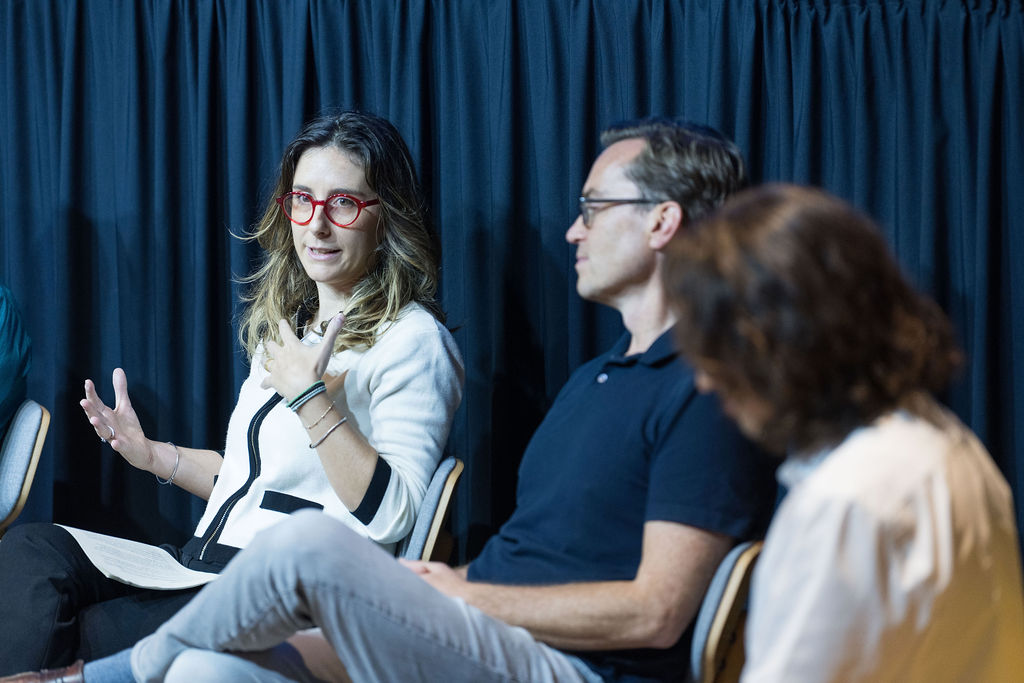
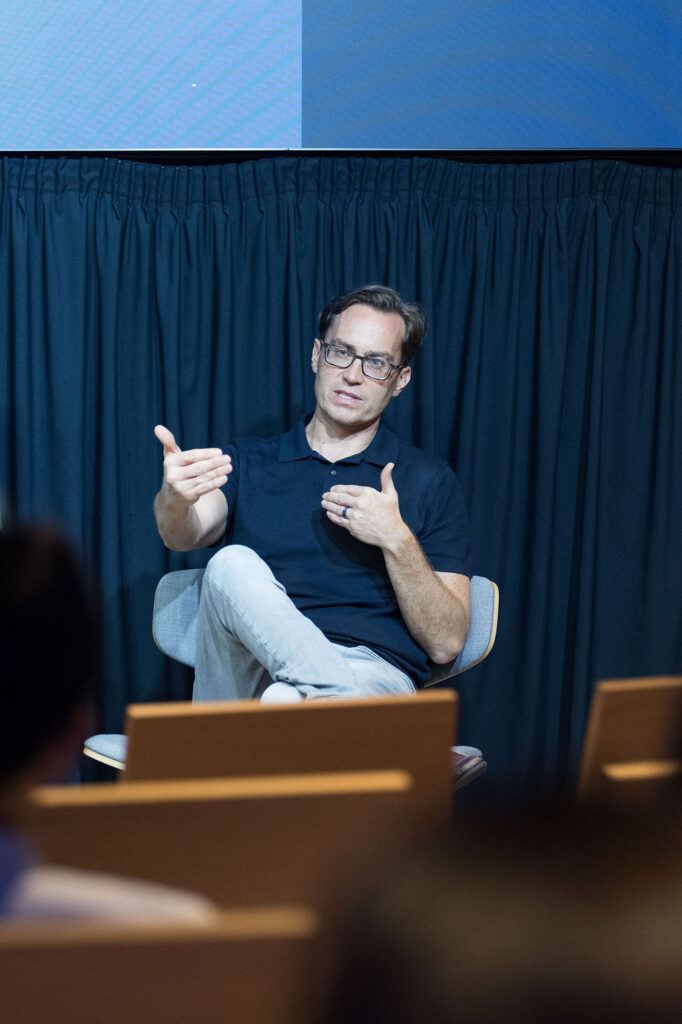
Panelists in the opening session shared different perspectives on how polarization affects impact capital. Ludovica Castiglia (Emory University) pointed to research on what is known as compensatory theory: in a more polarized environment, people with strong convictions may reinforce their position when they feel it is under threat, which could channel more capital toward specific causes, such as reproductive rights.
Other panelists saw a different effect. Greater uncertainty can push capital away from investments with less predictable outcomes, putting financial results first and slowing the momentum impact investing had built in recent years. Tyler Wry (Wharton) highlighted political risk, citing the withdrawal of government subsidies that had supported certain industries. Mercedes Valcárcel (SpainNAB) added that higher volatility makes investors more cautious, and observed that emotional views are currently gaining weight over technical knowledge.
5. Systemic challenges call for collaboration
Across the sessions, speakers returned to the idea that today’s challenges are systemic. The field has tools designed for models that worked until a few years ago, but not yet the tools to tackle multi-layered problems involving many stakeholders. Investors will need to adapt to that complexity.
Arturo Benito explained that Impact Bridge relies on the potential generated within ecosystems to give visibility to examples of social entrepreneurship. Models built by entrepreneurs without formal business training can become case studies at leading universities, then be replicated and adopted by organizations around the world, and even prompt new governance models.
6. Can impact survive exit?
The closing panel, moderated by Arthur Dumas (KEDGE Business School) with Benjamin Le Pendeven (Audencia), Valérian Fauvel (Jumanji Studio) and Mikel García-Prieto (Somos Stewards), addressed how to preserve both economic and impact value when investors exit a company. Until now, ownership has meant deciding on the future of a company, but both governance and traditional roles may need to adapt and open up to new models.
Questions left on the table
The day left many open questions with potential both for academic research and industry participation. One stands out in the current context, as large organizations such as BlackRock step back from their sustainability and impact commitments. Could a company’s founding purpose, like being impact-first, make it harder for it to abandon those commitments when conditions get tougher?
What comes next
On Thursday 15 October, Mario Calderini (Politecnico di Milano, TIRESIA) will open the research day with his keynote “The Unfulfilled Promise: Why Impact Investing Needs a Second Act”, followed by five academic paper sessions. On Friday 16 October, the PhD and Junior Faculty Workshop, co-organized with Politecnico di Milano School of Management, will give early-career researchers feedback from senior scholars and journal editors.