A decade after Brexit: GPC hosts a high-level conference in Brussels after launching a strategic EU-UK publications

Ten years ago, in June 2016, the Brexit referendum took place and shook the very foundations of the European project. Many feared a domino effect, but the EU, again, adapted. Today’s reality looks starkly different from 2016: the changing geopolitical landscape is pushing for a renewed EU-UK relationship.
During the month of June, the Global Policy Center commemorated the Brexit’s 10th anniversary by convening a high-level event in Brussels after publishing a policy brief and a IE Insights article on the evolution and prospects of the EU-UK partnership.
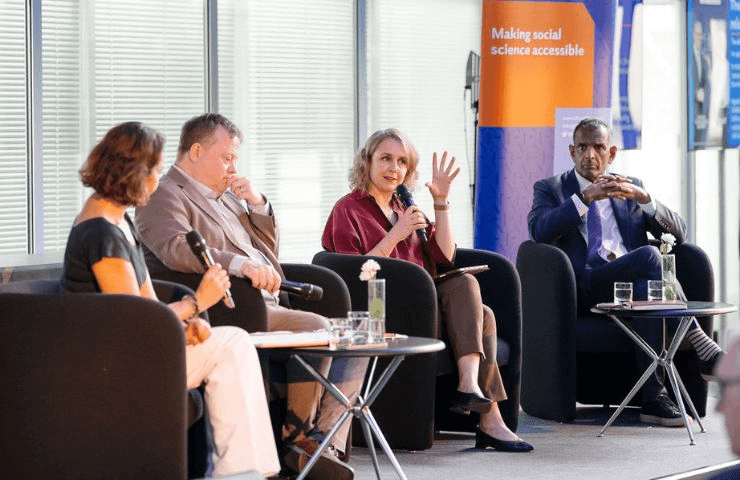
The GPC and the IE Competitiveness Hub in Brussels in collaboration with Flint Global and UK in a Changing Europe hosted a high-level event in Brussels on June 30th to discuss the future of EU-UK relationship.

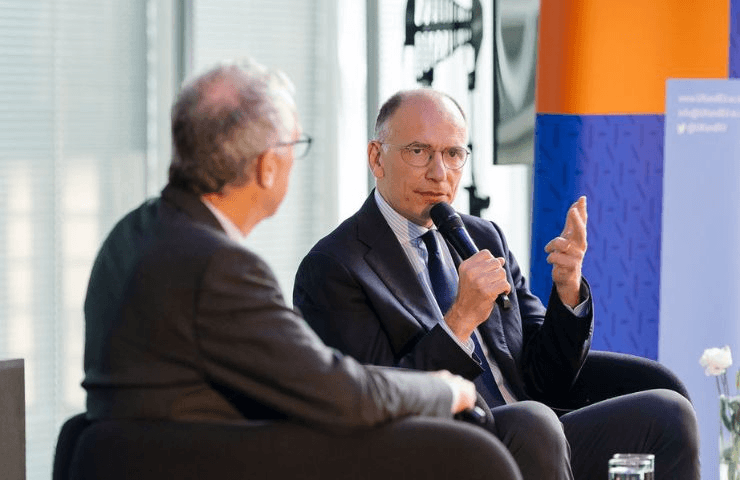
The event opened with remarks from Sandro Gozi, Italian MEP and Chair of the EU-UK Parliamentary Partnership Assembly. The program included conversation sessions with personalities like Enrico Letta, former Prime Minister of Italy and IE School of Politics, Economics and Global Affairs’ Dean and the UK Ambassador to the EU, Lindsay Croisdale-Appleby. The session concluded with a closing keynote by Andrius Kubilius, the European Commissioner for Defence and Space.
GPC director Ilke Toygür joined the first panel "Ten years on: How have the EU and UK changed since the referendum?". The panel sought to deepen into the strategic realities that will shape the future of EU-UK partnership. The second panel, joined by GPC co-chair Catherine de Vries, explored EU-UK economic cooperation in the light of UK plans for economic growth. Finally, the third panel, where GPC chair Amanda Sloat participated, discussed the potential cooperation among the EU and UK in security and defence of Europe.
The event highlighted a clear conclusion: the situation has dramatically changed and the 2016 framework for relations is becoming become obsolete. Persisting red lines are only widening a strategic gap that neither the EU nor the UK can afford in current global landscape. The way forward is a gradual shift from managed divergence toward a more pragmatic ‘reset’ of the relations exploring cooperation in critical areas such as defence or industrial policy. The EU and the UK must therefore be able to transform old divisions into a deeply integrated, future-oriented partnership and build a truly functional and pan-European strategic framework.
A pragmatic ‘reset’ on EU-UK relations
The GPC published the policy brief "Ever closer to the Union and beyond: time to reframe EU-UK relations" co-authored by Ilke Toygür and Sébastien Maillard. The authors argue that the promise of a “Global Britain” has not yet fully materialized: there is an incomplete separation in the economic field. The EU remains the UK’s main trading partner, accounting for 45% of its traded goods. At the same time, new trade agreements that are being signed are similar to the ones the UK has under EU membership.
The Brexit has also lost political momentum. Public opinion in the UK is changing, and a growing share of citizens are questioning the decision to leave the EU. Data from a recent European Council of Foreign Relations survey shows that 75% of British voters now want some form of closer relationship with the EU. Another survey from YouGov, published in June 2026, also shows that 55% of Britons now support a return to full EU membership. Toygür and Maillard signal a move from ‘Brexit’ to ‘Bregret’.
However, the discussion on the return of the UK to the EU does not only depend on UK voter opinion. The UK still maintains some red lines on fields such as the Single Market or free movement that still constrain the opinions. Trust remains fragile as Brussels’ perception is that existing agreements have not been fully implemented.
Rejoining the EU is not too realistic. As stated by the authors, "there is little appetite among EU member states to reopen a lengthy and politically sensitive accession process". Moreover, Toygür and Maillard point out that any future membership application would surely depend on full acceptance of EU membership rules, without the special arrangements and opt-outs that the UK used to have in the past.
The brief presents alternative options to rejoining the EU. On the one hand, the UK could join the Customs Union. This would surely ease trade among both parts as it would remove rules of origin and reduce bureaucracy. However, as the authors explain, a Customs Union does not remove regulatory divergence so border controls would still exist. This would require the UK to give up its independent trade policy, that would come with a high political cost.
On the other hand, the UK could join the Single Market. This option has clearer economic benefits, but it entails political risks for the UK. Joining the Single Market would enable swifter trade and deeper integration. Nonetheless, this entails full regulatory alignment with the EU and contributions to the EU budget. Due to the indivisibility of four freedoms in Single Market accession, this option would come with the acceptance of free movement, one of the red lines for the British.
Taking these limitations in mind, Toygür and Maillard state that one realistic solution for the UK would be to join the European Economic Area or, to adopt the Swiss model. However, if these options could strongly contribute to British economic growth, it would be politically unsustainable for the UK as it would turn the country from an EU rule-maker to an EU rule-taker.
Even with these limitations, the EU and the UK are not struck in stagnation. Toygür and Maillard explore the existing room to manoeuver and provide a series of policy recommendations oriented towards a more pragmatic "reset" of the relations: "the emergence of a more geopolitical EU creates new opportunities for cooperation that did not exist during the Brexit negotiation".
Both sides must move beyond technical arrangements and rethink their relationship. Some potential areas for cooperation include security, industrial policy and tech innovation. Without a shared strategic vision, efforts to strengthen the relationship may remain limited, fragmented and ultimately transactional. A more holistic and forward-looking approach toward a stronger and more effective partnership is needed to tackle the underlying complexities of the relationship.
Moving away from the past
Ilke Toygür and Sébastien Maillard also wrote the article "Why Brexit should no longer define the EU-UK relationship" for IE Insights. In the article authors defend that the EU-UK relationship can no longer afford to live in the past.
Recent global shifts have completely changed the landscape in which the EU and the UK operate. The implication is clear, no single European country, including the UK, can navigate such global challenges alone.
Yet, EU-UK relations are still trapped in the past. While there has been a mix of messy processes on regulatory standards on certain issues that are moving forward and intergovernmental security conversations are going on via (taking part in different forms of cooperation such as Coalitions of the Willing for Ukraine), the conversation is still shaped by Brexit-era redlines.
According to Toygür and Maillard, living in the Brexit-era when the present has changed so dramatically creates a major strategic gap for both the EU and the UK. As authors argue, the problem is that “the desire for strategic convergence due to the geopolitical reality, and the frameworks for delivery do not necessarily match”.
Relations must go beyond technical tweaks and tackle issues such as economic competitiveness or the strategic understanding of Europe. It is imperative to abandon Brexit red lines and avoid the relation to become more minilateral and bilateral. The EU and UK must move toward a truly functional, pan-European strategic framework.