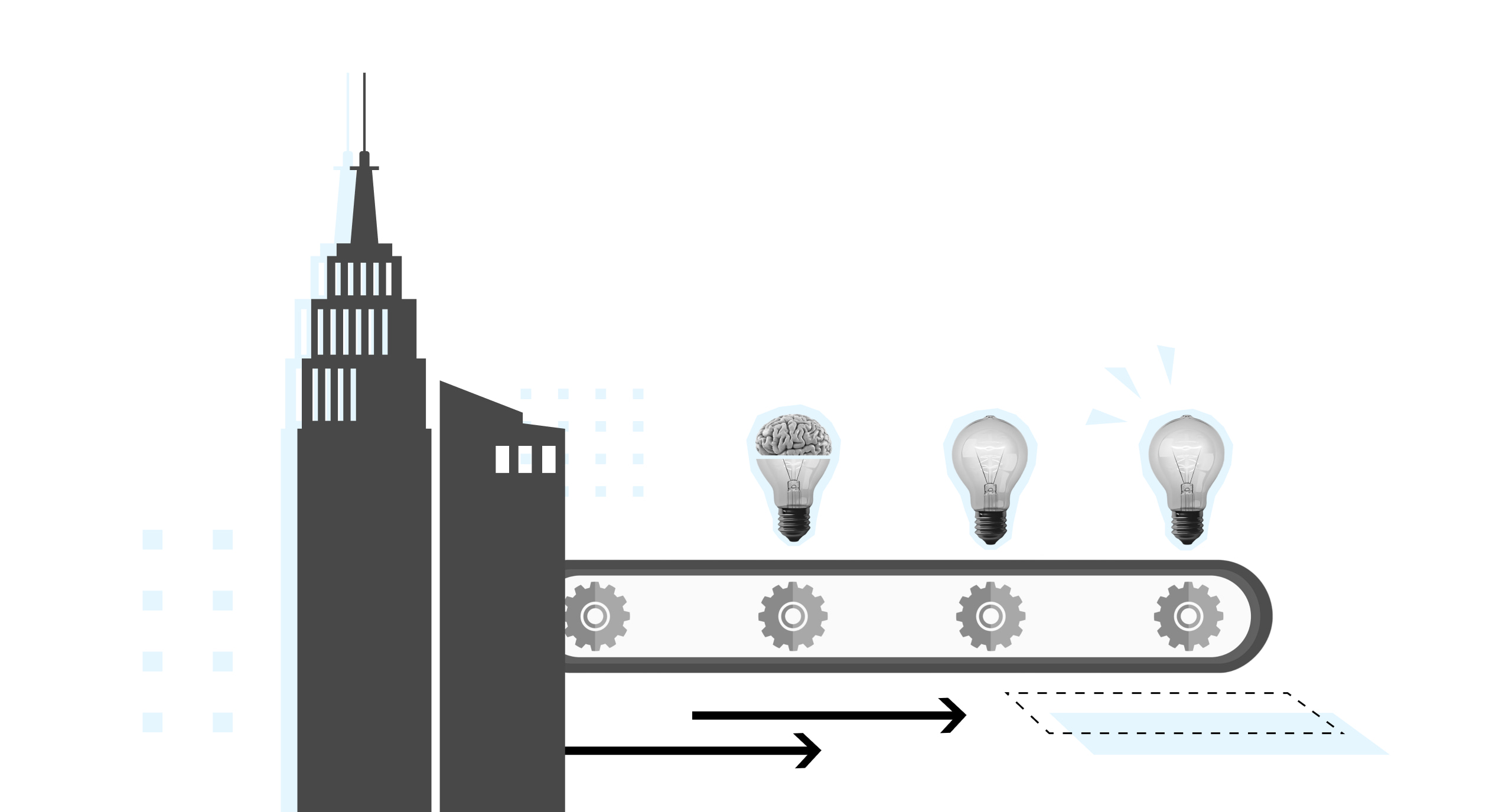
For Andrew Fooks, studying an MBA was a goal that had been relatively constant throughout his professional life. “I’d wanted to do an MBA for at least five years,” he says. “Being a mid-career professional, I wanted to understand how to take things to the next level and how to expand my skills and abilities to operate at a higher level. There’s always a step change involved in your career at some point. You can either continue along a natural linear progression, or you can work out how to step up and get an exponential level of growth. I wanted a catalyst for that.”
Today, as a participant in IE Business School’s Global Executive MBA alongside his career at the World Bank Group, he is carving out space to reflect and reconnect the different threads of a career that has taken him from early finance and IT roles to Director-level leadership positions in the Big Four, senior operational responsibility at a major international climate institution and now a role supervising teams across complex audit engagements in Washington, DC.
How did Andrew Fooks build his career before the Global Executive MBA?
Andrew’s professional journey began in higher education after graduating with degrees in accounting and IT just as the dot-com bubble burst. With fewer opportunities in tech at the time, he started in accounts receivable at his university and moved into system implementation projects, before transitioning into IT risk and assurance. “That turned into an eight-year career,” he says. “I worked my way up through the ranks and ultimately landed in IT audit at the university. That was what I wanted to do, and it was comfortable. But I’ve always had a drive and an ambition. I want to keep going and pushing myself.”
From there, Andrew moved into the Big Four, where his career accelerated. At EY and PwC, he progressed into Director-level roles leading complex infrastructure and cybersecurity engagements, managing teams and working with major organizations on high-stakes technology risk and governance challenges. Over time, he built deep technical expertise while also taking on broader leadership responsibilities, shaping programs and supervising multidisciplinary teams across large-scale projects.
Part of his motivation to shift direction came from his early life. “When I was five, I left Australia and lived in Papua New Guinea for three years, then Indonesia for eight,” he explains. “My dad was a civil engineer working on development and aid projects. I think I was exposed to global development early on, and I wanted to get back into that space.” That long-standing interest in international development would later influence several of the key career decisions that followed.
What leadership experience shaped his move into global development?
That pull toward development led him to the Green Climate Fund in Korea, where he took on the role of Corporate Security and General Services Manager. There, he was responsible for both physical and cybersecurity frameworks, crisis management during COVID-19 and maintaining operational continuity for a major international climate finance institution.
The position marked a defining leadership moment. He was working at the intersection of operations, security and institutional resilience, helping ensure continuity during an unpredictable global crisis. The scope of the role required both strategic oversight and hands-on decision-making, reinforcing his ability to lead in complex, high-pressure environments.
The experience became a key stepping stone. It allowed him to combine his background in technology risk with his early exposure to global development, and it helped position him for the transition into the World Bank Group, where he could apply those skills in a broader multilateral context.
What is his role today at the World Bank Group?
Today, Andrew supervises teams across multiple audit projects covering areas such as cloud platform governance and treasury system modernization. The role brings together technical expertise, leadership and a strong understanding of institutional risk at scale.
Working in a global organization means engaging with complex systems, diverse stakeholders and rapidly evolving technologies. His work sits at the intersection of governance, infrastructure and oversight, requiring him to guide teams while maintaining a strategic view of how technology decisions affect institutional resilience.
The position represents the culmination of years of building expertise across both private-sector consulting and international organizations. It also reinforced the sense that the next stage of his career would require a broader perspective beyond technical mastery alone.
Why did he decide to pursue an MBA at this point in his career?
Even with that alignment, Andrew knew he needed something more to prepare for the future. The pace of technological change, shifting geopolitics and uncertainty around global institutions made him question what the next chapter of his career should look like.
“The world is going through a massive amount of change,” he says. “We have huge technological shifts, geopolitical changes and real challenges in terms of multilateralism. These organizations need leaders who understand the technologies being deployed, not just the governance frameworks around them. I want to make sure I’m in a position where I can bridge that gap and use the skills and abilities I’ve got to contribute to society.”
As he explored MBA options, he looked at a number of well-known schools before narrowing his focus. A key moment came when he met an IE representative and had the chance to discuss the program in depth. “Lucía Egea outlined how the Global Executive MBA brings together the traditional MBA elements, but also overlays innovation and digital. How do you think about AI and automation? How does that affect the way you work and the way you make decisions? That focus on innovation and the digital element was the most interesting to me. I didn’t want a standard MBA. I wanted global exposure and that forward-looking perspective.”
How is the program changing the way he thinks about strategy and leadership?
Although he describes the program as still being in its early stages, Andrew says it has already begun to shift how he approaches problems and decisions. “We’ve done work around strategy, and it’s helped me understand the connection between theoretical strategy and how people actually interact within an organization,” he explains. “Game theory, for example, shows how different parts of an organization can end up working in their own interests. You have to find ways to align those ‘games’ so people are moving toward mutual benefit.”
More than anything, the program has pushed him to reflect. “It forces you to think,” he says. “One of the leadership courses was really about personal growth and understanding your own journey. You look back and think about what’s been good, what’s been missing and how you might think differently moving forward.” That process of stepping back and reassessing has become just as valuable as the academic content itself.
That reflection has led him to focus on a deeper question about purpose and direction. Rather than searching for something abstract, he describes it as identifying the overlap between where his expertise, impact and motivation come together. “I’m trying to understand the intersection between what I’m good at, what the world needs, what I can be rewarded for and what I genuinely enjoy doing,” he says. “The MBA is helping me connect those dots more deliberately and think about how to apply my experience in ways that create real impact.”
How is the MBA helping him move beyond technical expertise?
For much of his career, Andrew was recognized as a strong technical practitioner. But he believes the next stage of leadership requires a broader lens. “I’ve been told I’m a really good risk practitioner, which is a good thing,” he says. “But it’s not the thing that’s going to get you places tomorrow. What will get you that step change is having a much broader perspective and being able to look at a problem from many different angles.”
The program is already shaping that mindset. Instead of focusing only on technical processes, he now finds himself thinking more about structure, strategy, culture and the role of emerging technologies. “I’m thinking about how AI fits into governance, how strategy drives decisions and how different communities of work affect outcomes,” he explains. “It opens up your thinking to include a much broader spectrum.”
In fields like technology risk and international development, he believes that kind of perspective will be essential for future leaders. Developing the ability to step back, connect different forces and understand how decisions ripple across an organization is what he sees as the real value of the experience.
What role does the Global Executive MBA network play in his experience?
Perhaps the most defining part of the experience has been the people. Despite studying at a distance, Andrew has found strong connections with classmates across industries and regions.
“One of the people in my team works at UNHCR in Geneva, so we have a lot of overlap and empathy in terms of what’s happening in our organizations,” he says. “There’s a real sense of camaraderie.”
At the same time, the diversity of perspectives constantly challenges his assumptions. “You get people from very different areas,” he says. “One of my teammates is the president of the Ecuadorian Football Association. He talks about things you would never expect to encounter in your own work. It gives you exposure to completely different realities.”
What has surprised him most about the experience?
For Andrew, the variety of perspectives has become one of the most valuable parts of the program. Being surrounded by people with completely different professional and cultural backgrounds has broadened the way he sees challenges and opportunities.
“People have different backgrounds and different perspectives,” he says. “I’ll have an incomplete picture. You’ll have an incomplete picture. But if we lay those pictures over each other, we might get a full picture at some point if we keep working together. I love that part of the course.”
As he continues through the Global Executive MBA, he is focused on bringing together purpose, expertise and impact, using the program as a way to deliberately shape the next phase of his leadership journey.
Benjamin’s writing is featured in the LAMDA Verse and Prose Anthology Vol. 19, The Primer and Moonflake Press. Benjamin provided translation for “FalseStuff: La Muerte de las Musas”, winner of Best Theatre Show at the Max Awards 2024.
Benjamin was shortlisted for the Bristol Old Vic Open Sessions 2016 and the Alpine Fellowship Writing Prize 2023.