In every era, there are spaces where power concentrates. For decades, tech labs, trading floors and executive boardrooms have been among them. And for just as long, women have had to enter those spaces knowing they weren’t designed with them in mind.
The numbers tell the story. Women now make up close to half the global workforce, yet hold roughly 30% of leadership roles worldwide. In tech, the gap is even more visible: women represent around a quarter to a third of the workforce but hold fewer than one in five leadership positions, with some estimates placing female tech leadership as low as 14%.
And yet, despite the imbalance, women continue to build careers and redefine leadership in environments where they were once excluded entirely.
What does it mean to work in a male-dominated field?
In sectors like tech, finance and executive leadership, representation still drops as seniority rises. Women account for around 42% of managers globally but only 29% of C-suite leaders, a pattern often described as the “leaky pipeline” of leadership.
The result is something many women feel long before they can articulate it. You walk into meetings and notice you’re the only woman at the table. Your ideas get overlooked until someone else repeats them. You’re asked to prove your credibility in ways your male peers aren’t.
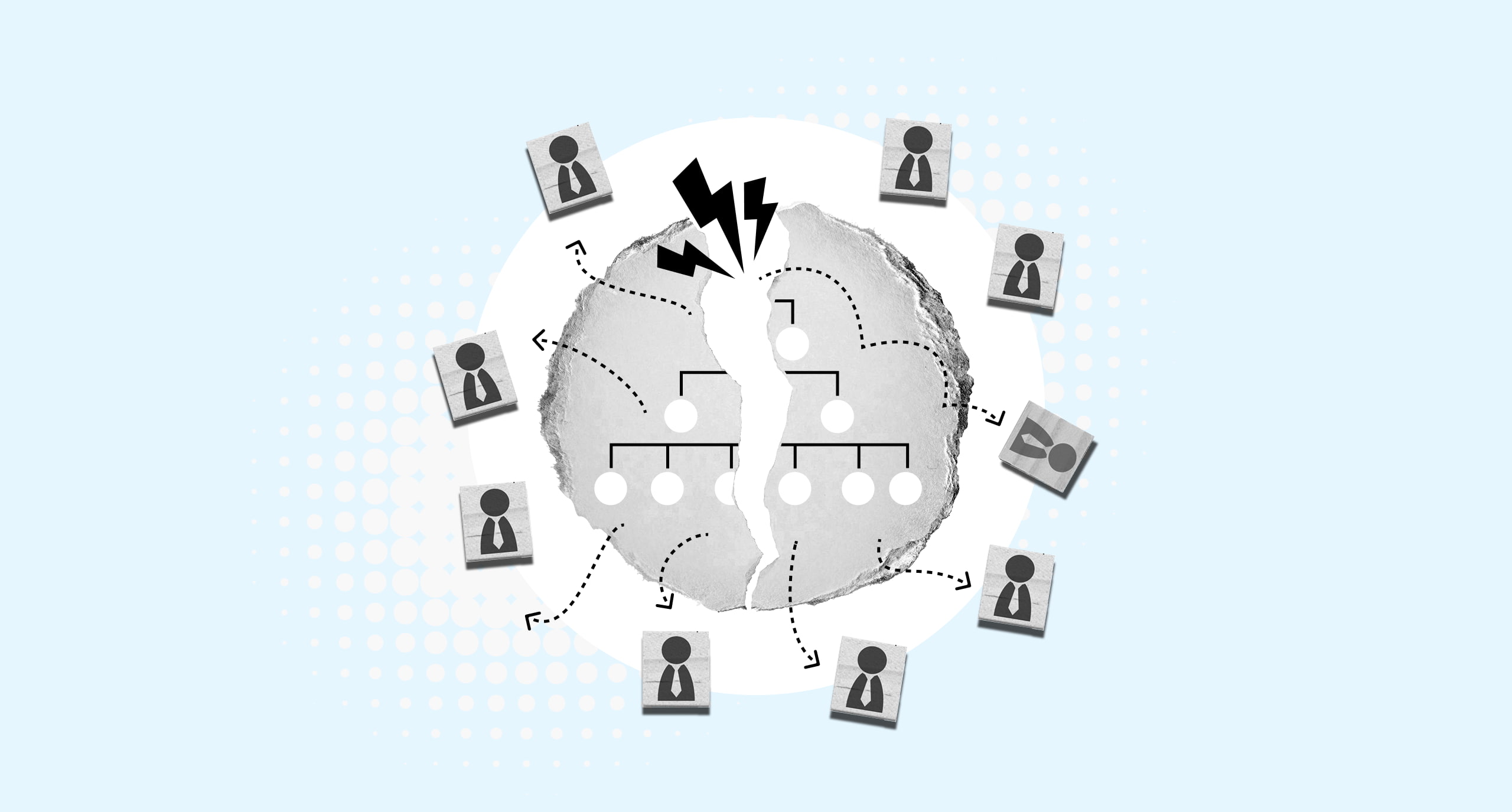
These experiences are common enough that they’ve become structural rather than personal. In some workplaces, informal “boys’ club” networks still shape opportunities, promotions and influence, creating invisible barriers that women have to learn to navigate. However, leadership is possible in all of these areas – and those female success stories need to be publicized as much as possible. You can start with the following video about women in finance.
What challenges do women in tech, finance and leadership still face?
One of the most persistent challenges for women in male dominated industries is underrepresentation itself. When there are fewer role models, mentors and peers who share your experience, career progression can feel isolating.
In technology, for example, women hold only about 22% of AI roles and a small fraction of CTO positions. Meanwhile, fewer than a third of female students even consider pursuing a career in tech, suggesting the pipeline problem begins long before employment.
Then there’s advancement. Across industries, women are promoted at slightly lower rates than men at early leadership stages.
Over time, those small gaps compound. For every 100 men promoted into management roles, fewer women receive the same opportunity, which shapes who reaches senior positions years later.
And the emotional cost is real. Studies show higher burnout rates among women in senior leadership, driven by the pressure of being visible minorities, navigating bias and balancing expectations from multiple directions.
How to survive in a male dominated workplace without losing yourself
Research shows that women in male dominated industries often feel pressure to adapt their communication and leadership style to fit existing norms, particularly in environments where they are underrepresented. Organizational psychology studies link this to “belonging uncertainty,” a pattern where people adjust behavior in response to signals about who fits in.
Long-term progression, however, is strongly tied to sponsorship and visibility. Women who receive senior support and access to stretch roles tend to reach management positions early in their careers.
Networks also have measurable impact. Labor market studies show that mentorship and professional connections increase promotion rates and job satisfaction, particularly in tech and finance where informal networks influence opportunities.
Finally, performance visibility matters. Studies on evaluation bias indicate that women’s achievements are more likely to be overlooked unless clearly attributed, making documented outcomes, feedback and sponsorship key drivers of recognition and progression.
Why representation changes everything
When women see others leading companies, managing funds, building startups or running global teams, it expands what feels possible. That effect ripples outward. Young professionals begin to picture themselves in roles they might never have considered before.
And the impact goes beyond individuals. Diverse leadership teams consistently make better decisions, challenge assumptions and innovate more effectively. When women move into positions of influence, they ultimately change how organizations operate.
But progress is slow. At the current pace, gender parity in leadership could still be decades away. Which makes every individual success story part of a broader shift.
How is IE University helping improve female representation in tech, finance and leadership?
Across tech, finance and senior leadership, one of the biggest barriers is still access: access to role models, to networks and to the confidence that comes from seeing people like you succeed. IE University has made this a strategic priority, not just through messaging, but through targeted initiatives designed to bring more women into fields where they remain underrepresented.
This work begins at the pipeline level. Scholarships, outreach initiatives and female-focused recruitment campaigns aim to increase participation in programs connected to STEM, analytics, finance and leadership. Projects like dedicated female leadership content series, alumnae visibility campaigns and industry speaker events are designed to make career paths more tangible by putting real stories at the center of the conversation.
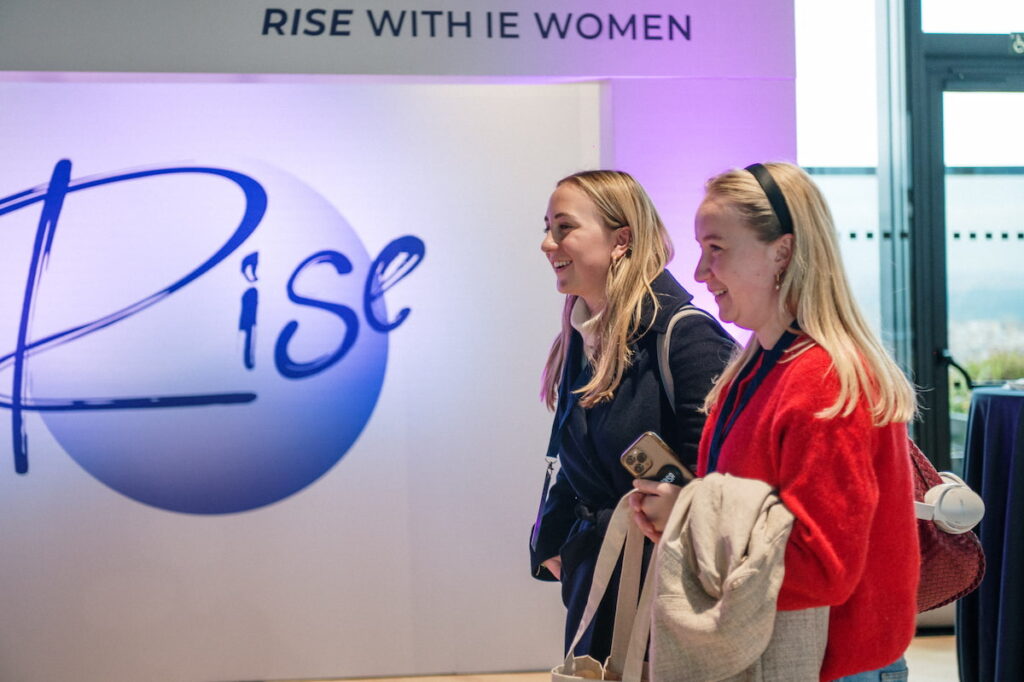
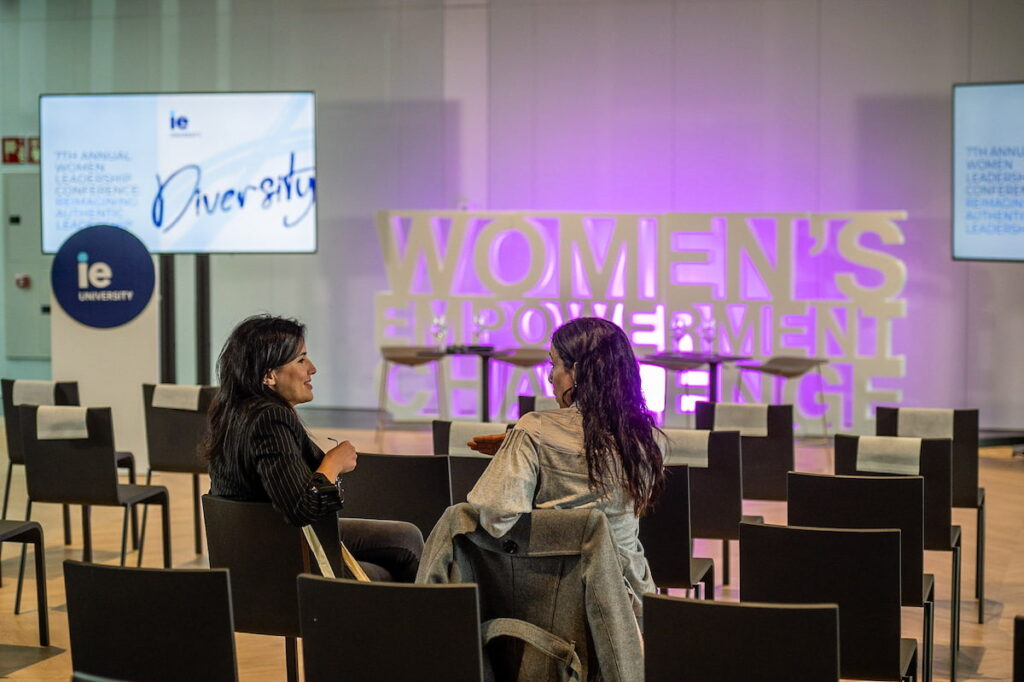
And, this March, we’re celebrating the IE Women’s Leadership Forum 2026 to bring young women closer to aspirational figures in these industries.

For women considering a future in tech, finance or executive roles, the most powerful step is often choosing an environment that actively supports that journey. That’s why we invite you to explore IE University and see whether our programs in tech, finance or leadership can support your journey.
We detail all of these initiatives on our dedicated page for Women at IE School of Science ( Technology.
Interested in streaming the IE Women’s Leadership Forum 2026 on March 4th? Follow this link for more information.
Interested in tech? Read our guide on top women in data science networks.
Want to see how we’ll support your professional growth? Read about our tech mentorship program.