
Setting goals is easy. Reaching them is harder. That gap is usually caused by vague intentions, unclear timelines, or objectives that are impossible to measure. SMART goals exist to solve that problem.
The SMART method gives structure to goal setting so your objectives move from ideas to execution. Whether you’re working on personal development, academic progress or business performance, SMART goals and objectives help you focus effort, track progress, and adjust intelligently.
What are SMART goals?
A SMART goal is a structured way of defining objectives so they are clear, actionable, and measurable. The SMART goal definition is based on five criteria that turn abstract ambitions into concrete plans. Below is an easy-to-understand breakdown of what each letter stands for.
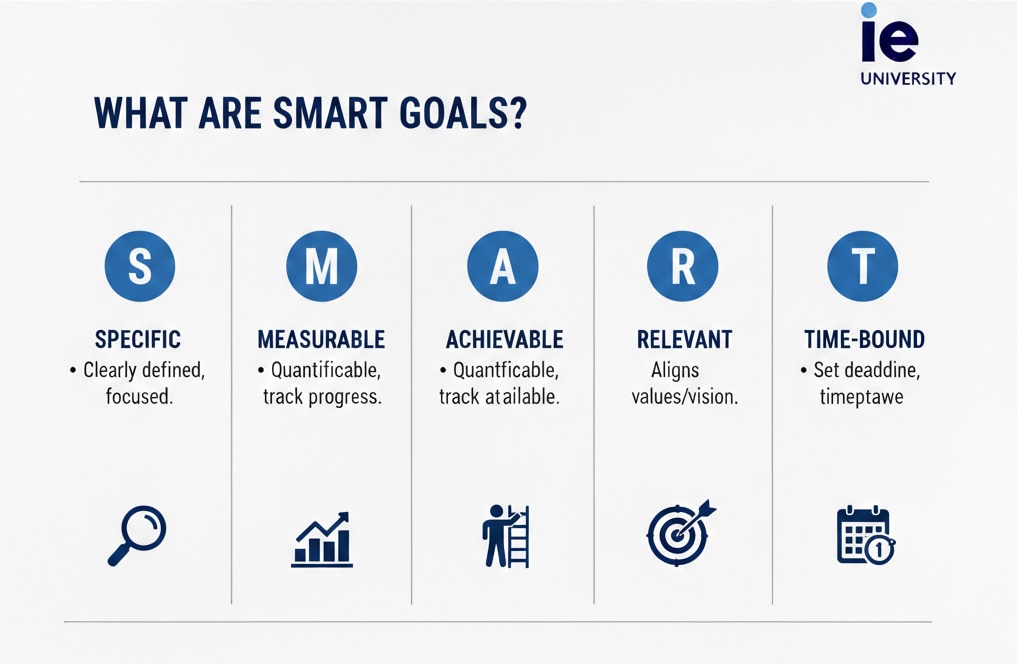
How do we break down SMART criteria by objectives?
Specific: What exactly are you trying to achieve?
Specific is the first part of the SMART goals framework, and it focuses on clearly defining what you’re trying to achieve before you begin. You should be able to describe the exact outcome you want, identify who is involved in reaching it, and understand where it applies. When a goal is specific, it feels concrete and focused, which makes it easier to plan, communicate and take action without confusion.
Measurable: How will you track progress?
Measurable focuses on how you will track progress and know whether you’re moving in the right direction. You should decide which metrics will show that progress is happening and define what success looks like in numerical terms. When a goal is measurable, you can check in along the way, see what’s working and stay motivated by having clear evidence of improvement.
Achievable: Is the goal realistic?
Achievable asks you to step back and assess whether the goal is realistic given your current situation. Think about whether you have the skills, time and resources needed to make it happen, and whether it fits within your real constraints. Setting an achievable goal helps you stay ambitious but grounded, so you’re pushing yourself while still working toward something that can realistically be accomplished.
Relevant: Why does this goal matter?
Relevant focuses on whether the goal truly matters right now and how it connects to the bigger picture. You should consider whether it supports a larger objective and whether this is the right moment to prioritize it. When a goal is relevant, it aligns with your broader direction and makes good use of your time and energy.
Time-bound: When will it be completed?
Time-bound means setting a clear timeframe for completion so the goal doesn’t drift or lose urgency. You should define an end date and decide whether there are milestones along the way to track progress. Adding a timeline helps you stay focused, creates accountability and turns a general intention into something with a clear finish line.
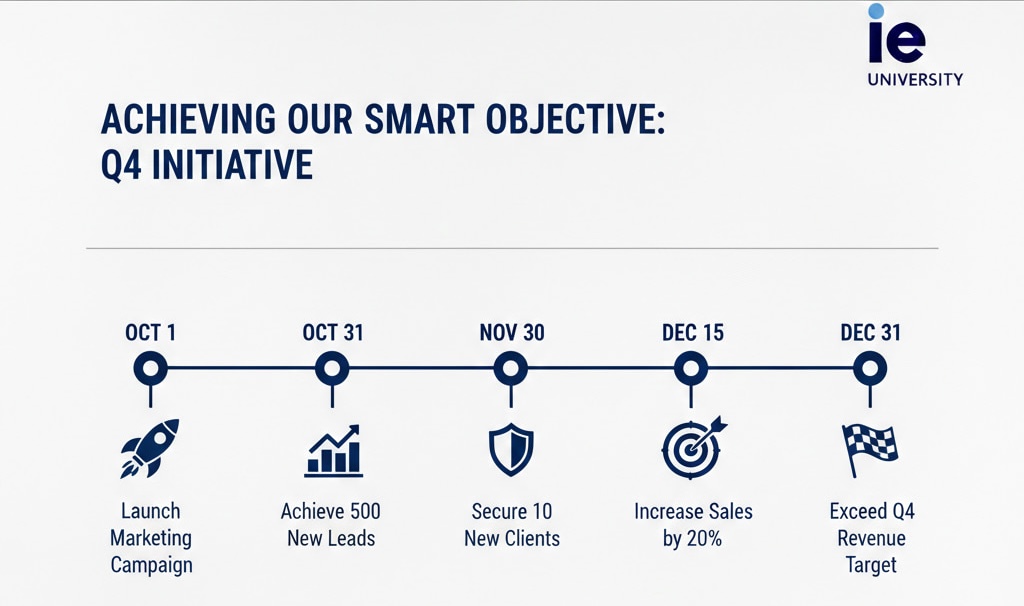
How do you apply SMART goals in practice?
Writing a SMART goal starts with a simple structure you can reuse and adapt: I will [specific action] measured by [metric], achievable with [resources], relevant to [objective], completed by [deadline]. This format keeps each part of the framework visible while you plan, so you can quickly check that the goal is clear, trackable and grounded in reality. It also makes it easier to communicate your intention to others and stay focused on what matters most.
In a career context, a SMART goal might be to increase organic website traffic by 20% within six months by publishing two SEO-optimized articles per week. The action is clear, the metric is defined, the resources are realistic and the deadline creates urgency. This kind of goal works well because progress can be tracked regularly and adjusted if needed.
You can apply the same logic to learning and team performance. For example, you might complete an online data analytics course and apply the skills in a portfolio project by the end of the quarter, or reduce customer response time from 24 hours to 8 hours by implementing a new ticketing workflow within three months. Each example links a specific action to a measurable outcome and a clear timeframe, which makes it easier to follow through and see real results.
Study with us at IE Business School
SMART goals only work when you know how to execute them in real situations. You need context, pressure, and clear feedback.
At IE Business School, the International MBA helps you apply SMART objectives to real business challenges. You work on live projects, make decisions with consequences, and learn how to adapt goals as conditions change.
If you want SMART goals to translate into career impact, the International MBA gives you the tools and experience to do exactly that. Follow the link below to find out more.

Benjamin is the editor of Uncover IE. His writing is featured in the LAMDA Verse and Prose Anthology Vol. 19, The Primer and Moonflake Press. Benjamin provided translation for “FalseStuff: La Muerte de las Musas”, winner of Best Theatre Show at the Max Awards 2024.
Benjamin was shortlisted for the Bristol Old Vic Open Sessions 2016 and the Alpine Fellowship Writing Prize 2023.