Meditation as a Global Public Good

By Lisa Bevill
Reflections on Supporting the First UN World Meditation Day
On 21 December 2024, the United Nations marked World Meditation Day for the first time in its history. At first glance, this may sound like a quiet or symbolic milestone. In reality, it represents something deeper: a collective acknowledgment that how we attend to our inner world shapes how we engage with the complex challenges of our shared outer world.
This observance did not emerge in isolation. Meditation has been woven into the fabric of the UN since its early years, beginning with the introduction of a minute of silence for prayer or meditation in 1949, followed by the creation of the UN Meditation Room, envisioned and personally guided by Secretary-General Dag Hammarskjöld in 1957. From the outset, the UN recognized that diplomacy is not only a matter of policy and negotiation, but also of presence, reflection, and ethical clarity.
For us at the Center for Health & Well-being at IE University, this recognition resonates deeply. Our work is grounded in the belief that well-being is not an individual add-on, but a foundation for sustainable leadership, sound decision-making, and healthy systems.
This year, we had the privilege of supporting this evolving narrative by contributing to the first World Meditation Report and by participating in United and Present: Global Solutions from Within — A Mindful Approach to Diplomacy, UN Work, and Beyond, a three-day convening held in Geneva. The gathering explored how inner awareness and contemplative practice can strengthen diplomacy, human rights work, and leadership under pressure.
Our involvement also aligns with our ongoing support of the UN System Workplace Mental Health & Well-being Strategy (2023 and beyond)—a landmark initiative that places mental health and well-being at the heart of organizational responsibility, acknowledging that those working to uphold peace, dignity, and human rights must also be supported in sustaining their own resilience.
A Day Rooted in Universal Wisdom
Meditation may appear deceptively simple. After all, it begins with something we all do every day: breathing. Yet, as UN leaders have consistently articulated across decades, its impact reaches far beyond the individual.
Meditation has been described as a universal practice that transcends borders, cultures, and belief systems, one that fosters resilience, clarity, and a shared sense of humanity. These reflections, voiced by UN leaders past and present, converge on a common understanding: meditation supports inner steadiness, ethical action, and the capacity to meet complexity with wisdom.
That is not a luxury.
It is infrastructure.
Crafting the First World Meditation Report
Working alongside UN colleagues on the World Meditation Report offered a unique opportunity to trace how meditation has been integrated into the UN system, not only symbolically, but structurally. Three themes stood out clearly.
First, meditation has always been part of the UN’s institutional DNA. From the mandated minute of silence at the opening and closing of General Assembly sessions to the intentional design of the Meditation Room, these gestures were deliberate reminders that peace begins within.
Second, the establishment of World Meditation Day responds to the realities of modern complexity. With more than 70 Member States co-sponsoring the resolution, there is growing recognition that emotional regulation, mental resilience, and reflective capacity are no longer “soft skills,” but essential competencies in diplomacy and global leadership.
Third, the benefits of meditation extend well beyond individual well-being. Scientific research consistently shows that contemplative practices enhance focus, emotional regulation, stress management, and compassion. These capacities are foundational for trust, cooperation, and ethical decision-making, qualities urgently needed in global governance today.
In this sense, meditation is not simply about personal well-being. It is about strengthening our collective capacity to respond wisely.
United and Present: Inner Work for Global Challenges
Held at the Palais des Nations in Geneva, the convening brought together diplomats, human rights advocates, scholars, clinicians, and mindfulness practitioners. Conversations explored how contemplative practice can support diplomacy, humanitarian work, leadership under pressure, and collective resilience.
What stood out most was the honesty in the room. Many participants spoke openly about the emotional weight carried by those working in high-stakes global environments, navigating conflict, inequality, and suffering while being expected to remain composed and decisive.
A shared insight echoed throughout the sessions: Inner work is not separate from global work, it is foundational to doing it well.
There were also moments of lightness. One speaker joked that diplomats who meditate might just save the world one breath at a time. Considering the alternatives, it did not sound like a bad strategy.
The UN System Workplace Mental Health & Well-being Strategy places well-being firmly within organizational responsibility. It emphasizes psychological safety, stress management, compassionate leadership, and systemic support, principles that strongly align with our work at the Center.
Meditation is not presented as a cure-all, nor should it be. But it is increasingly recognized as one evidence-based tool that can help individuals and institutions navigate stress, strengthen emotional awareness, improve decision-making, and cultivate empathy and connection.
These skills matter in every profession. In diplomacy and human rights work, where the stakes include lives, dignity, and global trust, they are indispensable.
IE University’s Contribution: Bridging Research, Practice, and Human Potential
Our participation reflects IE University’s longstanding commitment to evidence-based well-being, holistic leadership, and human-centered systems change. Through education, research, and partnerships, we aim to bring the science of well-being into leadership development, support individuals navigating complexity, and elevate human flourishing as a foundation for sustainable decision-making.
Looking Ahead
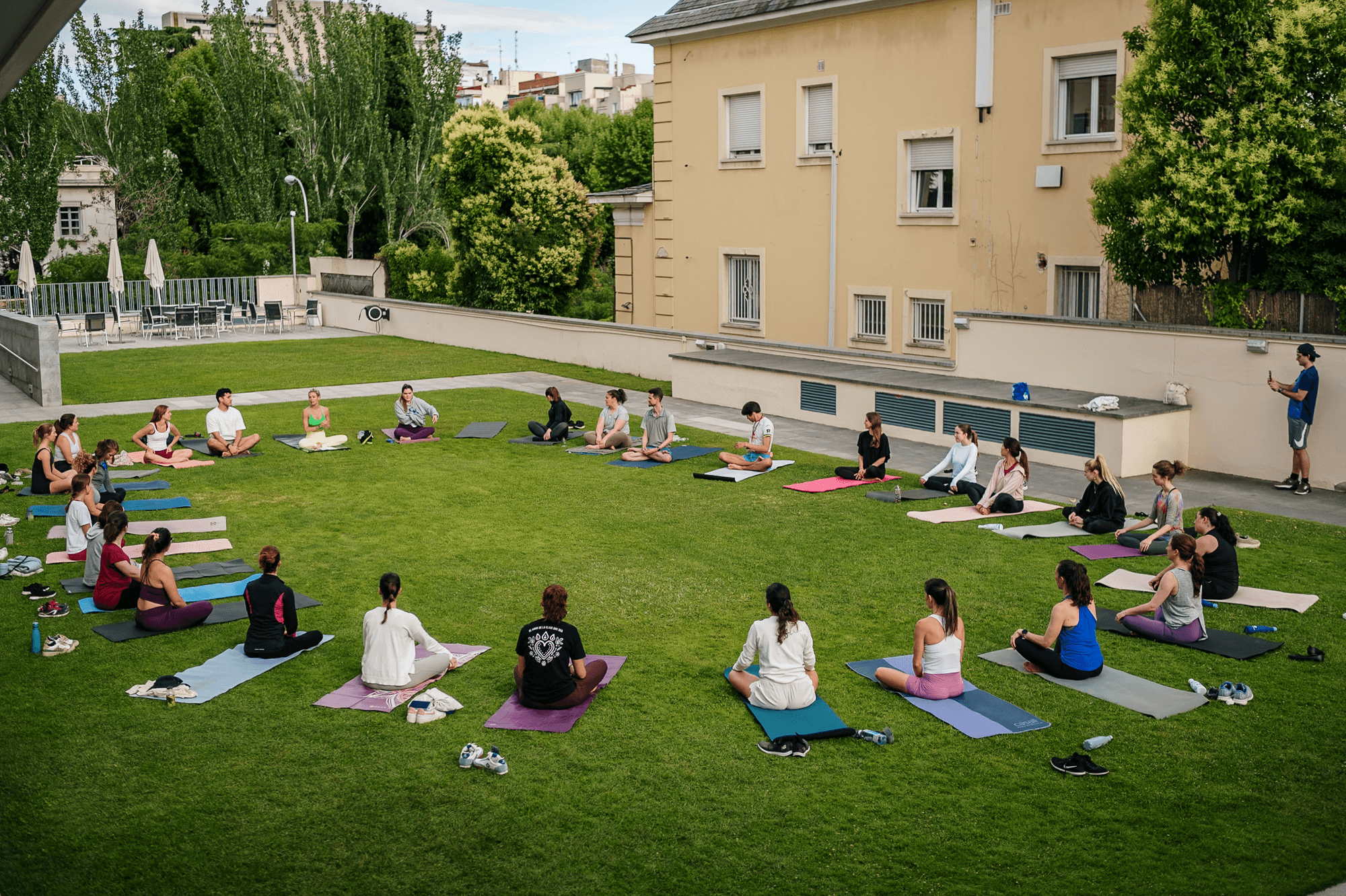
World Meditation Day will now be observed annually on 21 December, offering institutions, workplaces, and communities around the world an invitation to pause, reflect, and reconnect with our shared humanity.
As this observance grows, it holds the potential to advance workplace well-being globally, bridge contemplative traditions with modern challenges, and reinforce the understanding that peace, resilience, and ethical action begin with presence.
At the Center for Health & Well-being, we are honored to accompany this collective journey. The challenges ahead are significant, but so is our capacity to meet them with clarity, courage, and compassion.
And if meditation helps the world take one wiser breath together, that may well be diplomacy at its finest.