Spanish traditions are not the stuff of museums. You see them across everyday life, in the way people eat, celebrate, gather and use public space. In Madrid, Spain’s capital, you get a hotpot of all these flavors up close. Despite its big-city energy, it keeps hold of local fiestas, old markets, traditional sweets, flamenco and neighborhood customs.
Interested in the traditions that make this historic country tick? Read through as we dive into 10 Spanish and Madrid traditions that you can enjoy during your visit – be that on vacation or during your studies with IE Summer School.
Spanish traditions across the country
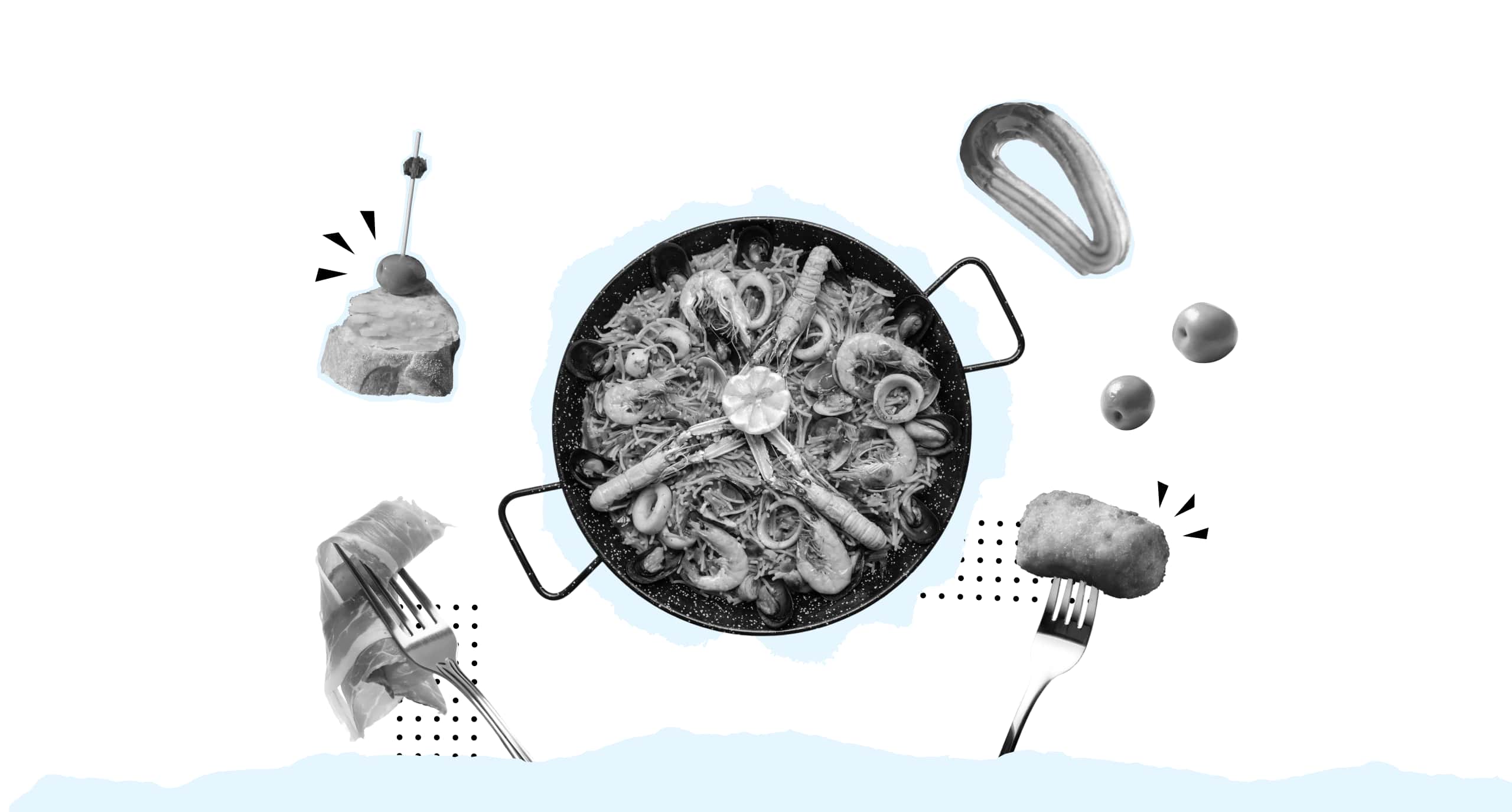
1. Tapas are about more than food
Tapas are one of the best-known Spanish traditions. That’s thanks in large part to the social ritual they represent. “Tapas” means little plates of food rather than one concrete dish. And going for tapas is more a social event than purely sitting down for a meal. You stay longer than expected, you move from place to place, you move on to drinks. They are tied to sociability, outdoor life and a way of eating that feels collective rather than rushed. Spain’s official tourism site highlights tapas, long opening hours and outdoor social life as central to everyday custom in Spain.
2. The Mediterranean diet is famous for a reason
UNESCO’s description of the Mediterranean diet says eating together is a foundation of cultural identity and continuity across Mediterranean communities. is useful here because it makes clear that this tradition is not only about ingredients. It also includes knowledge, rituals and, especially, the sharing and consumption of food. If you want more insight on what dishes the diet includes, read our guide on traditional Spanish foods.
3. Festivals still shape the calendar
Spanish traditions come alive most visibly during festivals. Across the country, local and religious celebrations still fill streets with music, processions, food, dancing and rituals that bring whole communities together. This is part of what makes Spain feel culturally dense. The year is not only divided by seasons and work schedules, but also by celebrations that still matter locally.
4. Flamenco is one of Spain’s most powerful cultural expressions
Flamenco often gets reduced to a cliché, but in reality it is one of the clearest examples of Spanish artistic tradition still carrying emotional weight. UNESCO describes flamenco as an artistic expression that fuses song, dance and musicianship, and notes that it can convey grief, joy, tragedy and celebration. Even outside Andalusia, it remains a major cultural symbol and an experience many visitors actively seek out. Spain’s tourism materials also regularly present flamenco as one of the signature ways to experience Spanish culture firsthand.
5. Outdoor life is part of the social rhythm
One of the easiest Spanish traditions to notice is how much life happens outside. Terraces stay busy, plazas stay active and people make time to meet in public space. During your visit, you’ll be surprised by how much time you pass outdoors, with later schedules and long opening hours. That gives Spain a very particular social texture. Even ordinary routines can feel communal.
6. Every region adds its own layer
There is no single version of Spanish tradition. One of the most important things to understand is that customs vary by region, city and even neighborhood. Food changes. Festivals change. Local identities stay strong.
Take La Tomatina in Buñol, where thousands gather each August for a chaotic tomato fight rooted in local celebration. Head north to Pamplona and you find the San Fermín, defined by its historic bull runs through the city’s streets.
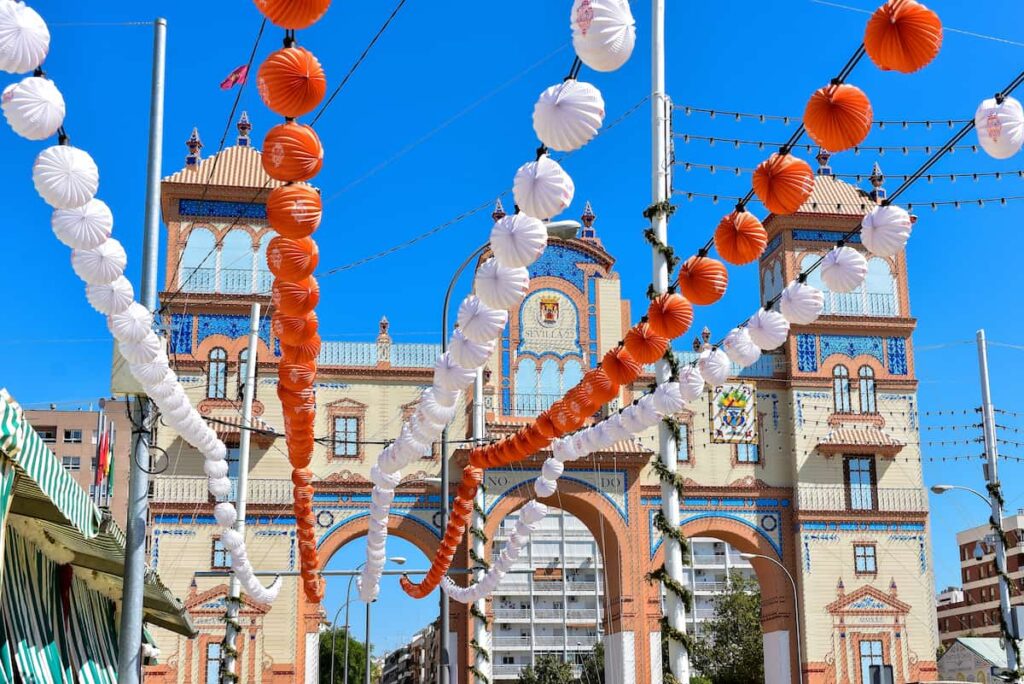
In Seville, the Feria de Abril transforms the city into a week-long display of flamenco, horses and social rituals tied to Andalusian identity.
In Catalonia, you’ll see Castells – teams building intricate human towers that symbolize community strength. Meanwhile, in Galicia, traditions lean Celtic, with bagpipe music and seafood festivals like Festa do Marisco in O Grove. Even something as widely recognized as paella shifts depending on where you are – its most traditional form rooted in Valencia, where recipes and ingredients are fiercely protected.
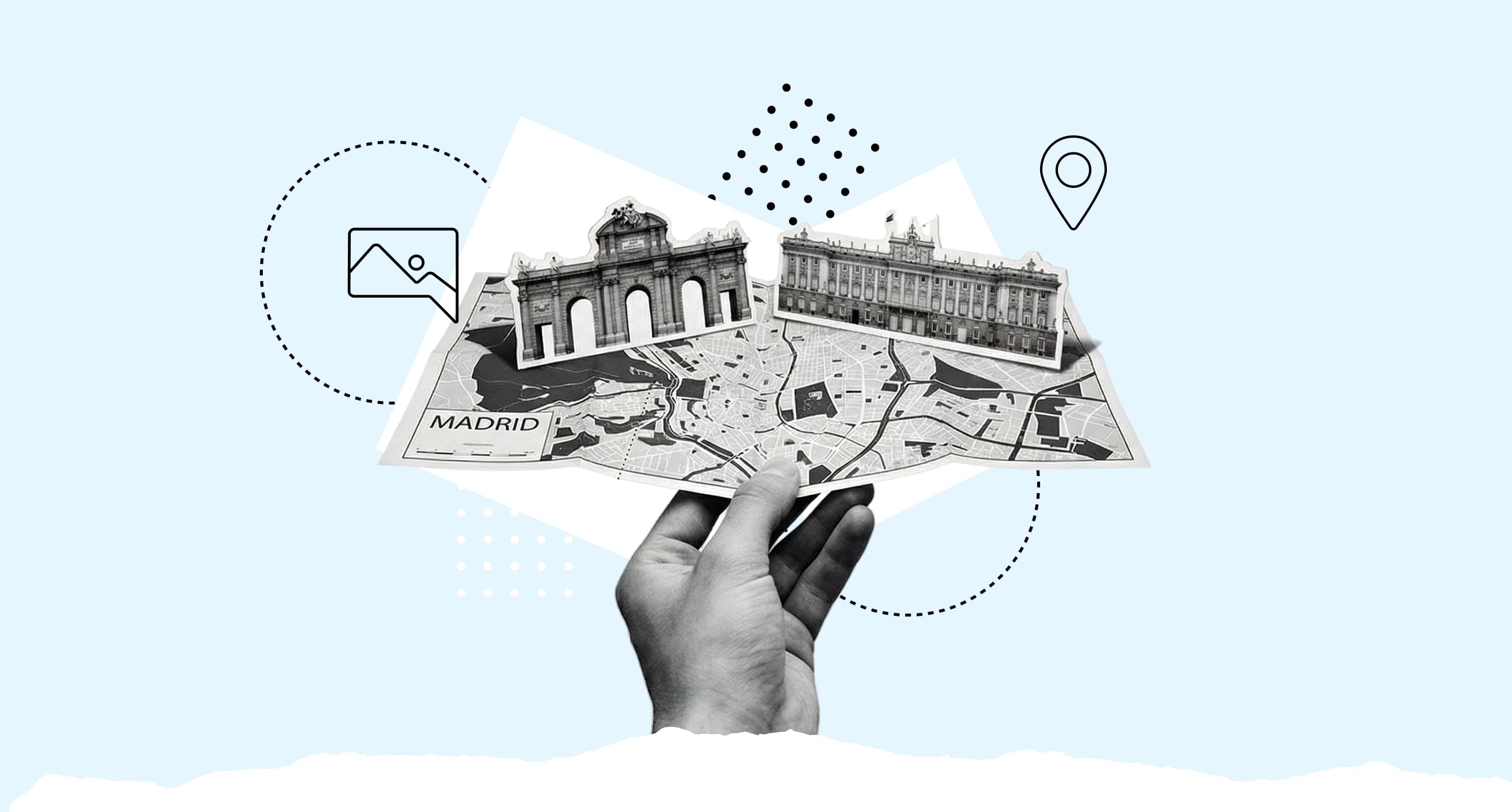
Madrid traditions: where the wider culture gets local
7. San Isidro is Madrid’s signature tradition
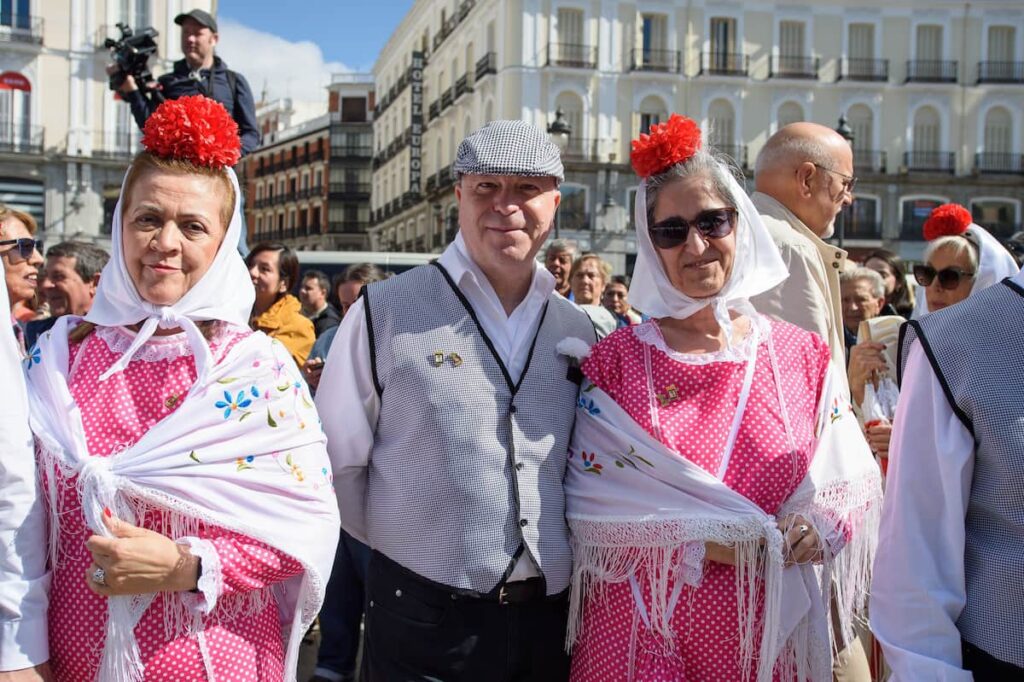
If you want one event that captures Madrid traditions, start with San Isidro. Celebrated around May 15, it honors the city’s patron saint and fills Madrid with concerts, gatherings, local dress and festive activity. Madrid’s tourism board identifies San Isidro as one of the city’s defining traditional celebrations. What makes it interesting is that it shows Madrid at its most local. The city feels less like a capital and more like a community with its own customs, references and rhythms.
8. The August fiestas keep neighborhood culture alive
Madrid’s traditional life does not stop after spring. The city’s August fiestas celebrate San Cayetano, San Lorenzo and La Paloma, and they are one of the best examples of neighborhood-based tradition still thriving in an international capital. Madrid’s official tourism site specifically highlights these celebrations as a way to experience the city at its most traditional. This is where Madrid traditions become especially appealing. They are not abstract heritage. They happen in the streets, in local dress, in music and in a sense of neighborhood identity.
9. El Rastro is a weekly Madrid ritual
El Rastro is not just a flea market. It is one of the most recognizable recurring customs in Madrid. People go to browse, meet friends, wander and turn a Sunday morning into an event in itself. Madrid tourism regularly presents markets like El Rastro as part of the city’s traditional character and street culture. That is what makes it relevant here. It shows how a city tradition can feel casual and everyday while still carrying cultural meaning.
10. Historic shops and traditional sweets keep old Madrid visible
One of the nicest things about Madrid is that traces of the past are still built into the city’s commercial life. Historic shops, older taverns and traditional sweets make cultural continuity feel visible rather than theoretical. Madrid’s tourism board highlights both its tradition-focused cultural offering and places tied to popular arts and customs. For a student or visitor, these details matter. They are often the moments that make a city feel textured and memorable.
Why this matters if you are spending time in Madrid
Spanish traditions become much more interesting when you experience them directly. It is one thing to read about tapas, festivals or flamenco. It is another to see how they shape real schedules, real neighborhoods and real social life.
That is one of the reasons Madrid works so well as a place to study. It gives you access to Spanish culture and traditions in a setting that is dynamic, international and easy to navigate, while still holding onto customs that make the city feel distinctly local.
Madrid is a place where major cultural life and traditional fiestas coexist closely.
For IE Summer School angle, that’s the real hook. You are not only spending time in Spain. You are stepping into a culture that still lives in the streets, on the calendar and around the table. If you’re looking for an extended stay with real life impact, follow the link below to find out more information.

Benjamin’s writing is featured in the LAMDA Verse and Prose Anthology Vol. 19, The Primer and Moonflake Press. Benjamin provided translation for “FalseStuff: La Muerte de las Musas”, winner of Best Theatre Show at the Max Awards 2024.
Benjamin was shortlisted for the Bristol Old Vic Open Sessions 2016 and the Alpine Fellowship Writing Prize 2023.