Insights from the IE University Student Well-being Report 2024–2025

IE University Student Well-being report: Gaining Insights on Students Health
By Josefa Brigham
The university experience is a pivotal and often challenging stage in life. The transition from high school to higher education, followed by the progression into the workforce, represents a series of significant life events. For many students, especially those moving abroad and adapting to a completely new environment, these transitions can be particularly demanding. Alongside this adjustment, students frequently face stress, anxiety, and feelings of uncertainty, often intensified by academic pressure, financial concerns, and the challenge of balancing studies with personal life. These realities make it essential for institutions to embrace comprehensive strategies that foster mental, emotional, and physical well-being within their communities.
Because of these common struggles amongst university students, for the past six years, the Center for Health and Well-Being has been dedicated to enhancing the well-being of the IE community. Adopting a holistic approach that integrates physical, mental, and emotional health, the center has offered a wide range of seminars, workshops, courses, and activities designed to provide students and staff with meaningful opportunities to prioritize their well-being. Through these initiatives, our goal has been to empower the community to thrive not only academically and professionally but also personally. To do so effectively, various methods like surveys and focus groups have been implemented in order to gain a better understanding of how we can support our community. The findings for the 2024-2025 surveys have been analyzed and disseminated, with the purpose of presenting them to the community and giving visibility to how our community is doing.
The IE student Well-being Survey
The IE Center for Health & Well-being has presented the second edition of the IE University Student Well-being Report. This study offers a comprehensive snapshot of our students’ health, well-being, and related experiences, helping us better understand and support our community.
Our commitment to providing the best resources for student well-being is supported by insights derived from the IE Longitudinal Well-Being Survey. This instrument has been instrumental in offering a comprehensive understanding of the community’s overall experience. By capturing key indicators such as life satisfaction, flourishing, self-efficacy, social beliefs, and health-related behaviors, the survey not only provides valuable data on student well-being but also serves as a foundation for the development of targeted programs and initiatives. These findings enable us to continuously shape and refine our efforts to strengthen student success.
Participants
Between Fall of 2024 and Spring Data was collected from +5,000 students across Madrid and Segovia campuses. Students filled out the survey before and after a mandatory two-session well-being workshop, giving us valuable insights into how well-being evolves over time.
It reflects IE’s diversity: participants came from Europe (39%), Latin America (22%), Spain (16%), North America (8%), and Africa/Middle East (rest). Additionally, both bachelor’s (67%) and master’s (33%) students took part, with a near-equal gender balance.
Powerful insights from this year's report:
Life satisfaction serves as a meaningful indicator of how students perceive their overall well-being. This year, the average score reached 7.42, which, when placed in the context of international benchmarks, is considered notably high. In addition, the survey revealed that 81% of students are thriving, and a clear majority report practicing healthy habits, particularly exercise. Equally important, the results highlight IE’s strong culture of diversity, as 75% of participants spend time daily—or more than once a day—with peers from different countries, compared to only 47% who regularly interact with peers from their own country.
The study showed insightful differences between campuses, gender, and academic years:
Madrid students showed slightly higher academic self-efficacy, grit and social support
Segovia students reported more social contact and contemplative practices.
Women reported greater engagement in contemplative practices (particularly mind-body exercises, journaling and acts of kindness), and motivation for well-being (particularly active interest)
Full-time master’s students report stronger healthier lifestyle behaviors (walking) and slightly better social support (family and friends), with no other major differences
Even though overall the data is positive, there are also areas that need more attention. Engagement in contemplative practices, for instance, remains limited: most participants reported practicing activities such as yoga, qigong, or tai chi only once or a few times per month. Likewise, mindfulness and meditation practices were particularly low, with just 6% of students engaging in them daily. Considering the well-documented benefits of these habits for brain functioning, physical health, and emotional regulation, their broader adoption within the community remains an important opportunity.
Some other challenges are how a large proportion reported feeling stressed about their studies most of the time, while 33.2% indicated that emotional or psychological difficulties interfere somewhat or moderately with academic performance. Furthermore, 11.6% of students reported often feeling isolated, and 11% stated that they frequently feel left out.
The majority of students reported knowing where to access IE resources if they needed professional support for their mental or emotional health. Building on this, our aim is to continue raising awareness of important topics that students may be struggling with, while also creating opportunities for reflection.
Report Launch Event
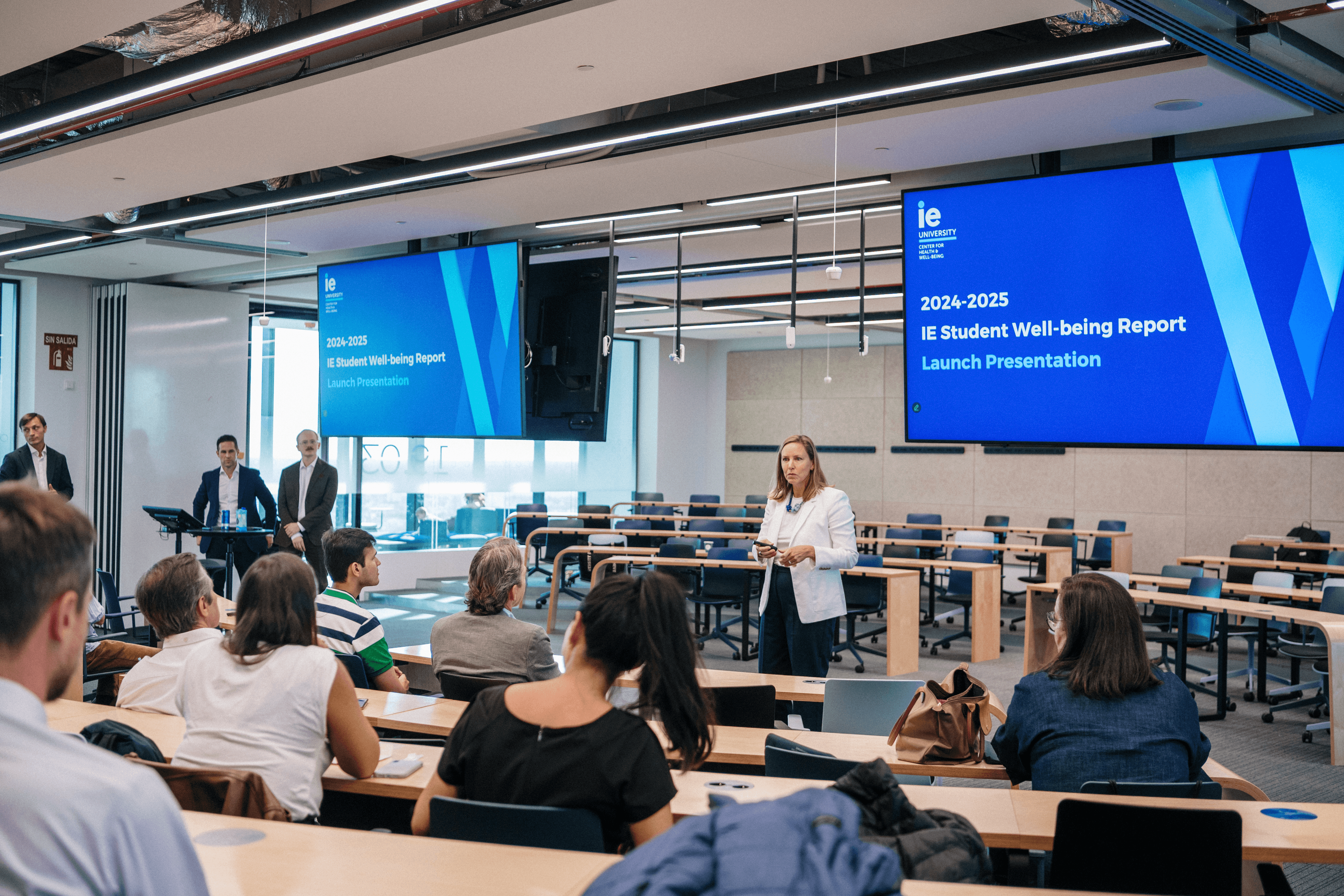
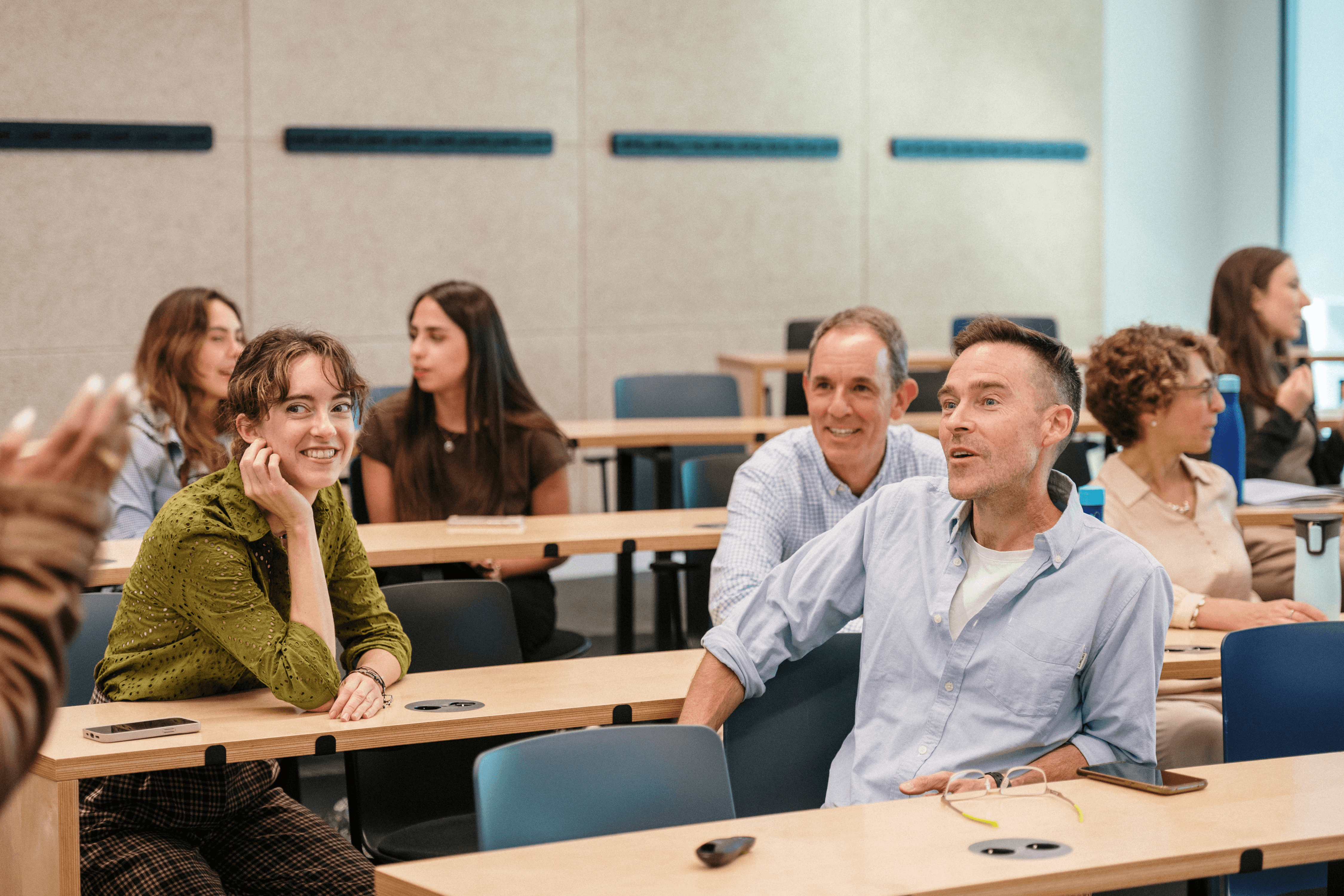
To bring the findings to the community, the Center of Health and Well-being hosted the annual report launch. Individuals from all over the community attended, such as Staff, professors, and students that showed great curiosity in the presentation during the Q&A.
They left with a better understanding on how the community is doing, in terms of satisfaction, stress, social support, and other interesting metrics. During the cocktail they had the opportunity to discuss and ask questions about possible future steps with the main researchers of the studies, Gonzalo Llanes, Thomas Vague, and Joshua Guyer.
Future steps to continue on making IE a Flourishing Community
The IE Student Well-being Survey is a vital instrument for evaluating the health of both students and staff, as well as for assessing the effectiveness of the university’s support structures. By collecting direct feedback, the survey provides a comprehensive overview of current strengths and areas requiring continued development, thereby enabling the Center to optimize its initiatives and maintain the well-being of the entire IE Community as a central priority. The latest report indicates notable progress while also underscoring domains that indicate further attention as we advance our mission to promote a thriving academic environment.