

Today, there is growing concern about the role that humans will play in a world where AI is increasingly ubiquitous. The latest technological advances clearly demonstrate that artificial intelligence is capable of doing tasks that only human beings were able to perform up until now.
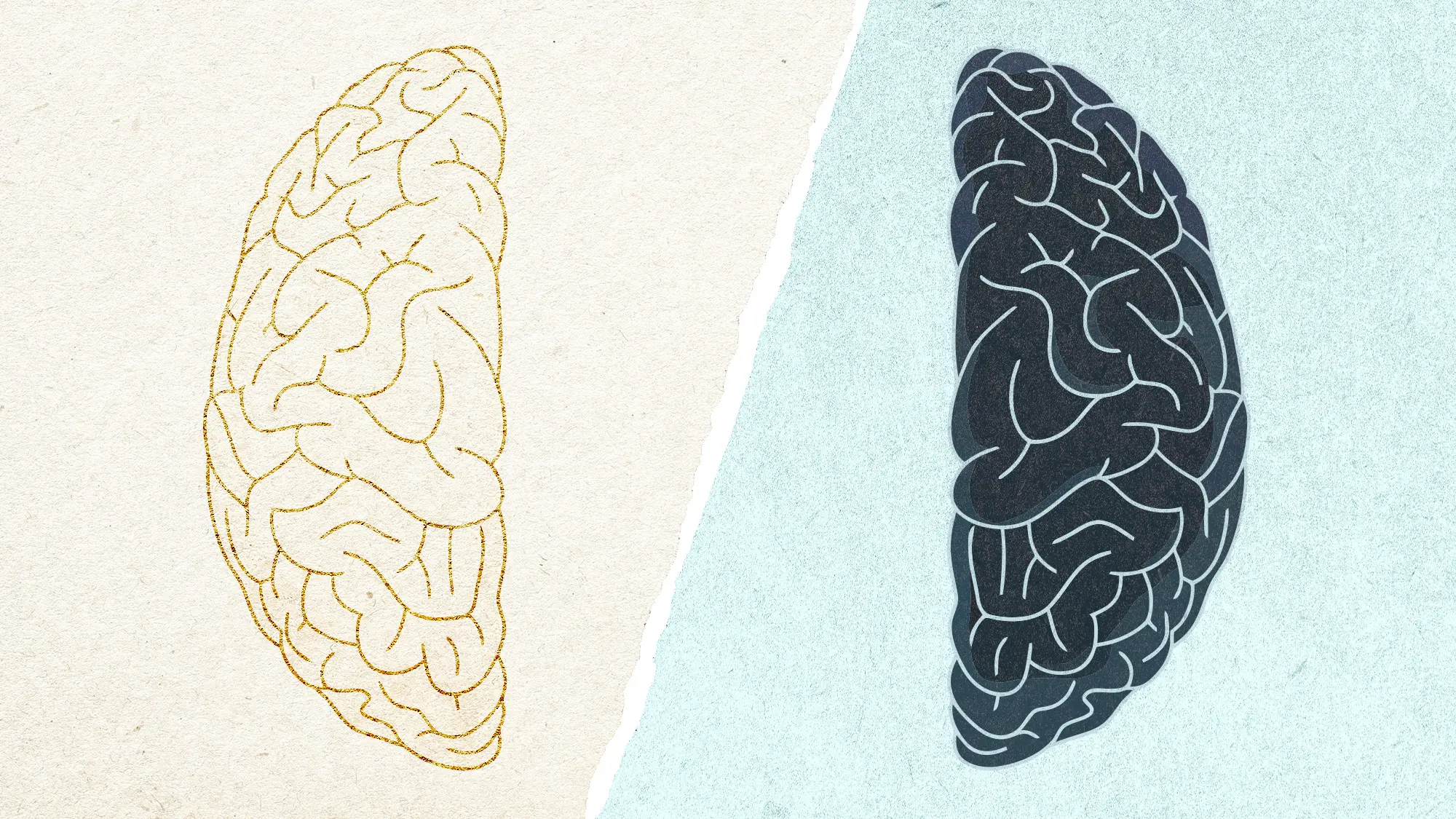
Artificial intelligence will increasingly take over many functions traditionally associated with the brain’s left hemisphere, particularly those involving algorithms, data analysis, and other logic- and language-related tasks. Yet intelligence is not the same as wisdom.
The ability to reason, to reflect, and to seek answers to the challenges ahead relies on capacities closely linked to the left hemisphere of the brain. In this sense, managing data is often prioritized over dealing with feelings, sensations, and emotions. However, data management is not always enough, and we must draw on other abilities that correspond to the right hemisphere, and to certain areas of the brain such as the ventromedial and orbitofrontal regions, which receive information about what we feel and about what is happening in our bodies as sensory inputs reach us.
It is in these areas, especially those located in the right hemisphere, where we find the intuition that guides us when rational thinking fails to provide clear answers.
Carl Gustav Jung spoke of this intuition as being “connected” to something he called the collective unconscious. The great Swiss physician used this concept to refer to a field of understanding that contained all of humanity’s knowledge. This was the only explanation Jung could formulate for what he had observed both in his patients’ lives and in his own.
This invites us to venture into a field that resonates deeply with the teachings of both quantum physics and metaphysics. This is why knowledge is not the same as wisdom. To assume that artificial intelligence can attain wisdom is therefore highly questionable, despite appearances to the contrary.
Wisdom is what connects us to the “laws of the universe” and binds us to existence. We find this connection in silence and contemplation. This is when the door to a cognizable, ineffable world opens. Cognizable because we can experience it, yet ineffable because language cannot fully capture it.
When the great Chinese Taoist painters sat in front of a waterfall or a rock formation in a state of contemplation, they were able to perceive the essence of existence, which is what our outward senses so often fail to grasp. As a result, these works convey serenity, even though they were painted in shades of gray. It is as if these artists could only open their metaphysical eyes when immersed in contemplation.
It is worth remembering that a wandering mind is an unhappy mind.
This can only occur when the mind is still, allowing consciousness to see what was otherwise hidden. It therefore becomes essential to seek moments of stillness, silence, and contemplation in these times of rapid AI development.
Today, we know that artistic experience, in its various dimensions, is one of the most valuable ways to connect with the potential that lies dormant in the brain’s right hemisphere for many of us. This explains why we can have such transformative experiences listening to music, looking closely at a painting, dancing, or taking a walk in nature.
It is extremely important to note that studies in affective neuroscience and contemplative neuroscience show that when we dedicate time to silence, meditation, and the cultivation of empathy and compassion, areas of the brain associated with the regulation of the immune system, the heart, and the body as a whole are activated. In addition, mental clarity increases when important decisions need to be made. This is especially necessary today, when distractions are abundant and attention spans are increasingly short. It is worth remembering that a wandering mind is an unhappy mind, and that inattention is associated with poorer health, lower performance, and diminished interpersonal relationships. It is very difficult for someone to feel valued if nobody pays any attention to them.
Attention is a capacity that underpins many other mental functions. For this reason, a mind that flits from one place to another or becomes trapped in dysfunctional thought patterns that pull us into past regrets or project us into future worries, is associated with depression and anxiety. How often do we resort to other methods that are quicker but ultimately far less effective, instead of addressing the root cause of the problem?
Just as this ability to perceive what is hidden largely depends on the functions of the right hemisphere, everything related to creativity, empathy, and compassion is also rooted in this part of the brain. This makes it especially important to cultivate these skills, which represent expressions of true humanistic leadership, especially in today’s culture, which is increasingly dehumanized and far removed from the spiritual dimension of existence. These skills are urgently needed in a world where having and controlling often seem to be much more important than being and allowing ourselves to be surprised.
Therefore, we should not imagine AI replacing what is genuinely human. Instead, we should envision artificial intelligence and humanity advancing together, providing efficient, creative solutions to the enormous challenges facing our world today.
If we believe that humans and AI are fundamentally at odds, we will find ourselves in a climate of distrust and alarm, which drains our energy and undermines our well-being. If we understand that the two can move forward hand in hand, ensuring that AI remains in the service of human beings rather than the reverse, we will be able to experience extraordinary cultural progress. This cooperation can help us confront the major challenges we face as humanity together, as a team.
Once again, there is a need to reduce the dominance of the left hemisphere and embrace the lessons offered by the right part of the brain. The left hemisphere tends to separate, drawing rigid distinctions between black and white, friend and foe, and between the possible and the impossible.
The right hemisphere, by contrast, tends to embrace, foster connection, and value diversity. It considers multiple perspectives rather than focusing on one alone. It also prefers not to choose between black and white, but instead to navigate the full spectrum of gray. The right hemisphere can recognize that a potential enemy can become a valued ally through empathy and compassion. It also understands that when we “think outside the box,” what once seemed impossible from one perspective can become achievable from another. It is no coincidence that the right hemisphere plays a central role in creativity and in finding new solutions to old problems. The great French writer Marcel Proust once said: “The real voyage of discovery consists not in seeking new landscapes, but in having new eyes.”
A change of perspective transforms everything. On December 24, 1968, William Anders, aboard Apollo 8, took a photograph of our blue planet entitled “Earthrise” that captured the world’s attention. It showed how Earth looks when viewed from space: our precious planet hung in the darkness. Seen from this vantage point, there were no separations, divisions, or conflicts.
This is why both perspectives are needed for effective leadership in the age of AI: the one grounded in data, categories, classifications, calculations, and measurement, and the one that offers a broader and more profound view of reality. In fact, “Earthrise” inspired a wave of initiatives that encouraged people to view our planet with greater empathy and compassion. Far from conflicting with wisdom, these qualities recognize a simple truth: if the planet can no longer sustain life, humanity will cease to exist.
© IE Insights.