


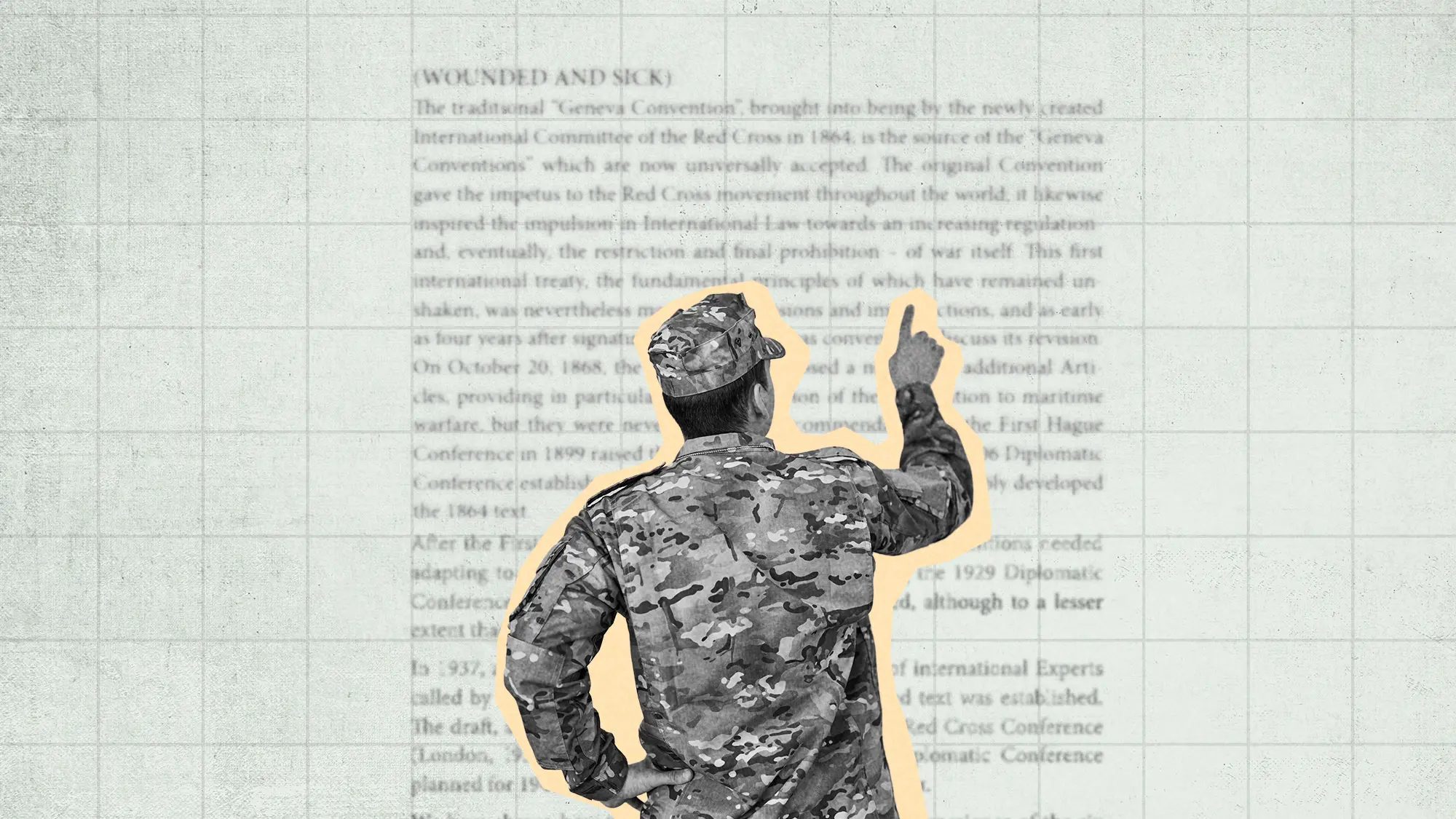
For nearly eight decades, the international community has sought to hold a fragile line against the worst forms of human cruelty, constructing a legal framework to prevent and punish the most serious violations of human dignity. We have a Convention on Genocide. We have the Geneva Conventions governing war crimes. We have an International Criminal Court tasked with prosecuting individuals responsible for the gravest offenses.
Yet one glaring gap endures: there is still no standalone global treaty obliging states to prevent and punish crimes against humanity as a distinct category of international crime.
This omission is not merely procedural. It reflects a deeper fissure in the contemporary international system. The rules governing the use of force, civilian protection, and accountability are increasingly contested, selectively applied, and in some cases actively disparaged. The current effort at the United Nations to negotiate a Convention on the Prevention and Punishment of Crimes Against Humanity is, therefore, not simply a legal initiative. It is a political and normative test of whether international law can still function as a shared language in an era of fragmentation.
We are living through a period of sustained normative stress. Protracted wars in Ukraine and the unresolved situation in Gaza continue to generate massive civilian suffering and credible allegations of atrocity crimes. Sudan has once again descended into large-scale violence marked by ethnic targeting and mass displacement. Crises in places such as Venezuela, and elsewhere, have raised fundamental questions about respect for sovereignty, the prohibition on the use of force, and the boundaries of lawful international action. At the same time, several powerful states have taken steps that undermine confidence in multilateral justice mechanisms, including open hostility toward international courts and sanctions regimes.
Increasingly, international law is treated less as a source of constraint than as a matter of convenience: something relied upon in favorable circumstances and ignored when it proves restrictive. The effects are tangible. Deterrence weakens, and the line separating lawful conduct from unlawful becomes easier to blur. And this is why the ongoing negotiations toward a Convention on the Prevention and Punishment of Crimes Against Humanity demand urgency. With the preparatory process now underway, the effort is not only about filling a legal gap. It is about reasserting the fact that law still matters.
Crimes against humanity – widespread or systematic attacks directed against civilian populations, including murder, torture, sexual violence, persecution, enforced disappearance, and deportation – rank among the gravest crimes under international law. Yet, unlike genocide or war crimes, they are still not governed by a dedicated universal treaty establishing comprehensive obligations for states.
The Rome Statute of the International Criminal Court defines these crimes and provides a forum for individual prosecution. What it does not do is require states to incorporate crimes against humanity into domestic law, establish jurisdiction over suspects found on their territory, or cooperate systematically in investigations and extraditions. In practice, accountability remains uneven and heavily dependent on political will.
During my years with the International Committee of the Red Cross, I encountered this gap repeatedly. Serious abuses clearly met the threshold of crimes against humanity, yet national authorities lacked either the legal basis or the institutional confidence to pursue them. The absence of a dedicated treaty was not an abstract concern. It translated into paralysis.
Credibility turns on practice rather than principle.
The momentum behind the current negotiations does not emanate from states alone. For several years, a broad coalition of civil society organizations, academics, and former senior officials from international institutions, working through the Crimes Against Humanity Initiative / CAH Treaty Now, has advocated for the adoption of a dedicated convention, developing concrete legal proposals and mobilizing diplomatic support. Their efforts have helped place the issue firmly on the international agenda and demonstrated that both the technical foundations and a measure of political consensus are already in place.
A robust convention has the potential to address this gap in several concrete ways. At its core, it would require states to criminalize crimes against humanity in domestic law and to exercise jurisdiction over suspects found on their territory, either through prosecution or extradition, thereby closing safe havens. It would also establish a clearer framework for international cooperation, including evidence sharing, mutual legal assistance, and extradition. Finally, it would articulate prevention obligations, such as training, institutional safeguards, and early-warning cooperation.
Beyond these technical functions, the convention carries a broader normative role. It would oblige states to confront the political and reputational costs of disregarding international law and treating core prohibitions as optional. Even where compliance is partial or uneven, binding obligations shape how conduct is discussed, judged, and challenged, widening the space in which accountability can be pursued.
International law rarely operates as a switch. It works as pressure.
My own experience has reinforced how much of that pressure is exerted away from the headlines. In the field, sitting in makeshift facilities, I encountered families whose suffering clearly fell within the definition of crimes against humanity – relatives disappeared, lives suspended in uncertainty – yet for whom no legal pathways existed. I have also witnessed armed actors debate internal codes of conduct not out of altruism, but because legal and reputational pressure altered their calculations.
Law does not eliminate violence. But it shapes behavior at the margins, and over time, those margins matter. A Convention on the Crimes of Humanity would strengthen the ecosystem in which those imperfect but consequential effects occur.
For European states in particular, the negotiations represent both an opportunity and an obligation. Supporting a strong convention – including meaningful prevention duties and robust cooperation provisions – aligns Europe’s long-standing commitment to multilateralism and human rights. In the end, credibility turns on practice rather than principle. Calls for accountability abroad lose force if Europe is unwilling to apply the same standards at home, whether through universal jurisdiction or sustained support for international institutions.
A Convention on Crimes Against Humanity will not end atrocities. It will not resolve the structural drivers of conflict or overcome the geopolitics that shield perpetrators. But international law has never advanced through grand leaps alone. It has advanced through accumulation.
In an era marked by deepening cynicism about global norms, negotiating a new treaty centered on civilian protection is, at its core, an effort to hold the line. It signals that, despite everything, states remain capable of articulating shared red lines — and that international law, however imperfect, is still one of the few tools available to defend human dignity against the politics of cruelty. That, in today’s world, is no small achievement.
© IE Insights.