If you search for top FMCG companies, you usually get one of two things: a market-cap list with no real context, or a generic roundup of brands you already know. Neither helps much if you are trying to understand the industry, compare different parts of it or work out where you might want to build a career.
This guide takes a more useful angle. It still covers the biggest FMCG companies in 2026, but it groups them by the parts of the market that matter most: food and nutrition, beverages and snacking, household and personal care, and beauty.
That structure is more useful because category is where business models, consumer behavior and career paths start to diverge.
It also reflects where the industry is heading. E-commerce is reshaping FMCG, consumer expectations are becoming more value- and convenience-driven, and companies are adapting portfolios around wellness, premiumization and operational focus.
What is an FMCG company?
An FMCG company sells fast-moving consumer goods: products people buy frequently, use quickly and replace often. That includes food, drinks, toiletries, cosmetics, cleaning products and other everyday household essentials. The economics are usually built around high volume, strong distribution and repeat purchase rather than one-off big-ticket sales.
That matters because FMCG is one of the clearest industries for seeing how business works in practice. Brand, pricing, packaging, retail placement, consumer psychology, forecasting and supply chain execution all sit close together. In other words, the shelf is never just the shelf. It is strategy made visible.
How should you think about top FMCG companies in 2026?
A ranking only helps if you know what it is really ranking. “Biggest FMCG companies” usually means scale: global reach, revenue, breadth of portfolio and category strength. “Best FMCG companies” can mean something else entirely, such as sharper growth, stronger innovation or better learning environments.
That is why this article does not try to force one overall winner. Instead, it builds a practical shortlist by category. That is closer to how the industry actually works and more helpful if you are comparing where different skills compound fastest.
Which are the biggest FMCG companies in the world in 2026?
If you are looking for scale, a few names appear repeatedly: Nestlé, Procter & Gamble, PepsiCo, Unilever, Coca-Cola and L’Oréal. They operate across huge geographies, own globally recognized brands and sit at the center of everyday consumer demand. Nestlé says its products are sold in 185 countries, Unilever says its products are used by 3.7 billion people every day in over 190 countries, and P&G positions itself around daily-use cleaning, health and hygiene categories.
These are also the companies that tend to matter most for early-career visibility. They offer strong brand recognition, clear category logic and the kind of scale where functions like marketing, finance, operations and insights become highly structured learning environments. Large FMCG employers also commonly run graduate schemes and rotational pathways, which is one reason the sector stays attractive to graduates from a wide range of backgrounds.
Which top FMCG companies lead food and nutrition?
Nestlé
Nestlé is still one of the clearest examples of an FMCG giant because it combines scale with category breadth. Its portfolio stretches across coffee, confectionery, pet care, dairy, nutrition and prepared foods, and the company describes itself as a world-leading food and beverage business with more than 30 billionaire brands.
Danone
Danone matters for a different reason. It is more tightly associated with health, dairy, plant-based products and nutrition-led consumption. In a market increasingly shaped by wellness and more intentional purchasing, that makes Danone a useful example of how FMCG companies can build category strength through a clearer consumer proposition rather than sheer breadth alone.
Mondelēz International
Mondelēz belongs in this conversation because snack-led FMCG is not a side category anymore. It sits at the center of habitual, high-frequency consumption. Oreo, Cadbury and Ritz make the company a good example of how focused brand ownership can still create enormous global presence without trying to be everywhere at once.
Which FMCG companies dominate beverages and snacking?
PepsiCo
PepsiCo is especially useful because it combines two strong consumer behaviors in one system: drinks and snacks. The company highlights its global portfolio of brands across both categories, which gives it a broader presence across consumption moments than a pure-play beverage company. That makes PepsiCo a strong example of how cross-category reach can become a competitive advantage.
The Coca-Cola Company
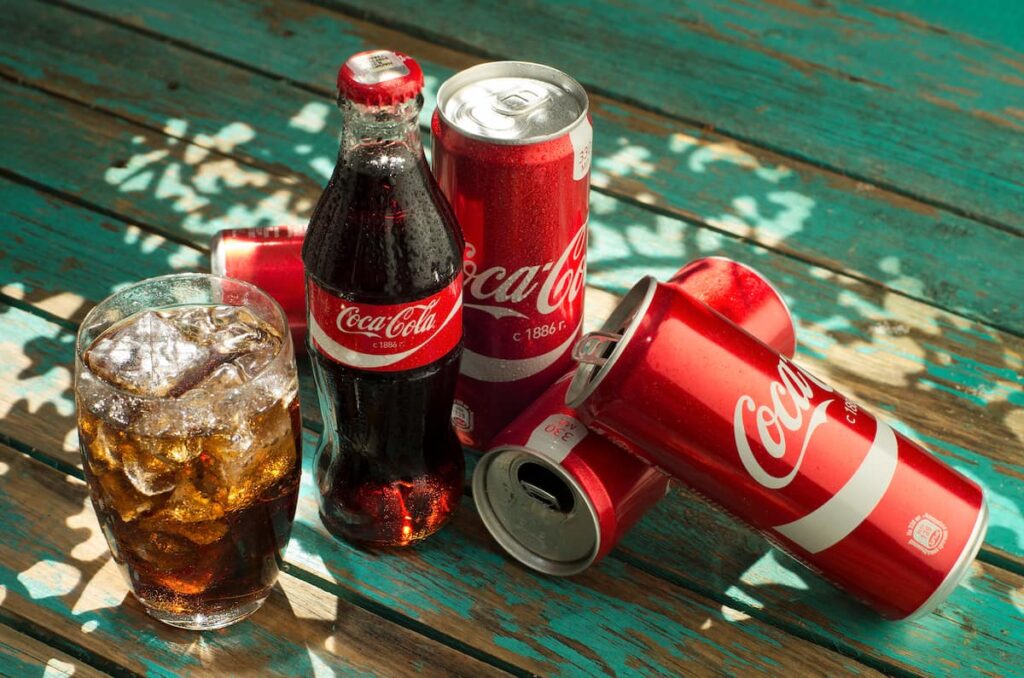
Coca-Cola remains one of the clearest examples of concentrated brand power in FMCG. It is more focused than PepsiCo in category terms, but that focus is part of the strength. It shows what happens when distribution, consistency and brand memory align at global scale. In FMCG, not every advantage comes from having more categories. Sometimes it comes from dominating one with extraordinary discipline.
Nestlé, again
Nestlé also belongs here because hot drinks and beverages are a major part of how its scale works in practice. Companies like this are useful to study precisely because FMCG category boundaries are often porous. The best operators are not simply food companies or beverage companies. They are portfolio companies that understand where repeat demand can be built and defended.
Which FMCG companies lead household and personal care?
Procter & Gamble
P&G is still one of the cleanest case studies in classic FMCG brand management. Its own brand portfolio spans fabric care, baby care, grooming, home care, hair care, oral care and skin and personal care. That range makes it one of the most useful businesses to look at if you want to understand how category management, consumer insight and repeat purchase fit together.
Unilever
Unilever sits slightly differently. It has major presence across household essentials, personal care and food, and it emphasizes both global scale and the breadth of its household-name brands. It is also a good example of a company reshaping its portfolio in response to how the market is changing, with a stronger visible push into wellbeing and beauty-adjacent areas.
Which FMCG companies stand out in beauty and premium consumer products?
L’Oréal
L’Oréal is the obvious standout here. The company describes itself as the world leader in beauty and emphasizes the breadth of its global brand portfolio across mass, luxury and specialist beauty. That makes it a strong example of how FMCG can move beyond basic utility into identity, aspiration and premiumization while still operating at very large scale.
Unilever
Unilever belongs in this section too because beauty is one of the areas where it has been sharpening focus. That matters strategically. Beauty and wellbeing tend to sit at the intersection of consumer loyalty, margin potential and lifestyle positioning, which is exactly why more consumer products companies are leaning into them.
Which are the best FMCG companies to work for?
“Best” depends on what you want to learn. P&G, Nestlé, Unilever, PepsiCo, Coca-Cola and L’Oréal are all strong targets for different reasons, but the logic is not identical. Some are better for broad category exposure, some for brand-building depth, some for operational scale and some for faster-moving consumer or premium categories.
For early-career professionals, large FMCG companies are often attractive because they offer rotational schemes, recognizable products and clearer organizational pathways.

You’ll also access a breadth of functions inside these businesses, from finance and product development to sales, marketing and food science, which is part of what makes the industry such a strong generalist training ground.
A useful way to think about it is this: the best FMCG company for you is usually the one whose category structure matches the kind of work you want to do. If you care most about consumer identity and premium branding, beauty may teach you faster. If you want commercial breadth and high-volume systems thinking, food, drinks or household goods may be better.
How to keep learning about the FMCG industry?
FMCG moves quickly, and the companies that lead it rely on insight. Consumer behavior helps shape everything from product design and pricing to supply chains and creative strategy. That is also why FMCG companies increasingly need professionals who can turn complexity into clarity.
They need people who can interpret consumer signals, understand behavior and turn research into decisions that influence whole categories.
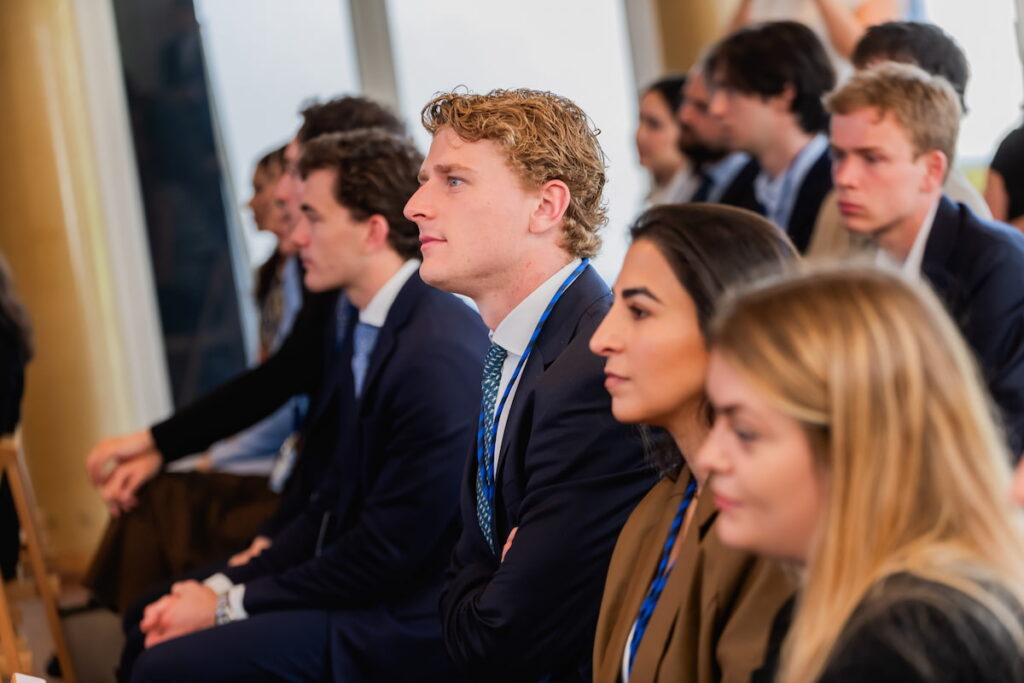
We built the Master in Market Research & Consumer Behavior for that kind of work. That means combining analytics, psychology, strategy and hands-on experience to prepare you for roles in FMCG insight, innovation and consumer analytics.
If you want to keep learning about the FMCG industry, the best next step is to study how consumers think, choose and behave. Follow the link below to find out more about the program.

Benjamin’s writing is featured in the LAMDA Verse and Prose Anthology Vol. 19, The Primer and Moonflake Press. Benjamin provided translation for “FalseStuff: La Muerte de las Musas”, winner of Best Theatre Show at the Max Awards 2024.
Benjamin was shortlisted for the Bristol Old Vic Open Sessions 2016 and the Alpine Fellowship Writing Prize 2023.