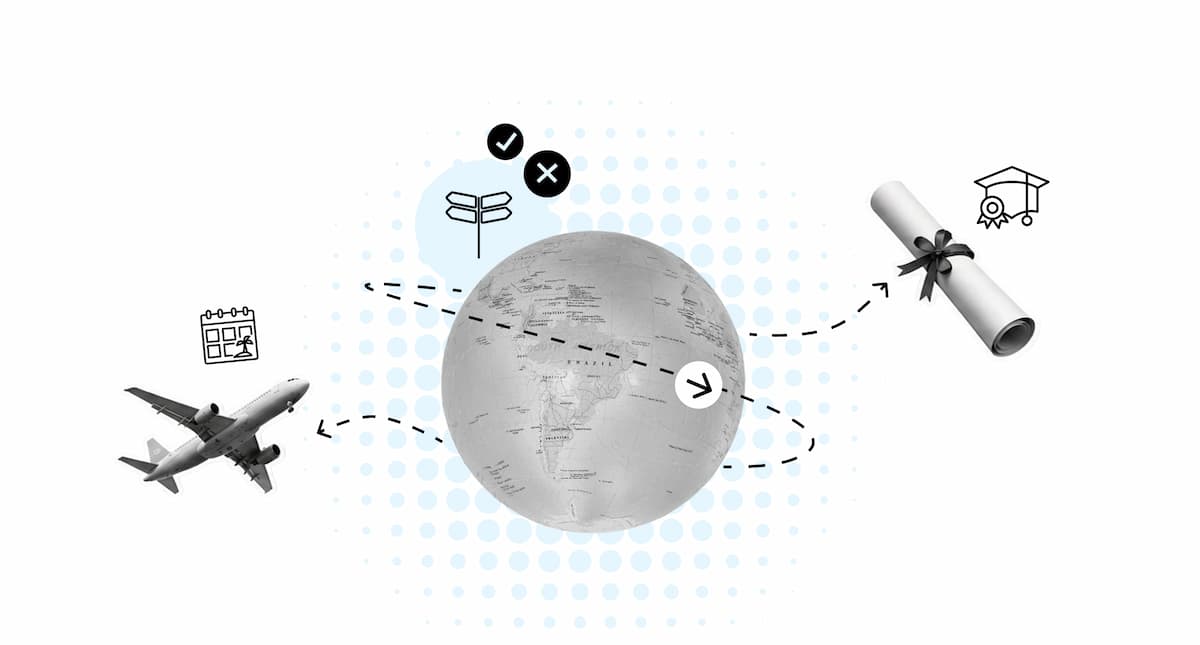
Sometimes, the most valuable thing you can do after graduating high school isn’t taking on a degree. It’s taking a year to build the self-awareness that makes everything that follows clearer.
There can be a lot of pressure on high school graduates to move directly into university, but an increasing number of students are pausing to ask whether they’re ready. For many, a gap year before university can be a smarter move.
Taking a gap year isn’t lazy, and it doesn’t mean you’ll be a step behind your peers. It can be one of the most impactful forms of pre-university planning, building self-awareness, adaptability and career clarity that no classroom can provide so completely in such a short window of time.
The pros: what a gap year can do for you
The case for taking a gap year is much more than finding yourself. Done right, it’s a period dedicated to your personal growth that will make you a stronger student when the time comes.
Career exploration
Choosing a career path when you’ve only just left school is a big ask. A gap year gives you time to experience the real world, shadow professionals, intern or travel. You’ll spend time in environments that either confirm or challenge what you think you want to do.
Real-world experiential learning
Experiential learning, the kind that happens through doing, not studying, builds problem-solving instincts and resilience that you’ll draw on throughout your studies and beyond. Whether it’s managing a budget abroad, navigating a new culture or experiencing the workplace, these experiences compound.
A global perspective
Travel and international experience develop a global perspective in a way that’s hard to replicate in a classroom. Students who have lived or worked abroad can bring more nuanced thinking to class, group projects and interviews.
Rest and recovery
Academic burnout is real. Students who push through exhaustion often struggle in their first year. A gap year can reset that, so you start university energized and genuinely motivated rather than running on fumes.
Emotional intelligence and independence
Self-reliance, adaptability and communicating across different cultures are the components of emotional intelligence that employers increasingly prioritize. A well-spent gap year builds all of them.
The cons: navigating the pitfalls
Taking a gap year isn’t a guaranteed win. The question of whether a gap year is a good idea depends on how much planning you put into it.
• Risk of losing academic momentum: A year away from structured learning can make the return feel steeper than expected.
• Financial cost: Without a plan, expenses add up fast and can limit your options for the year ahead.
• Feeling left behind as peers move ahead: Watching friends settle into campus can trigger doubt, even when taking a gap year is the right thing for you.
• Drift without structure or a clear goal: Reaching the end of a gap year with nothing to show for it can be a bigger regret than not taking one at all.
Gap years work when they’re well designed. The cons above aren’t inevitable, but they are the more likely outcomes of an unstructured year with no clear purpose.
How to plan a gap year: a step-by-step blueprint
The difference between a gap year that helps you grow and one that holds you back comes down to the planning. Here’s a framework to plan your gap year.
Define your intentions
First things first: What are you trying to get out of the year? Career exploration, language skills, financial independence and mental recovery are all valid answers, and whatever you choose will shape everything that follows.
Think in phases
If you’re looking for gap year ideas, taking a modular approach like the one below gives you a structure to build from. The modular blocks also help prevent goal drift, keep momentum up and give you something to look forward to throughout the year. Here’s an example:
• Months 1–3: Work and save, developing professional habits and the funds to make what comes next possible.
• Months 4–6: Pursue something that excites you, such as learning a new language, volunteering or a structured internship.
• Months 7–9: Travel or explore a specific interest with the savings you’ve built.
• Months 10–12: Recover, reflect and prepare for what comes next.
Budget properly
Financial literacy is one of the most underrated benefits of taking a gap year, but only if you take it seriously. Set a monthly budget, track it and build a contingency fund for the unexpected.
Build something you can talk about
Universities and employers want to hear about what you did with your gap year. Aim for at least one or two experiences that you can speak about clearly, explaining how they supported your professional and personal growth. This could be an internship, a course or a volunteer project.
Stay connected to your academic goals
Read around what you think you want to study at university and follow the news in the field. It keeps the intellectual side of your brain in gear and it will give you clarity about whether you can pursue the field long-term, away from the classroom. The gap year students who thrive at university are the ones who never fully switch off from what comes next.
Is a gap year a good idea for you?
For students who plan it well, a gap year is one of the best investments they make in themselves. It equips you with an understanding of your goals and what you enjoy, which makes choosing a degree and succeeding in it significantly easier. For students who drift, it can feel like lost time. The difference is intention.
Each individual’s timeline is unique. For some, the right step is university immediately after high school. For others, a gap year offers the chance to explore their interests and learn more about themselves.
When you’re ready to take the next step, IE University’s admissions process and programs are built exactly around this kind of profile: curious, globally minded and connected to the world around them.
The admissions committee actively looks for international exposure, extracurricular depth and investment in your own personal development. A purposeful gap year can make your application even stronger, and when you’re ready, there’s a program built around where you’re heading.

Scott is editor-in-chief of Uncover IE and Senior Content Manager at IE University. He holds degrees in English Literature and Spanish from Saint Louis University and has spent more than a decade working in content strategy, editorial leadership, journalism and multilingual communications.