

The international order is under strain precisely when it is most needed. States are turning inward, driven by resurgent nationalism and populist scepticism of multilateral institutions, yet the world they inhabit remains structurally globalised in ways that make such inward turns deeply consequential. One and a half billion international tourist arrivals are recorded annually. A pathogen endemic in a remote valley in Patagonia is, at most, one long-haul flight from Madrid, London, or Tokyo. The spring of 2026 demonstrated this with painful precision.
When a Dutch couple on a bird-watching expedition across Argentina, Chile, and Uruguay boarded the cruise ship MV Hondius in Ushuaia on 1 April, they were carrying, unknowingly, the Andes virus, the only strain of Hantavirus known to transmit between humans. Three people died before the ship docked in Tenerife to carry out medical evacuations.
What activated the international response was not diplomatic courtesy but law. In its landmark 1949 Corfu Channel judgment, the International Court of Justice held that states are bound by “elementary considerations of humanity” as a matter of customary international law, independently of any specific treaty obligation, meaning that a vessel carrying persons in mortal danger generates obligations on every state with the capacity to act, regardless of the flag flown, the nationality of those aboard, or the domestic political cost of assistance. Those obligations are further reinforced by the right to life under Article 6 of the International Covenant on Civil and Political Rights, which imposes positive duties on states capable of preventing foreseeable loss of life.
Translating those obligations into an operational response, however, requires institutional infrastructure. That is where the WHO becomes indispensable. Operating primarily through the International Health Regulations (IHR), the regulation legally binds 197 states parties to detect, assess, report, and respond to public health risk and emergencies of international concern, including pandemic ones, creating a surveillance architecture dependent upon reciprocal information-sharing. When major contributors withdraw, two consequences follow. First, financial: the United States’ departure as historically the largest single donor has created funding gaps that disproportionately affect surveillance in precisely those settings where novel pathogens most frequently emerge. Second, there is the erosion of legal accountability. The IHR’s compliance mechanisms function only within a political ecology of shared commitment. As major states signal that the framework is optional, others face diminished incentives to report transparently. The result is not merely moral hazard; it is structural degradation of the early-warning system upon which the entire edifice rests.
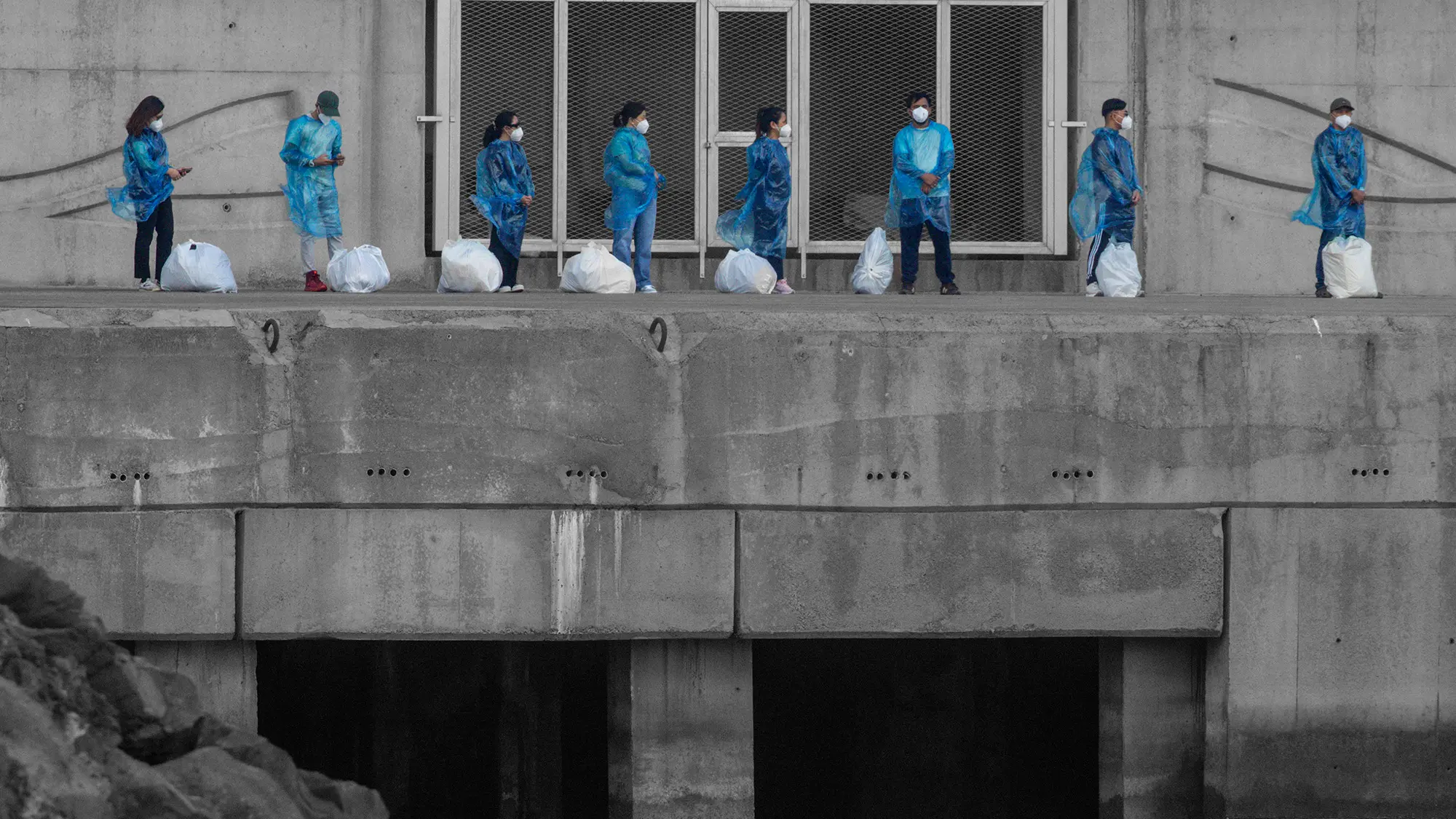
When the Hondius found itself stranded off Cape Verde, the WHO and the EU formally requested Spain to manage the evacuation. This hantavirus outbreak directly demonstrates the application of IHR core capacities at points of entry, particularly in managing an international public health emergency involving cross-border travel. The Spanish Ministry of Health approved docking at Tenerife, explicitly invoking international law and humanitarian principles. The Canary Islands’ regional president immediately declared he “cannot allow” the ship to enter, a position that was politically intelligible but legally untenable. The duty of assistance codified in UNCLOS Article 98 is a norm of customary international law that admits of no unilateral derogation by domestic or regional authority, precisely because the alternative, a world in which states may weigh the political cost of rescue against the lives at stake, is one the international legal order has explicitly rejected. The central government’s override of its regional authority was therefore not merely politically defensible; it was legally compelled. The operation that followed on 10 May, with passengers of 19 nationalities screened and dispersed by military aircraft to their respective countries, functioned because of WHO coordination infrastructure. Seventeen American citizens were evacuated to Nebraska, benefiting directly from a system their own government was simultaneously defunding.
The Hondius case throws into sharp relief a broader and largely unresolved problem: international law governs the sea through a patchwork of instruments that remain insufficient for the crises it routinely faces. UNCLOS Article 98 and SOLAS Chapter V impose on every ship master, and on coastal states with relevant capacity, an obligation to render assistance to persons in distress at sea, regardless of nationality or legal status. Yet the same framework fails conspicuously in other contexts. Migrants crossing the Mediterranean are in law entitled to exactly the same duty of rescue as the Hondius passengers, yet rescue assets have been withdrawn, NGO vessels detained for carrying out their legal duty, and informal returns to Libya continue in open defiance of the principle of non-refoulement. The law is identical; its application is not. What differs is not the legal text but the political will to enforce it, and the visibility of those in distress.
Another population suffering from this lack of application are the thousands of commercial seafarers, crew members from the Philippines, India, and Egypt, remain stranded aboard vessels in the Persian Gulf, unable to rotate or repatriate as a consequence of regional conflict. The Maritime Labour Convention 2006 imposes clear obligations on flag and port states regarding welfare and repatriation, but was designed for commercial failure, not geopolitical paralysis. For these workers, no instrument provides adequate protection in precisely the circumstances in which they most need it.
The reason states do not respect international law is mainly structural, stemming from the lack of a centralized enforcement authority. There is no global police force, no compulsory court, and no executive body with the power to sanction non-compliant states. The International Court of Justice can only hear cases where both parties have consented to its jurisdiction, and even where it rules, compliance remains voluntary. That vulnerability is not theoretical. In March 2022, the ICJ ordered Russia to immediately suspend its military operations in Ukraine. Russia ignored the ruling entirely, and no legal mechanism existed to compel otherwise. The UN Security Council, the closest instrument to a world-enforcement authority, was paralyzed by Russia’s veto. This episode strikingly showed that the rules-based international order depends less on law than on the political will of powerful states to observe it. That dependence has always been a weakness; it has become a crisis at a moment when several of those states are actively contesting the multilateral frameworks they once helped construct. In this environment, the erosion of WHO funding, the pushback of migrants at sea, and the abandonment of seafarers in the Gulf are not isolated failures. They are symptoms of the same underlying condition.
The reform of the law will not need a full reconstruction of the international legal order, but it does require moving from voluntary compliance towards meaningful accountability. Four reforms could begin to make the necessary transformation: expanding the compulsory jurisdiction of the ICJ; strengthening the IHR with an independent review mechanism capable of attributing responsibility for surveillance failures; deploying the UN Human Rights Council’s Universal Periodic Review to revise any pattern of conduct that reduces international legal obligations to dead letter; and extending standing before international tribunals to individuals and non-governmental organizations. Sadly, the alternative to reform is a legal order impotent in its enforcement.
The Hondius episode, taken together with the plight of Mediterranean migrants and stranded Gulf seafarers, reveals a single underlying truth: the international legal architecture is sophisticated enough to articulate obligations rooted in the humanity principle, but fragile enough to collapse when political will is withdrawn. The WHO needs reform, but reform is not withdrawal. The sea has always been the space where the gap between legal aspiration and political reality is most nakedly visible. Closing that gap requires not less multilateralism, but the courage to demand more of it.
© IE Insights.