
Choosing where to study abroad in Spain is about far more than choosing a university. The city you live in shapes your networks, your safety, your day-to-day wellbeing, and the opportunities you can access once your degree begins to open doors. Spain offers several excellent destinations for international students, but when you look closely at the full picture – stability, safety, community, and career access – Madrid consistently takes top spot for the best places to study abroad in Spain.
Below is a clear, data-backed guide to the major study-abroad cities in Spain and what international students should understand before deciding where to build their next chapter.
Why is Madrid considered the top destination for studying abroad in Spain?
Madrid combines academic strength with a lifestyle that simply works for international students. It has scale, internationalism, affordability in most neighborhoods, and one of Europe’s most reliable transport systems. But what sets it apart most clearly is safety. Independent safety indices place Madrid well below other large European cities in crime, particularly petty theft.
The capital also offers an unusually strong professional ecosystem. Major employers across consulting, tech, finance, energy, consumer goods and public policy operate here, which creates an environment rich in internships, part-time roles and graduate opportunities.
For business, analytics, tech and creative students, this concentration of industry becomes a powerful extension of the classroom.

Madrid’s overall stability is another advantage. Spain’s violent-crime rates remain far below the EU average, and Madrid’s infrastructure, services and social environment reflect that grounded, predictable rhythm. For international students moving to a new country, this sense of reliability matters more than they expect. It also offers excellent cost of living in comparison with other capital cities.
Barcelona: A beautiful city with a different set of realities
Barcelona is one of the world’s most recognizable cities for day tourism – artistic, Mediterranean, lively and instantly captivating. Yet its global visibility brings a particular challenge: a high volume of petty crime concentrated in tourist-heavy areas. Data from 2025 shows Barcelona recording around 8,563 offences per 100,000 residents in the first half of the year. Catalan outlets have also noted that theft levels are roughly 50% higher in Barcelona than in the capital.
Most incidents are non-violent, but they influence the rhythm of daily life.
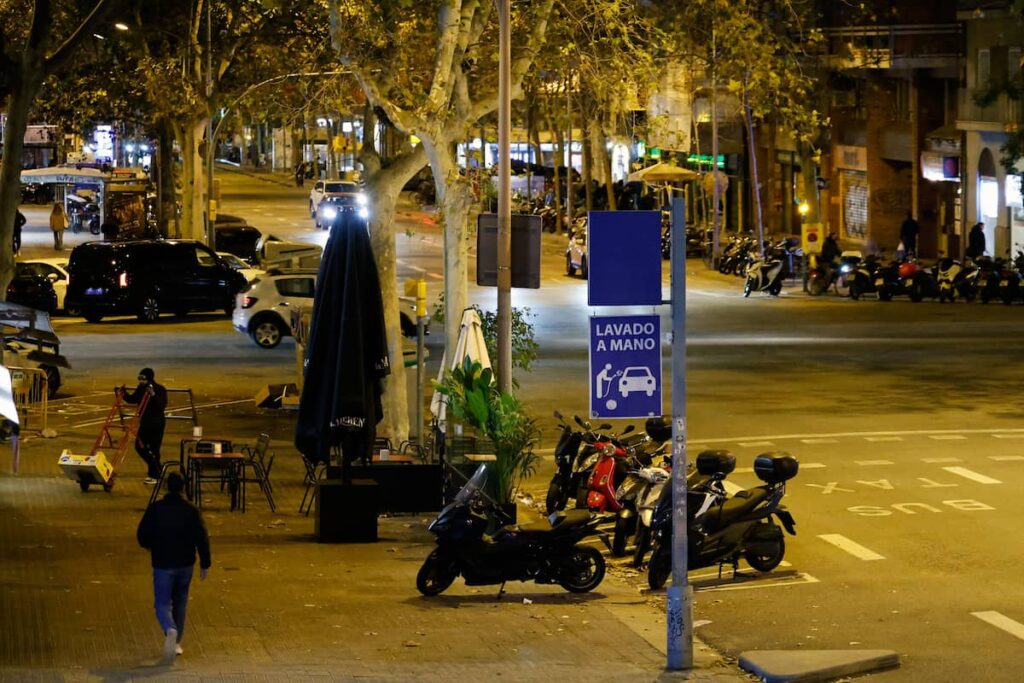
For international students, this means living with a degree of vigilance. You get the beaches, nightlife and parties, but you also navigate crowded metro lines where theft is common and adapt to habits like keeping your bag zipped and your phone stored away. It doesn’t make Barcelona unsafe in the sense that students need to fear harm. It simply means the city demands more attention and more caution, which isn’t always ideal when you’re balancing classes, projects, internships and a new social life.
An in-depth study from the turn of the decade points out how Barcelona’s economy is also being dwarfed by that of Madrid, positioning students less favorably as they enter the world of work. Add that to political divide and low levels of trust, and you should take your time in weighing up the benefits of fun against professional trajectory.
Valencia: A calm Mediterranean balance
Valencia offers a very different atmosphere. It’s Mediterranean and sunny, but more relaxed than Barcelona and more contained than Madrid. Crime levels tend to sit notably lower, and the city’s size makes it easy to navigate. It has a respectable and growing innovation ecosystem, with tech parks, research clusters and design-driven industries, but without the congestion or density of larger cities. For students who want a peaceful backdrop with good infrastructure and cultural richness, Valencia often becomes an appealing compromise.
Seville: Warm, safe and community-focused
Seville is known for its cultural depth, warm climate and welcoming social environment. It offers some of the lowest crime levels among major Spanish cities and a lifestyle built on community rhythms rather than metropolitan speed. Students who want immersion in Spanish culture and a slower pace of life tend to thrive here. While it doesn’t match Madrid’s corporate concentration, its quality of life and sense of belonging are significant advantages for many.
Comparing the Cities: Safety, Lifestyle and Long-Term Prospects
Is Madrid safe for international students and young professionals?
Yes. Madrid ranks among the safest large capitals in Europe, with consistently positive scores for both daytime and nighttime safety. The city centre has a steady police presence, metro stations are well monitored, and most residential neighborhoods feel calm even late into the evening. For students, this sense of ease becomes part of the daily routine, allowing them to focus more on academic and professional goals in one of the best places to study abroad in Spain.
Is Barcelona safe to visit or live in as an international student?
Barcelona is safe enough for most residents and visitors, but it does have one of Europe’s highest rates of petty theft. Students who choose the city simply need to adopt more cautious habits. The issue isn’t personal danger; it’s the cumulative stress of avoiding pickpocketing and dealing with crowded, high-tourism areas. Some students enjoy the energy enough to accept these trade-offs. Others prefer not to.
How important is city safety when choosing a study-abroad destination?
Safety shapes everything from housing choices to where you study late, how you commute, and how freely you socialize. For many students, especially those moving abroad for the first time, personal security is one of the most important – yet overlooked – factors in academic performance and well-being. The best places to study abroad in Spain feel stable and navigable. And that allows you to focus on building a future rather than managing daily risks.
Rankings rarely capture the lived reality of being a student in a new city. What matters is how a place supports you over the long term. Students should first consider the environment they will inhabit every day: the reliability of public transport, the ease of moving around safely, the affordability of housing, and how welcoming the local culture feels.
These are the foundations that determine whether a city helps you thrive or leaves you navigating constant friction.
It’s also worth examining the economic ecosystem around you. A city with strong corporate presence, internship availability and professional networks becomes an extension of your education. Madrid exemplifies this dynamic: its industries absorb thousands of interns and graduates every year, giving students a head start in competitive fields like consulting, analytics, tech and finance. In contrast, cities with slower or narrower economies may offer charm but fewer career pathways.
Finally, students should think about sustainability in the broad sense – how the rhythm of the city aligns with their goals. Some people flourish in high-energy environments; others need a calmer structure to focus. Whether you prefer Madrid’s cosmopolitan flow, Valencia’s softness or Seville’s warmth, the right match will support both your academic experience and your personal growth.
Choose the city that supports your future
Madrid stands out not because it is loud or showy, but because it quietly delivers what international students need most: safety, stability, opportunity and an international community that feels easy to join. Barcelona remains one of Europe’s most iconic cities, but its higher crime levels and tourism-driven pace make it less ideal for students who want peace of mind while studying. Valencia and Seville offer excellent alternatives with strong cultural value and lower daily stress.
The best place to study abroad in Spain is the one that lets you grow without unnecessary noise. For most students, Madrid offers exactly that balance.

Benjamin’s writing is featured in the LAMDA Verse and Prose Anthology Vol. 19, The Primer and Moonflake Press. Benjamin provided translation for “FalseStuff: La Muerte de las Musas”, winner of Best Theatre Show at the Max Awards 2024.
Benjamin was shortlisted for the Bristol Old Vic Open Sessions 2016 and the Alpine Fellowship Writing Prize 2023.