Most students arrive at IE University knowing that the network matters. Fewer arrive knowing how to use it. This gap is where a lot of value gets left behind, particularly in the first semester when everything is new. It’s tempting to focus entirely on coursework, but don’t underestimate the power of networking at IE University.
Networking at a university is not a separate activity from the rest of your experience. It is woven into how the programs are structured — in cohort learning, in group projects, in the clubs you join and the events you attend. The students who build the strongest networks during their time at IE University are not necessarily the most extroverted. Those who show up consistently and treat every interaction as a genuine relationship are the ones who benefit.
Start with your cohort
The most underestimated network you will build at IE University is in the room with you on the first day. Your cohort is a group of professionals from different industries, countries and career stages who are sharing your experience. This will create the foundation for relationships that last well beyond graduation.
The practical advice here is simple: learn what your peers do and where they come from. The classmate who works in venture capital, the one with ten years in healthcare and the one pivoting out of consulting will all be relevant to your career at different points. Getting to know them as people first makes those connections far more durable.
Use the clubs — and use them early
IE University has over 150 student clubs covering academic interests, industries, nationalities, hobbies and causes, with around 1,500 events running across the academic year. The IE clubs platform lists current events and organizations across the university.
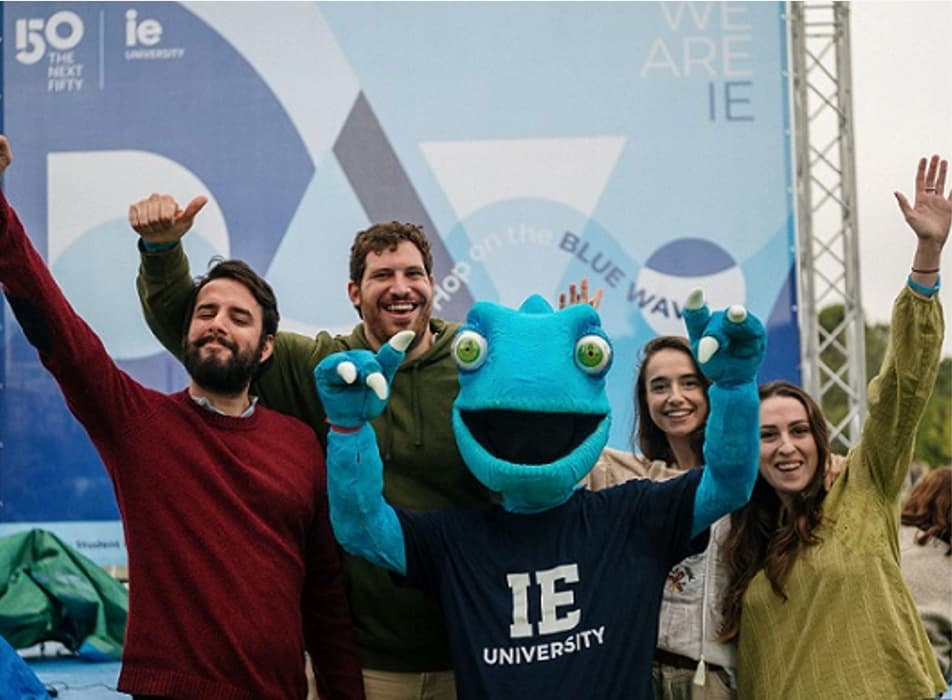
Clubs matter for networking because they give you a recurring reason to interact with people outside your immediate program cohort. A finance student who joins the Entrepreneurship Club will meet people from law, tech and design whom they would otherwise never encounter. That cross-program exposure reflects how organizations actually work — and the professional relationships that come from it are more varied and durable than those formed purely within a single program.
Pick one or two clubs that genuinely interest you rather than trying to join everything. Consistent presence in a smaller number of spaces will get you further than sporadic appearances across many.
Connect with faculty beyond the classroom
Faculty members at IE University are practitioners as well as academics. Many are active in industry, advise companies or run their own research. Northeastern University’s graduate networking guide notes that faculty are among the most underused networking resources available to graduate students. Yet they are connected to former students, industry professionals and institutional networks that are not visible from the outside.

Attending office hours, asking a follow-up question after class or engaging with a professor’s area of research are all low-stakes ways to build a relationship. Most faculty members are interested in students who take their work seriously, and a recommendation or an introduction from a professor carries more weight than most students realize.
Engage with the alumni network from day one
The IE Alumni Network includes over 75,000 graduates across 165 countries, organized into more than 80 alumni clubs by region and sector. As a current student, you have access to this network before you graduate — and most alumni are willing to speak with current students who reach out with a specific, thoughtful question.

The key is specificity. A message that says “I would love to hear about your career” is easy to ignore. A message that says “I am a first-year student in the Master in Finance interested in sustainable investment roles in London — I noticed you made a similar transition after graduating and would value fifteen minutes of your perspective” is much harder to pass up.
The IE Alumni platform and LinkedIn are both effective starting points for identifying relevant alumni. The annual Global Alumni Weekend, which brings over 1,000 alumni back to Madrid, is one of the highest-density networking opportunities available to current students, is worth attending if the timing aligns with your program.
Attend events outside your comfort zone
IE University hosts a consistent calendar of guest speakers, industry panels, career forums and community events across the academic year. The student experience platform lists ongoing opportunities.
The events that tend to be most valuable are not always the ones most directly related to your field. A technology panel will attract technology students; an event on the future of healthcare might attract a more interesting cross-section of industries and give you more room to stand out and have genuine conversations.
SHRM’s networking guidance for students emphasizes building a diverse network — contacts who are different from you in background, industry and career stage can connect you to clusters of people you would not otherwise reach. IE’s international environment makes this easier than almost anywhere else.
Follow up — and keep following up
The most common networking failure at any business school is not a lack of connections made. It is a failure to maintain them. A conversation at an event, a coffee with an alum, a group project with a classmate from another program — all of these are only as valuable as the relationship you build afterward.
A brief follow-up message after a conversation, sharing an article relevant to something you discussed, or checking in six months later to share an update on your own progress — these are the habits that convert introductions into relationships. The connections you leave with will reflect how consistently you invested in networking at IE University while you were there.
Scott is editor-in-chief of Uncover IE and Senior Content Manager at IE University. He holds degrees in English Literature and Spanish from Saint Louis University and has spent more than a decade working in content strategy, editorial leadership, journalism and multilingual communications.