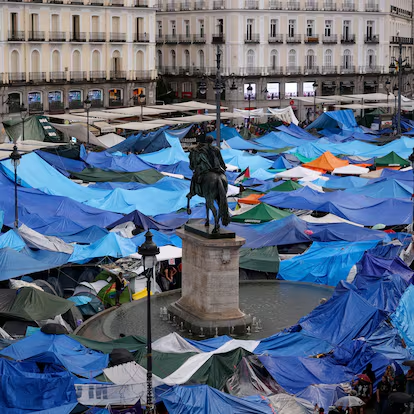
On September 26, 2026, a protest against the eviction of Maricarmen Abascal, an 87-year-old resident of Madrid’s Retiro district, turned into something larger. Demonstrators pitched tents in the Puerta del Sol and stayed put. The camp lasted 35 days and became a national symbol of the housing crisis. Police cleared the square on November 3, removing 334 people overnight. Organizers moved the protest into Madrid’s neighborhoods and toward a general strike over housing solutions and the cost of living.
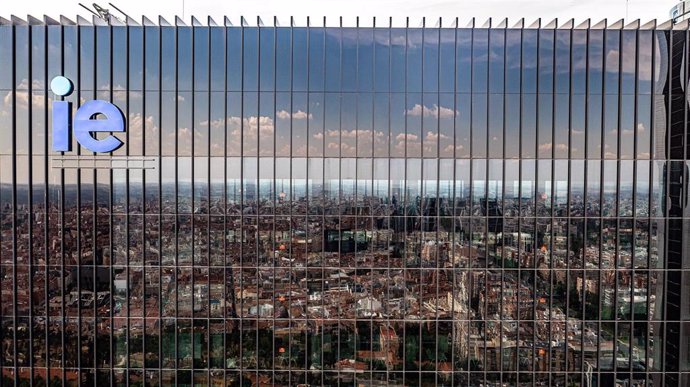
Two days after the camp was cleared, the Executive Director of the United Nations Human Settlements Programme for UN-Habitat, Anacláudia Rossbach, visited IE University and spoke to students about housing for all. The session’s moderator, Borja Santos, Vice Dean of IE School of Politics, Economics & Global Affairs, opened by pointing to the images from Sol. Her response was clear: what Madrid saw is part of a global crisis. Solutions will have to come from policy, from the way we build and from the generation most affected by it.
A global crisis, not just a Spanish one
The basic problem is simple to state: house prices have been rising faster than incomes. A general guideline states that no more than 30% of income should go on rent. However, for many people, that line has long been crossed. Reports show that housing prices in Europe have risen by around 60% since 2015 and that only 14.5% of people in Spain under 30 live independently. Eurostat puts the average age at which young Spaniards leave their parents’ home at 30.2, against 26.3 across the EU.
In much of the world, the picture is starker still. Rossbach explained that in many countries in the Global South, formal housing markets have historically been accessible to only 5% to 15% of households. Most people have had no option but to build for themselves, often informally. The result, she said, is that around one billion people now live in informal settlements.
The causes are shared. Land, she noted, is the most expensive input in housing. Its price has climbed fastest in large global cities like Madrid. Inflation since the pandemic and the effects of conflict in the Middle East have increased the cost of building materials. Where those pressures meet, housing slips out of reach.
Three levers policy can pull
In the political debate, housing is often reduced to a single choice: build more or regulate more. Asked which approach works, Rossbach’s answer was “ideally a mix,” and the right mix depends on the place. Her answers point to three levers governments can use.
Land. Because land drives so much of the cost, policy around it matters most. One tool is inclusionary zoning, which requires a share of new homes in a development to be affordable. Rossbach described a case where a mayor agreed to release land for development on condition that half of the new housing was affordable. Another is densification: allowing more homes on the same land, especially near public transport, a strategy she noted cities in places such as Norway are pursuing.
Money. “There is no housing market system in the world that’s not subsidized,” Rossbach said. In some countries, support is visible as public housing or grants; in others, it’s hidden in tax breaks. The real question, in her view, isn’t whether to subsidize but whether the support reaches those who need it most. Subsidies that aren’t targeted, she warned, waste public money.
Regulation. Rent control is one of the most debated tools. Rossbach pointed out that it’s far from new, with cities such as New York using it for decades. In her view, it can ease pressure in the short term, but supply and demand eventually adjust. On large institutional investors buying residential property, she drew a clear line: private investment is needed, until it starts driving prices to the point where people are excluded from housing. Short-term tourist rentals, she argued, depend on context. In emptying towns, they can bring life back; in overcrowded city centers, they can push residents out. Even within one city, different neighborhoods may need different rules.
The greenest home might already exist
Housing isn’t only a policy question. It’s also a question of what we build, where and how. The answer can look different depending on where you stand.
In Africa and Southeast Asia, where most of the world’s urban growth will occur, Rossbach made it clear that new homes must be built. Europe is different. It already has a dense stock of buildings, and many of them are empty or underused, from city apartments to whole towns in countries such as Spain and Italy. Every new building, she noted, means new infrastructure and new emissions. Her advice for places like Europe: build less, build sustainably and make the most of what already exists.

The way cities grow matters too. UN-Habitat’s work on the Sustainable Development Goal for cities has found that cities are growing more in territory than in population, spreading outward faster than they fill up. That sprawl puts pressure on farmland, natural areas and water supplies. For this reason, it can also make cities more vulnerable to disasters such as flooding.
The answer, she argued, lies in standards. Building codes need to require greener materials and lower energy use, and they need to be enforced. Some countries are already moving in that direction; she pointed to Costa Rica’s work on greener building codes, and to locally produced building materials that often aren’t yet recognized in official standards. UN-Habitat is now working with member states on shared standards for climate-resilient housing, meaning homes built to withstand floods, landslides and other disasters.
So, what can young people actually do?
Housing is an intergenerational problem, but it lands hardest on the young. Approximately 47-50% of the world’s population is under 30, and they’re the ones who will live with today’s decisions longest.
Rossbach’s starting point was that the future won’t look like the past. “Future generations will no longer live like past generations,” she said. That makes young people’s views on how cities should work essential, not optional. And this may lead young people to adapt to new ways of living, as they always have when cities change.
Her practical advice for getting involved:
- Start where you live. Engagement can begin in your own building or neighborhood, with the people who share your housing challenges.
- Take part in how your city is planned. Local governments decide on land, zoning and housing programs, and many run public consultations that rarely hear from young people.
- Use the international channels. UN-Habitat has a youth advisory board, and its World Urban Forum, next held in Mexico, includes a dedicated youth segment.
- Bring your expectations to the table. Policymakers need to hear what young people want from their homes and cities, not just what they can afford.
The camp in Puerta del Sol showed how strongly people feel about housing. The harder work comes after the tents are gone. We must turn that energy into policies, buildings and cities that work for the people who will live in them the longest.
These questions sit where politics, economics, global affairs and architecture and design meet. If they interest you, explore the politics behind IE School of Politics, Economics & Global Affairs or how to create built environments that make an impact at IE School of Architecture & Design.

Scott is editor-in-chief of Uncover IE and Senior Content Manager at IE University. He holds degrees in English Literature and Spanish from Saint Louis University and has spent more than a decade working in content strategy, editorial leadership, journalism and multilingual communications.