- Home
- News And Events
- News
- The Madrid Scale Proposes A Use-based Approach To Neurotechnology Governance
The Madrid Scale Proposes a Use-Based Approach to Neurotechnology Governance

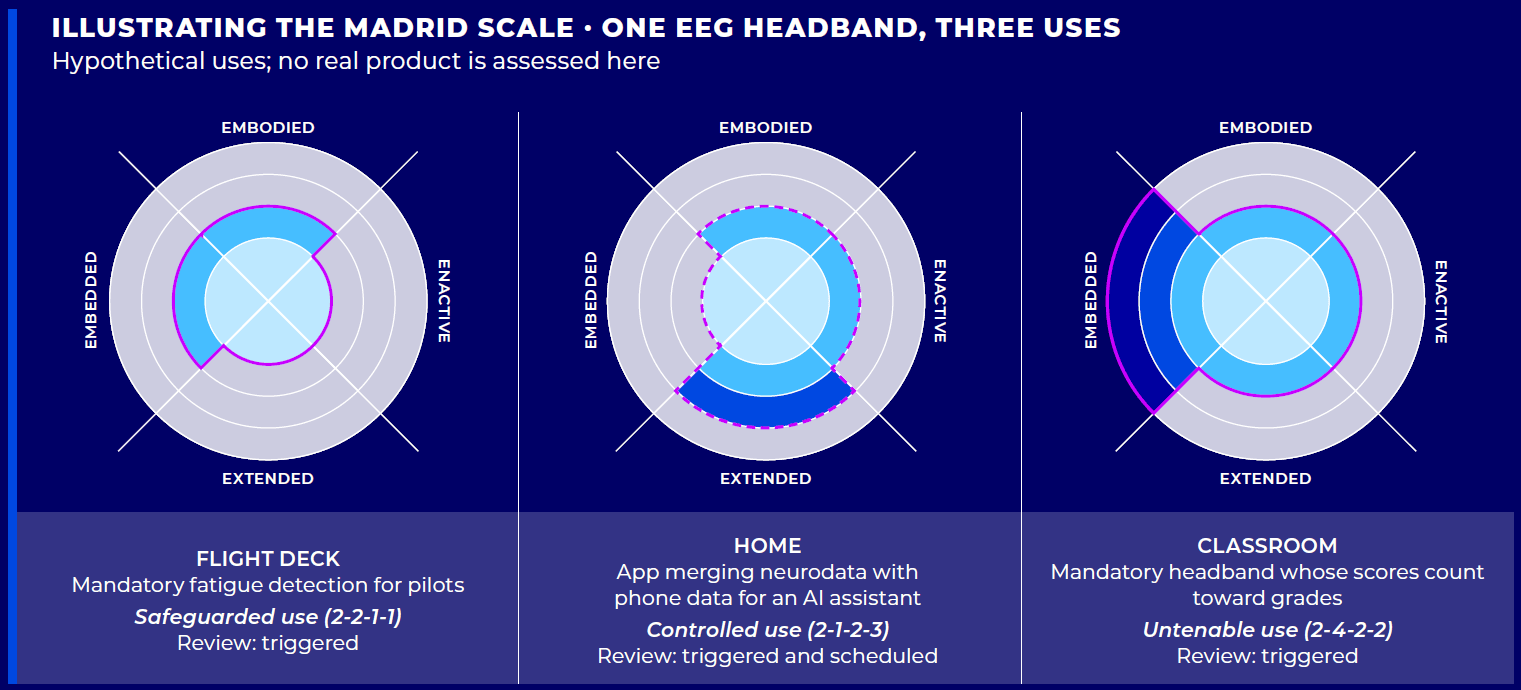
The same neurotechnology can raise very different governance questions depending on how it is used. Consider one hypothetical electroencephalography (EEG) headband. It could help detect pilot fatigue, feed a home AI assistant, or produce scores that affect students’ grades. The device may be similar, but each use calls for a different response.
This is the starting point of José Manuel Muñoz’s paper, “The Madrid Scale for Neurotechnology Governance: A Use-Based Calibration of Risk and Opportunity in Context.”
The paper proposes assessing each use of a neurotechnology according to its purpose, setting, the people affected, and the data systems to which it connects. The Madrid Scale examines each use through four dimensions:
Embodied: What can neural signals reveal about a person, either alone or combined with other bodily data such as heart rate, gaze, or voice?
Embedded: Where is the technology used, by whom, on whom, and for what purpose? This dimension considers how the setting and people’s ability to refuse can change what is at stake.
Enactive: How do the person and the system change through continued use? Benefits and risks may emerge after deployment as people adapt to the technology and the technology adapts to them.
Extended: What other devices, data sources, and AI systems does the use connect to? This dimension follows where data and inferences go and what feedback returns to the person.
Each dimension also considers consent, accountability, and reversibility: whether people can genuinely refuse, who is responsible for the use, and whether harm can be undone.
"The same device can pose very different risks depending on how, where and by whom it is used. The Madrid Scale helps govern the use, not the tool. "
The framework sets out four governance responses: applying existing rules, adding safeguards, conducting controlled trials while gathering evidence, or advising against a use in its current form. The highest level reached in any of the four dimensions determines the overall classification.
To illustrate the approach, the paper considers three hypothetical uses of the same EEG headband: detecting pilot fatigue, combining neural and phone data in a home AI application, and generating mandatory scores that affect students’ grades. These examples do not assess any real product.

This publication is the third thematic paper of The Neurotechnology Shift, a research initiative by the Center for the Governance of Change at IE University, developed in collaboration with Fundación Tatiana.