- Home
- News & Events
- News
- The Global Education Conference 2026, Organized By Ie University And The World Bank Group, Analyzes The Impact Of Ai On Higher Education And The Future Of Work
The Global Education Conference 2026, organized by IE University and the World Bank Group, analyzes the impact of AI on higher education and the future of work

Universities and the private sector must collaborate to equip students with the skills that the jobs of tomorrow will require.
IE University, together with the World Bank Group, organized the Global Education Conference 2026, an international forum that brought together more than 400 experts to analyze how artificial intelligence is transforming higher education, talent development and the labor market.
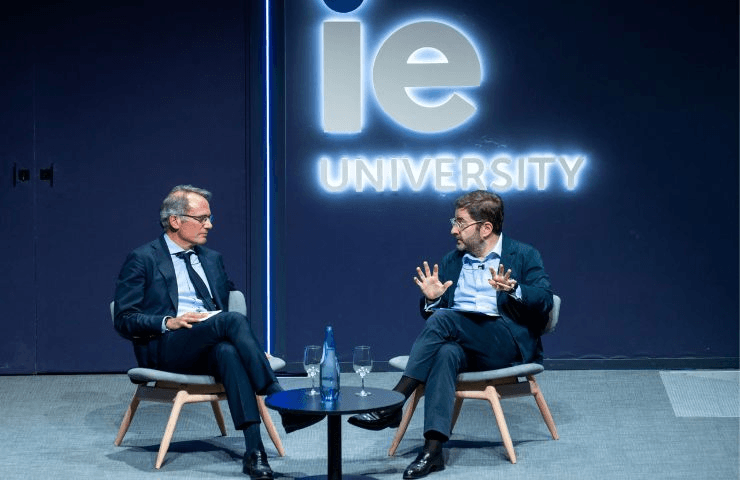
The IE University campuses in Madrid and Segovia hosted the Global Education Conference 2026 on June 17th and 18th. This year’s motto was "Building Skills for Tomorrow's Jobs." The conference brought together more than 400 international experts to discuss the role of universities and talent development in a world transformed by AI.
Held by the International Finance Corporation (IFC), a member of the World Bank Group, in collaboration with IE University, the meeting included representatives from the academic, business and institutional worlds, who contributed their unique perspectives on the future of work.
A recurring theme in the debates was the growing need to reduce the gap between the skills taught in higher education and those demanded by the market. Mamta Murthi, vice president of people at the World Bank Group, highlighted the private sector's responsibility in shaping these skills and said she was proud to collaborate with IE University to "bring partners together around solutions that expand opportunities and create a more promising future for young people."
Indeed, one of the conclusions of the meeting was the need to strengthen collaboration between universities and companies to align training with the demands of employers, promote new career paths and foster greater employability.
During the different sessions, the importance of continuous learning as a response to a constantly evolving work environment was also highlighted. Concepts such as upskilling and reskilling featured prominently in the discussions, along with the need to develop technical skills without losing sight of competencies such as critical thinking, creativity, adaptability and teamwork.
Juan José Güemes, vice president of strategy and president of the Center for Entrepreneurship & Innovation at IE University, argued that artificial intelligence will not replace human talent, but will make skills such as judgment, creativity and entrepreneurial spirit even more valuable. Along the same lines, he stressed that educational institutions must prepare students for professional opportunities that do not yet exist.
The program also included a conversation between Manuel Muñiz, Rector of IE University, and Alfonso García Mora, IFC regional vice president for Latin America and the Caribbean, on the impact of economic, technological and geopolitical changes on education and employment. Both agreed that universities play a key role in helping people understand and face the transformations that will mark the coming decades.
Through initiatives like this, IE University continues to strengthen its role as a platform for international dialogue on the key challenges that will define the future of higher education, talent development and employment.