- Home
- Alumni News
- Inside The Energy Transition: Five Ie Alumni Navigating A Changing Industry
Inside the Energy Transition: Five IE Alumni Navigating a Changing Industry

Five IE alumni offer an inside look at the forces transforming the global energy landscape.
What does an industry do when it has to rebuild itself without ever switching off?
This year, the energy sector has had to answer that question while managing its most severe supply shock in half a century. In February 2026, the closure of the Strait of Hormuz led to global oil supply falling by 10 million barrels a day within weeks — the largest disruption in the history of the oil market. Supply has only partly recovered since, with the U.S. Energy Information Administration (IEA) not expecting Middle East production to return to pre-conflict levels until early 2027.
Even so, investment in renewables, grids, storage and electrification keeps accelerating despite the disruption. The IEA expects global energy investment to reach around $3.4 trillion in 2026, with roughly twice as much capital flowing into clean energy technologies and infrastructure as into fossil fuels.
That investment is trying to catch up with an industry where electricity demand is rising faster than the system can expand to meet it. In 2025, renewables overtook coal in global electricity generation for the first time, supplying 33.8% of the world's electricity, with solar alone meeting around 75% of the year's growth in demand. The IEA expects electricity use to keep rising 3.6% a year to 2030, roughly 50% faster than over the past decade, driven largely by AI, data centres and wider electrification. Thus the harder challenge now is not generating clean power, but delivering it fast enough to meet demand.
IE alumni are navigating this scenario from different points along the system that range from national gas companies to solar-and-storage investors. These five IE alumni are figuring out what these challenges look like in practice.
Joaquim Barbosa – APREN
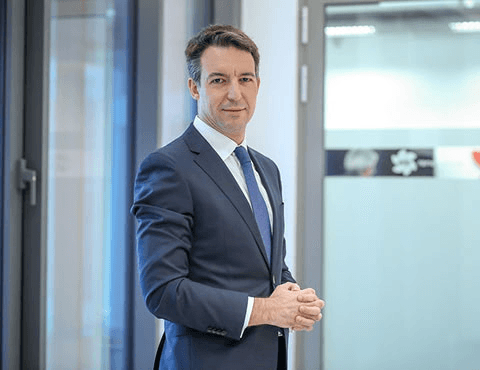
"It is no longer just about managing individual assets, but about driving a collective vision, unblocking structural challenges, and ensuring the sector has the right conditions," he said.
That move followed a conclusion he'd already reached about the sector itself: that its defining shift over the past two years has been less about technology than about mindset.
"There has been a shift toward a more balanced approach that focuses equally on energy security, economic competitiveness, and the environment," he said.
His training as an economist shapes how he applies that balance to individual markets.
"Capital flows where there is stability and predictable risk," he said. "A market can have great potential, but if the regulatory framework shifts mid-game … the economic feasibility collapses."
Those markets still run largely on oil and gas, and despite now leading a renewable energy association, Barbosa doesn't dismiss them.
"The oil and gas sector remains, and will continue to be, fundamental to sustaining daily life and economic development while the wider energy system evolves," he said.
Rather than bystanders, he sees oil and gas companies as active participants, evolving, in his words, "from pure extraction businesses into integrated energy companies."
That is also why he pushes back on the popular image of the transition as a simple swap of old energy for new. Renewable energy itself is far from new, he explained. These technologies have been deployed for decades and already have a strong track record of proven results. Moreover, treating it as an abrupt shift, he warned, "could potentially lead to massive system failures and social disruptions." What is actually under way is "a profound integration where legacy infrastructure and new technologies must be synchronized."
What makes him optimistic about the next five years is momentum — capital, technology and strategic urgency aligned at the same moment. What worries him is everything standing between ambition and delivery.
"The decarbonization targets are already clearly identified and defined; the real challenge now is operational," he said. "We risk being held back by regulatory bottlenecks, slow licensing, and infrastructure constraints."
Holding that many pieces together, he says, is something IE prepared him for. He credits its professors, case method and diverse cohort with giving him "the broader business perspective needed to transition from technical roles into senior leadership." Just as lasting, in his view, is the network, which "walks with you for life."
Having just made that leap himself, he offers students the same encouragement.
"Definitely jump into the sector," he said. "It is a fascinating industry that will be in constant transformation."
"We are not just changing power sources—we are re-engineering global infrastructure and markets under real-time geopolitical and economic pressures."
Tabriz Ammayev – SOCAR Azerigas
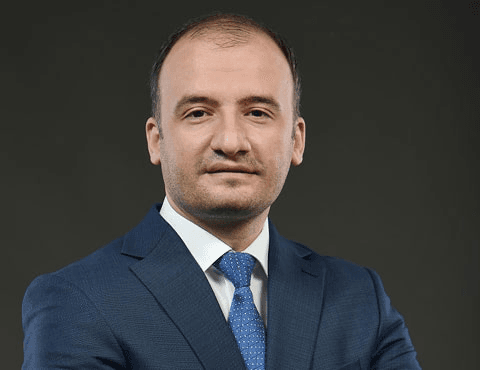
"A successful strategy is not about choosing between today's priorities and tomorrow's opportunities. It is about building the capability to address both," he said.
Balancing them has grown more urgent as change across the sector has accelerated.
"Energy companies are no longer operating in an environment where the only priority is securing supply and meeting demand; they are now expected to balance energy security, affordability, sustainability, and resilience."
For a producer like Azerbaijan, that shift changes what competitive advantage looks like.
"The future energy company will not be defined only by the resources it owns, but by its ability to innovate, adapt, and continuously create value," he said.
Transformation, in his view, does not mean starting over. As Azerbaijan expands into renewables, efficiency and digital transformation, he argues its existing capabilities can carry into what comes next.
"It does not mean abandoning existing capabilities," he said. "Instead, the opportunity is to use existing expertise, infrastructure, and human capital as a foundation for creating new value."
He points to the Southern Gas Corridor as an example of how successful energy projects depend on more than infrastructure alone.
"Successful energy projects are not only about resources — they are about collaboration, innovation, and the ability to adapt to changing global needs."
The same emphasis on adaptability shapes how he sees technology. He expects that AI and advanced analytics will increasingly separate one company from another.
"As the saying goes, ‘data is the new oil,’" Ammayev noted.
But adopting tools is not the same as transforming an organization.
"Technology itself is not the transformation. The real value comes when technology is combined with the right processes, capabilities, and organizational culture."
He applies the same scrutiny to strategy, which he thinks gets reduced too often to presentations and visions rather than the harder work of acting on them.
"Strategy is not just about predicting the future; it is about having the courage and discipline to shape it."
Complacency, more than any external shock, is what worries him most about the years ahead — "organizations becoming too comfortable with past success and not investing enough in future capabilities."
Wanting the same kind of growth for himself, he pursued his Global Executive MBA at IE as "a chance to reflect, grow as a leader, and prepare [himself] to create greater impact." Being surrounded by professionals from dozens of countries "showed [him] that complex problems rarely have only one solution."
For those just entering the sector, Ammayev keeps the advice simple.
"Do not focus only on the industry you are entering — focus on the value you can create within it."
"In a rapidly changing world, the biggest risk is not change itself — it is the inability to adapt."
Carlos Barrasa Ruíz – Moeve
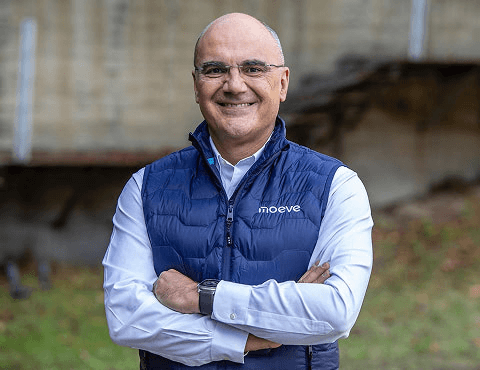
"Successful transformation is not about abandoning the past; it is about repurposing existing capabilities, assets and talent to build the business of the future," he said. Decades running complex industrial facilities and global supply chains, he added, "remain highly relevant as we develop new businesses in renewable fuels, hydrogen and other clean energy solutions."
The harder part, he says, is cultural: "encouraging innovation while maintaining operational excellence, making long-term investment decisions in uncertain markets."
That kind of change is easier to manage, in his view, once volatility stops being treated as an exception.
"Volatility has become structural rather than temporary," he said. "For many years, the industry viewed market disruptions as exceptional events." Managing uncertainty "is no longer about responding to isolated crises; it has become a core capability."
He also points to a trend he thinks gets overlooked: "the energy transition is proving to be one of addition rather than replacement. As demand for energy continues to grow, driven in particular by artificial intelligence, data centers and digitalization, we need more energy of all kinds."
His job is to help decide where that extra energy will come from, while balancing business needs with cleaner energy, but he does not see the two as being in conflict.
"Long-term commercial success increasingly depends on developing competitive low-carbon businesses," he said. Capital allocation is where that plays out: "Every investment must have a credible path to profitability, clear customer demand and a realistic regulatory framework. The transition needs to make environmental sense, but it also needs to make business sense."
Among the opportunities he backs, he singled out green molecules — renewable hydrogen, green ammonia and sustainable fuels — for sectors "where direct electrification is difficult, such as aviation, shipping and parts of heavy industry."
“At Moeve, we have made a firm commitment to becoming a leader in the green molecules market in Europe,” he explained. “At our Energy Park in Huelva, we are building the Andalusian Green Hydrogen Valley, Europe’s largest renewable hydrogen production project, and we are building southern Europe’s largest second-generation biofuels complex for the production of sustainable aviation fuel and renewable diesel.”
In addition to contributing to the decarbonization of heavy transport and industry, he noted that “these solutions are set to strengthen Europe’s energy security, reduce dependence on imported fossil fuels, and support a new wave of reindustrialization based on cleaner technologies.”
But strategic appeal alone doesn't make a project real. It scales, he said, only "when all the fundamentals are in place … an economic model that makes the project bankable."
"Ultimately, the energy sector is governed by both economics and physics," he said. "Projects need to satisfy commercial requirements, but they must also respect the fundamental laws of thermodynamics."
Looking ahead, his worry is about timing: "the transition may happen more reactively than proactively," he said. "Delaying investment or policy decisions could lead to a less orderly and more expensive transition."
Barrasa Ruíz traces that way of thinking back to IE, and to a relationship that “did not end at graduation.” The school, he said, "encouraged us to challenge assumptions, embrace change and look beyond traditional business models."
His advice to students carries the same enthusiasm he still has for the sector.
"There has rarely been a more exciting time to enter the energy industry," he said.
"Ultimately, the energy sector is governed by both economics and physics."
Bader Alnughaymishi – stc
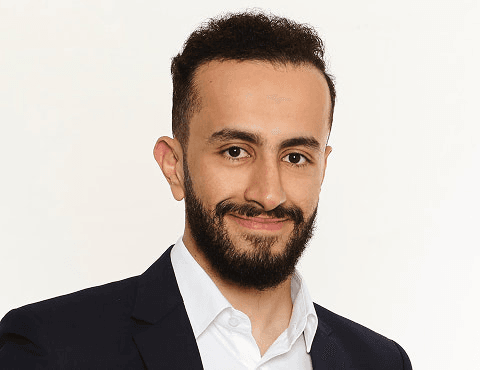
"Digital services help other industries cut their emissions, through smart logistics, remote work, digital government services and connected energy management," he said. "The positive impact a telecom enables across the economy can be larger than its own footprint." AI, he added, "raises the stakes on all three. It increases the sector's energy consumption, and at the same time it is becoming one of the best tools we have for optimizing energy use."
That challenge looks different today because the energy conversation has shifted from supply to demand.
"For most of my career, the energy conversation was about supply: how to generate cleaner power at a lower cost," he said. "Over the past two years, the conversation moved to demand," driven by AI and data centres turning electricity into "a strategic resource."
"Energy used to follow economic activity. Now economic activity follows energy," he said. "Countries that can deliver fast, affordable and clean electricity will attract the digital economy, and Saudi Arabia, with its low-cost solar and available land, is in a strong position to benefit."
His own path to that goal was built in stages: first developing efficiency projects on the ground, then in the non-profit sector, and finally in corporate sustainability.
"Implementation taught me what is realistic, non-profit work taught me why it matters, and the corporate role is teaching me how to move a large organization," he said.
He carries that layered view into how he sees stc's place in Saudi Arabia's diversification story, which he thinks is usually told through the wrong sectors. Large national companies outside oil and gas, he said, "build the infrastructure the new economy runs on" and "set the standard" for the market to follow — a role Vision 2030 has made easier to justify.
"Clarity at the national level changes behavior at the company level," Alnughaymishi noted.
Turning that national direction into company-level progress is less a technical challenge than an organisational one.
"In any large organization, emissions rarely sit with the sustainability team. They sit in operations, facilities, procurement and the supply chain," he said. "So the real work is translation."
He also rejects the idea that sustainability in Saudi Arabia is borrowed from elsewhere. The drivers differ — regulation in Europe, national transformation at home — but "the science, the accounting standards and the target-setting frameworks are all global, and we measure ourselves with the same rulers."
He credits IE's classroom and its diverse representation for sharpening that view: "The same problem looks completely different to a consultant in Germany, an engineer in Brazil and a banker in Singapore."
His advice to students is to build the substance before chasing the label.
"Learn how emissions are measured, how energy systems work, and how companies report and get assessed by investors," he said. "Solid technical grounding is what makes you stand out."
"Energy used to follow economic activity. Now economic activity follows energy."
Herman Cheung – NextEnergy Group
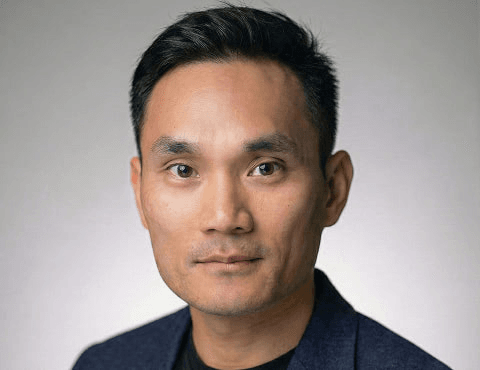
"I get to work with genuinely smart, technically deep people across finance, technical, operations, and software, people who can solve problems in their specific areas far better than I ever could," he said. "My role isn't to outthink or out-innovate any one of them, it's to see the common thread and join up the expertise across teams." Sitting at that intersection, he added, "I'm often the first to spot where things are heading."
And what he sees heading somewhere new is the industry's basic logic. "It's the shift from what we're calling 'dumb electrons to smart electrons,'" he said. "For the past decade, the story of renewables was simply about generating more clean power. Now it's about 'smartly' deciding when to use that power."
The market has already made his case for him: "negative electricity prices across Europe around midday in summer, driven by too much solar energy hitting the grid at once," he said. "Generation isn't the core problem we're solving for anymore. The real value now sits in shifting that power to when it's actually needed."
Cheung's own route into the sector ran through several industries first. Having studied both engineering and business, he was drawn to renewables for three reasons: "accelerating an already fast-growing industry, solving problems no one has solved before, and doing both in a way that has a genuine positive impact."
He is just as precise about how he measures success. "I'd love to say the measure is purely positive impact on society, but the reality is that renewable energy is ultimately just another asset class," he said. "The real measure of value is the returns we generate for investors."
That same hard-headedness is what surprised him about the people he works with. "What's surprised me is just how entrepreneurial everyone in this industry is," he said. "We might be the poster child for ESG (Environmental, Social, and Governance), but day to day, none of it is vibes based."
Looking ahead, he expects smart electrons and AI to define the next five years — the pace of which excites him. What scares him is the one variable no company controls: "government policy… renewables are too important to be treated as an easy way to swing votes."
For Cheung, interest in ESG is not enough to make it into the industry anymore.
"Don't join the industry simply based on vibes," he said. "You have to genuinely enjoy the reality and the practicality of ESG, not just the idea of it… Come in because you want to solve hard, meaningful and practical problems."
His IMBA is where the habit of looking across disciplines started — and what "pushed [him] from development and management into product leadership."
"Impact follows returns, not the other way round."