- Home
- Civica
- Civica News
- Ie University Joins Civica Partners In Paris To Shape The Alliance’s Next Chapter
IE University joins CIVICA partners in Paris to shape the alliance’s next chapter

The CIVICA 2+ kick-off meeting launched the new two-year cycle of European cooperation, with a focus on closer ties in education and research and a stronger contribution to society.
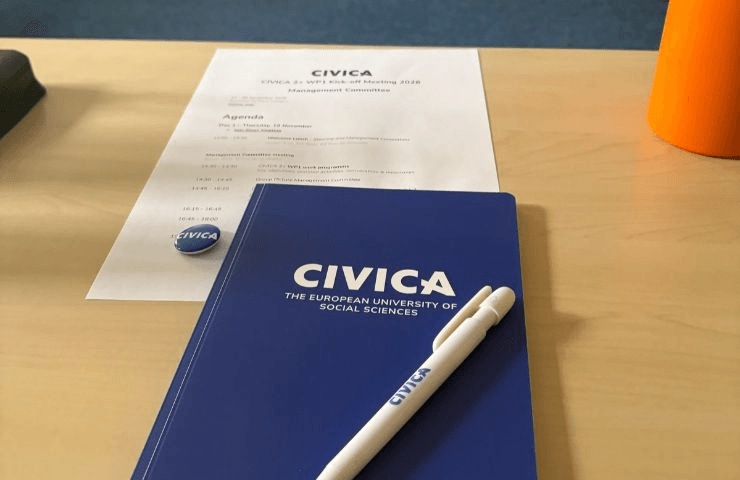
IE University joined its CIVICA partner universities at Sciences Po in Paris on November 19–20 to launch CIVICA 2+, a new two-year cycle funded by the European Commission. The meeting brought together representatives from across the alliance to set priorities for the coming period and explore how deeper cooperation between leading universities in social sciences can help address Europe’s challenges.
Represented by Quentin Sohet, Executive Director, Lucia Lopez and Francesco Bartolini, Coordinators, IE University contributed to discussions that connected the practical delivery of the new cycle with a broader question: how can CIVICA build on its collective strengths to achieve a lasting impact in education, research and society?
"At IE, we’re excited to contribute to this new phase of CIVICA. Alongside our work in education and research, we’re leading Global Outreach and Partnerships activities, where our experience can bring added value as the alliance’s profile and impact continue to grow" highlighted Quentin Sohet.
Over the two days, partners worked on coordinating CIVICA 2+ activities and monitoring their progress. A central focus was how to make the alliance’s results more visible and measurable, ensuring that closer collaboration across institutions translates into a clearer contribution beyond individual projects.
The discussions also looked ahead to CIVICA 3, the alliance’s next phase. Participants explored ways to deepen integration through Education and Research and expand engagement with the wider society. European partnerships in education and how the social sciences can contribute to addressing Europe’s challenges were also part of the agenda.
These ambitions prompted conversations about the structures needed to support them. Partners considered how future governance and program arrangements could enable more effective cooperation while drawing on the different strengths and perspectives of the alliance’s member institutions.
The visit also provided an opportunity to exchange with Sciences Po President, Luis Vassy, on its engagement with CIVICA and the future of the alliance.
The meeting marked an important step in shaping a sustainable and impactful future for CIVICA. Partners highlighted the need for a clear, focused structure that builds on the alliance’s strengths and diversity while supporting closer collaboration among its member institutions.