


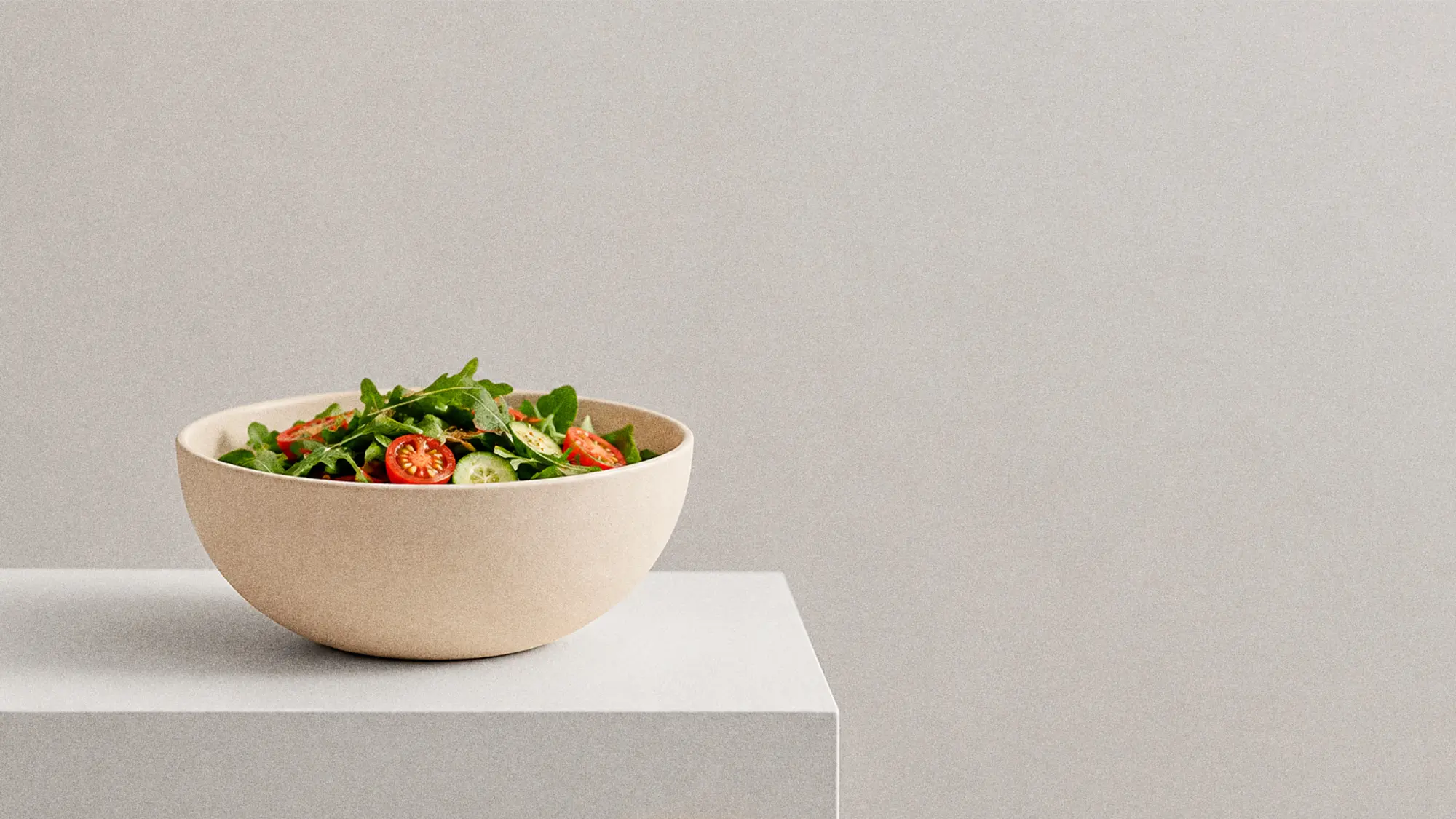
Minimalism is usually associated with owning fewer things: decluttered homes, capsule wardrobes, and a preference for simplicity over excess. But could the same mindset also change what people want to eat?
It seems it can. My research, with Sumit Malik of University of Liverpool, found that activating a minimalist mindset can shift people’s preferences away from unhealthy foods and toward healthier alternatives. This isn’t simply a case of minimalism making people want less. A minimalist mindset appears to influence what they want to eat in the first place.
An Implicit Association: “Minimalism Means Healthy”
We began by investigating whether people intuitively associate minimalism with healthiness. A reaction-time task designed to capture automatic mental associations asked participants to sort words associated with high minimalism, such as “frugal,” “modest,” and “simple,” and low minimalism, such as “excessive,” “extravagant,” and “lavish,” alongside images of healthy and unhealthy processed foods. The results revealed a strong implicit association: participants were faster at pairing high minimalism with healthy foods and low minimalism with unhealthy foods than then they were with the reverse pairing.
And the association was subconscious. When asked directly, participants also reported associating minimalism with healthiness. Together, these findings suggest that people hold both an automatic and an explicitly recognized belief that minimalist lifestyles and healthier consumption go hand in hand.
Recognizing an association is one thing, but could simply adopting a minimalist mindset influence what people want to eat?
A Minimalist Mindset Changes Preferences
In a pre-registered experiment involving 403 participants, we asked people to imagine adopting either a high- or low-minimalism lifestyle.
Participants in the high-minimalism condition were asked to imagine owning fewer possessions, avoiding accumulation, and living in a home with emptier spaces and simpler décor. Those in the low-minimalism condition imagined owning more possessions and embracing fuller spaces and more complex designs. Importantly, the exercise did not mention food, dieting, or mindful eating.
Participants then imagined attending a party and shared preference for either a selection of healthy foods – such as vegetable salads, fruit salads, broccoli salads, and apples – or a selection of indulgent foods, including chocolate waffles, cakes, cupcakes, and butter tarts. The results showed a clear reversal in preferences. Participants in the high-minimalism condition expressed a stronger preference for healthy foods than for unhealthy foods. Among participants in the low-minimalism condition, the pattern reversed: preferences were higher for unhealthy foods.
What is particularly striking is how little it took to produce this shift in preference. Participants did not actually adopt a minimalist lifestyle or change anything about the way they lived. Simply imagining themselves, living with fewer possessions and in simpler surroundings was enough to change the kinds of food they preferred.
Why It Happens: Desire and Conflict
Why might imagining a minimalist lifestyle have this effect? It changes two things: how much people want a particular food and how conflicted they feel about choosing it.
For indulgent foods, activating a minimalist mindset increased that sense of conflict while making the food less desirable. In other words, participants wanted indulgent foods less and choosing them was at odds with the mindset they had adopted. With healthy foods, the opposite happened: desire increased and conflict dropped.
Simply put, indulgent foods become less appealing and more psychologically difficult to justify, while healthier options become more attractive.
From Ratings to Decisions
Expressing a preference, however, is different from making a choice. So, we next tested whether the effect would hold when participants had to choose between a healthy and an unhealthy option.
In a pre-registered study involving 301 participants, people again imagined adopting either a high- or low-minimalism lifestyle. They were then asked to choose between two gift baskets: one containing chocolate, caramel-filled, and sugary nougat bars, and another containing granola, dried-fruit, and high-fiber digestive bars.
Among participants in the high-minimalism condition, 65.2% chose the healthier basket. In the low-minimalism condition, only 30.8% selected it. The study also found that internal conflict helped explain this difference. Participants in the high-minimalism condition experienced greater conflict about choosing the indulgent basket and less conflict about choosing the healthier alternative.
Not Just Less Food, but a Different Mix
Minimalism is often summarized as “less is more,” so one possibility is that a minimalist mindset simply makes people want to consume less overall. Yet this is only part of the story.
In a study involving 201 participants, we asked people to indicate how many healthy and unhealthy snack bars they expected to consume over the following five days. Those in the high-minimalism condition expected to consume fewer bars overall. However, the reduction was concentrated in unhealthy bars: expected consumption fell from 5.34 bars in the low-minimalism condition to 3.37 in the high-minimalism condition. Expected consumption of healthy bars remained relatively stable – 4.57 compared with 4.76 – and the difference was not statistically significant.
Minimalism, therefore, did not merely reduce the expected quantity of food. It shifted the balance of what people expected to eat, reducing unhealthy choices while leaving healthy ones largely unchanged.
What Could This Mean for Health and Marketing?
The findings point to several possibilities for public-health communication and responsible marketing.
Health campaigns could frame better eating around simplicity, intentionality, and avoiding excess rather than focusing exclusively on calories and restrictions. Social media influencers who embody minimalist lifestyles may also help reinforce the association between minimalism and healthier choices. The same principle could have implications for how healthier foods are marketed. For food brands, the findings suggest that minimalist messaging and clean, uncluttered aesthetics may complement the positioning of healthier products. Packaging and advertising built around simplicity could reinforce consumers’ existing association between minimalism and healthiness.
Our findings could also inspire changes in cafeterias, supermarkets, restaurants, and online food-delivery platforms. For example, simplified displays, minimalist messages, or prompts could encourage healthier purchases and eating behavior. Taken together, these studies suggest minimalism may influence more than what people keep in their homes. Even when activated only as a mindset, it can shape how people evaluate food: unhealthy options generated more conflict and less desire, while healthier options became more attractive.
Whether these effects translate into lasting changes in everyday diets remains to be tested. Nevertheless, the findings offer a new way to understand the relationship between lifestyle choices and food decisions. “Less is more” may describe not only how much people expect to consume, but also what they prefer to put on their plates.
This research is funded by MCIN/AEI/10.13039/501100011033/FEDER, UE Grants No PID2022‐140723OA‐I00
© IE Insights.