

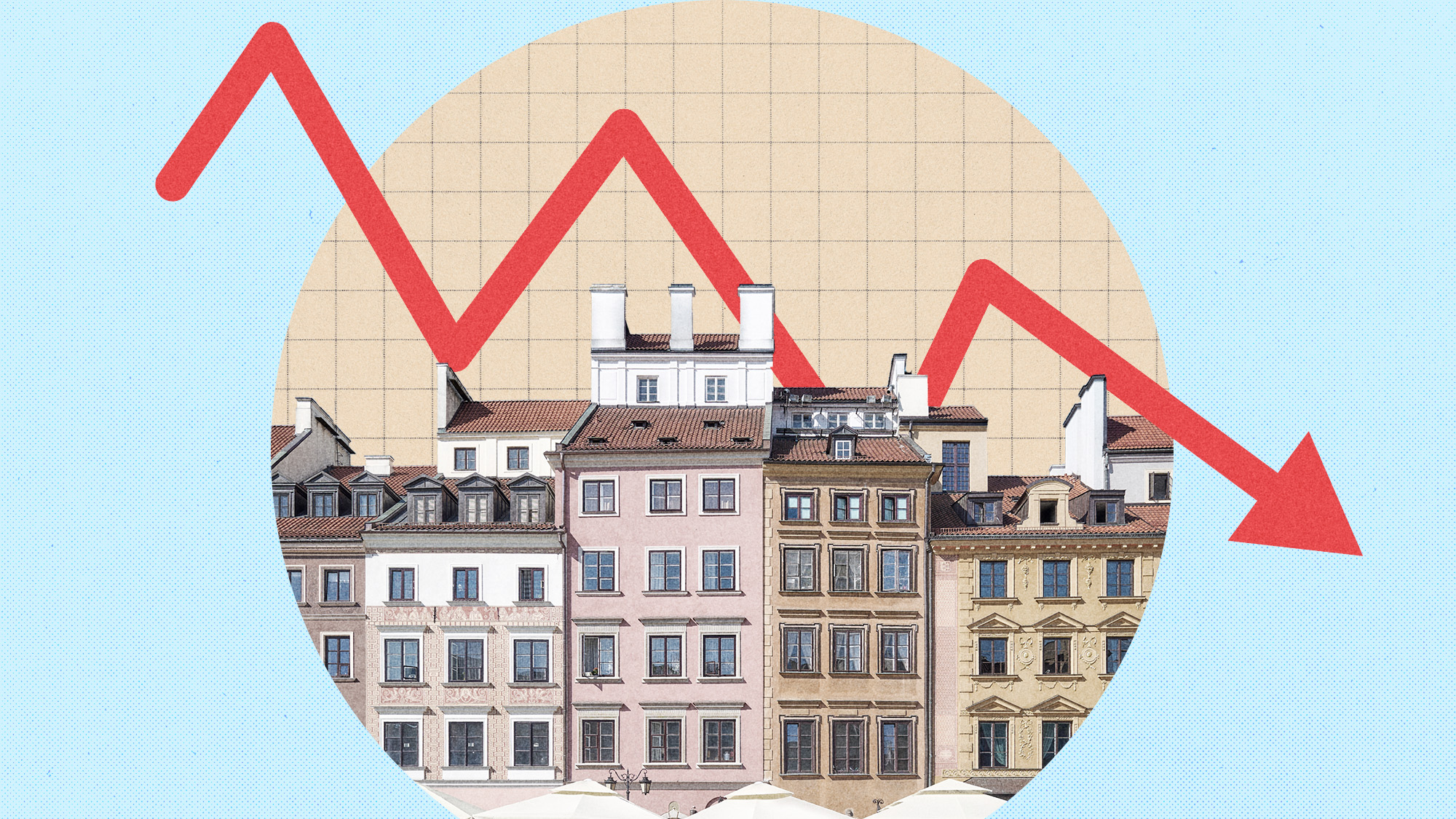
A business can be doing well in January and struggling to fill its order book by June. Customers delay purchases, banks become more cautious, investment plans are shelved and hiring freezes begin. Before long, a slowdown that first appeared in the economic statistics is being felt in factories, shops and households. How does that happen? And why can it be so difficult to reverse?
Those questions lie at the heart of the work for which Michael Woodford and Robert E. Hall have been awarded the 2026 Nobel Prize in Economics. Their research has helped economists explain how decisions made by individuals and firms can produce economy-wide fluctuations, and what monetary and fiscal policy can realistically do about them.
Woodford’s central insight concerns expectations. People do not make economic decisions by looking only at today’s prices, wages or interest rates. They also form judgments about what lies ahead. A manufacturer considering a new production line wants to know not just the cost of borrowing today, but where interest rates, demand and inflation may be heading over the next few years. If the outlook deteriorates, the investment may be postponed even before sales begin to fall.
The reverse is also true. A credible prospect of lower inflation and more stable financing conditions can encourage firms to invest and households to spend before the improvement is fully visible in the data. Expectations are not a footnote to economic activity. They help determine it.
Woodford developed these ideas in Interest and Prices, a landmark study of modern monetary policy. His work explains why a central bank’s influence extends beyond the interest-rate decision it announces today. What matters is also the path of policy that households, businesses and investors believe it will follow. That is why a statement from the European Central Bank can move bond yields, mortgage rates and investment plans even when its official interest rate remains unchanged. But words have power only when the institution speaking to them has earned credibility.
Hall approached the economy from another direction: the labor market. Anyone who has tried to recruit a skilled employee, or find a job after being laid off, knows that vacancies and job seekers do not automatically find each other. Employers must search, interview, and assess candidates. Workers need information and time to identify suitable opportunities. The process is costly, uncertain and often slow.
This helps explain why unemployment can persist long after the initial shock. When sales weaken, a firm may stop recruiting. Another business does the same, then another. Workers who lose their jobs cut their spending, reducing the revenue of companies that had initially been unaffected. A downturn spreads through a succession of perfectly understandable decisions.
Hall’s research also illuminates the way households respond to changes in income. A family receiving temporary government payment will not necessarily spend it all. If the family believes the extra income will disappear next month, it may save much of it or use it to repay debt. A lasting improvement in earnings is more likely to change its spending plans. This does not mean that emergency assistance is never justified. It does mean that a temporary subsidy cannot substitute for policies that raise productivity, employment and real income over time.
A central bank can help stabilize demand. It cannot build a competitive economy on its own.
The relevance of these ideas is particularly clear today. Central banks are trying to contain inflation without inflicting unnecessary damage on output and employment. The difficulty is that monetary policy works with a delay, while expectations can change almost overnight. If businesses and workers come to believe that inflation will remain high, they may build that assumption into prices and wage negotiations, making the problem harder to resolve. But if a central bank tightens too aggressively after inflation has already begun to ease, it risks suppressing investment and hiring just when the economy is losing momentum.
Recent crises have shown both sides of this dilemma. The pandemic disrupted supply chains and employment, while the subsequent surge in demand and energy prices intensified inflationary pressures. Businesses had to make investment and pricing decisions without knowing whether shortages and higher costs would last. Households faced similar uncertainty about their jobs, mortgages and purchasing power. Woodford helps us understand why credible policy signals matter in such circumstances; Hall helps explain why a temporary disruption can leave a stubborn legacy of unemployment. Neither suggests that central bankers can fine-tune the economy with perfect accuracy.
There is a lesson here for governments as well. Before introducing a subsidy, raising a tax or changing labor-market rules, policymakers should ask how people will respond. An investment grant may simply subsidize a project that would have gone ahead anyway. Higher employment costs may discourage a small firm from taking on an additional worker. And repeated changes in economic policy can cause businesses to postpone decisions that would otherwise create jobs.
None of this makes macroeconomic management easy. Sound monetary policy can limit the damage from a recession, but it cannot compensate indefinitely for weak productivity, poor education, barriers to competition or a climate hostile to investment. A central bank can help stabilize demand. It cannot build a competitive economy on its own.
Perhaps the most important lesson from Woodford and Hall is that a crisis does not require millions of people to make foolish choices. A family may sensibly decide to save more when it fears unemployment. A company may prudently delay hiring when orders become uncertain. Yet if households and firms all retrench at once, spending falls, jobs disappear and the fears that prompted those decisions become more likely to come true. Economists call this a coordination problem; families experience it as a recession.
That is where credible public policy matters. Central banks must anchor inflation expectations without creating avoidable instability, while governments should provide a predictable framework in which businesses can invest and workers can find jobs. The aim is not to override individual decisions but to prevent a wave of reasonable precautions from turning a temporary setback into a prolonged economic crisis.
A version of this article ran in Spanish in Expansion.
© IE Insights