Every September, Climate Week NYC brings the world’s sustainability leaders together to accelerate change. Hosted by Climate Group alongside the UN and the City of New York, it’s the global stage for action on climate, energy and equity.
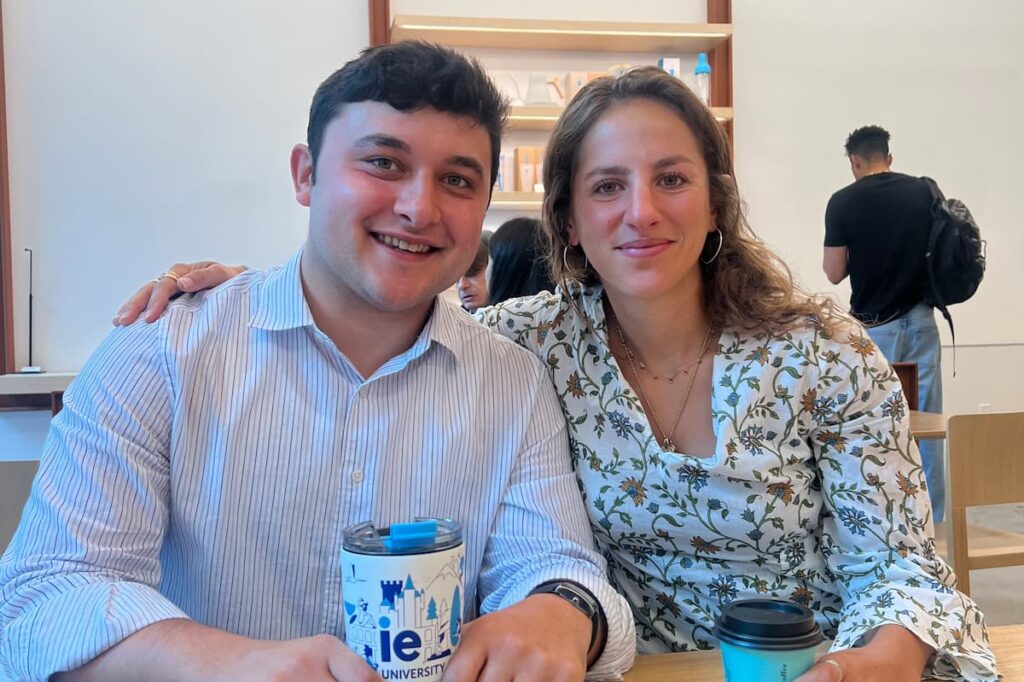
Among those attending this year were Master in Sustainability & Business Transformation students Maya Schultz and Spencer Grohovsky. Immersed in a week of ideas and impact, they saw first-hand how collaboration is redefining what progress means—and why the next generation of business leaders must be part of it.
What is Climate Week in NYC?
Forget the standard conference playbook. Climate Week NYC is where global power meets climate rebellion. Every September, while world leaders gather at the UN, the city transforms into a live laboratory for solutions that actually move the needle. Hosted by Climate Group, it has grown since 2009 into one of the planet’s most influential sustainability events. It’s now a space where CEOs, policymakers, activists and artists share one mission: action over talk.
This year’s theme, “Power On,” turned the city itself into a message. From the “Climate Clock” in Union Square to installations along the East River, New York became a living manifesto for change. “In all its craziness, Climate Week NYC was daily proof that people and the planet they live on are more important than any profit line will ever be,” says Spencer.
What happens at Climate Week in NYC?
For one week each year, New York becomes the epicenter of climate acceleration. Streets buzz with activists, business leaders, and students who refuse to accept “business as usual.” Climate Group, together with the UN and the City of New York, curates more than 500 events. These span everything from green finance to circular economy innovation.
Maya described one of the strongest shifts she noticed at Climate Week as a growing recognition that nature itself is part of the climate solution.
Across discussions on ocean restoration, regenerative agriculture, biodiversity credits, and seaweed-based products, nature-based solutions were framed as economic and social opportunities rather than tradeoffs.
She was particularly struck by how many conversations focused on transforming traditional systems—such as agriculture and supply chains—to work with nature rather than against it, and on rethinking waste as a resource.
What did we learn from Climate Week NYC 2025?
The message that echoed through every event was simple: sustainability has outgrown the buzzword phase. It is now the operating system for modern business, policy, and innovation. “Today, in my opinion, we are mostly seeing the bare minimum being done,” says Spencer. “Transformation is happening to prepare for expected regulatory, economic, and social shifts. Unfortunately, I would also say that most commitments are more for appearances than anything. However, to look at the positive side, there are plenty of people who have given their life’s work to actual transformation, which I believe will pay off in greater ways than we can imagine!”
Both students saw how real progress depends on re-defining return on investment around resilience and inclusion, not just profit. Their takeaway was clear: real transformation will not come from competition but from collaboration and courage.
By the end of the week, they had witnessed a movement that demands real systems change—and it starts with individuals willing to act differently.
Women leading the sustainability movement
Spencer points to the significance of female leadership in sustainability that’s been made clear to him in various moments: “Reading my professor Lisa Neuberger’s book, Rebalance. Meeting seven of Lisa’s female colleagues for drinks and hearing their stories and wisdoms on what was made them successful. Attending events hosted by women like Innovate for Impact hosted by Overview Effect whose CEO is a woman and IE Alum, Cristina Calvo. Meeting representatives of the Women in Cleantech group out of New York.”
For Maya, these encounters revealed what leadership shaped by care, intelligence, and connection can achieve.
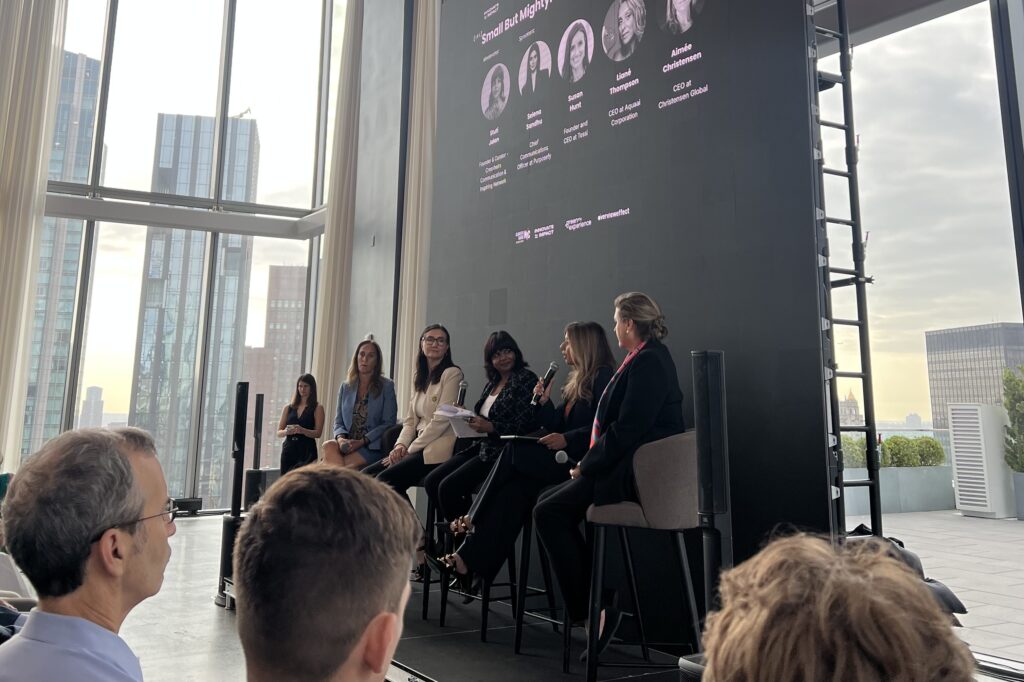
“I think of the two panels we went to: one called ‘Women Funding the World’ and another called ‘New Gen in Action.'” says Maya. “These panels redefined leadership for me. The most impactful leaders are not the loudest; they are the ones building ecosystems of change. Whether in ocean conservation, regenerative food systems, or finance, the women emphasized listening, trust, and long-term thinking over short-term wins. That’s the kind of leadership I aspire to: collaborative, grounded, and deeply purpose-driven.”
What role does business play in tackling climate change?
Let’s be honest: business built this system—so business must rebuild it. “Business as usual is not an option,” said Sanda Ojiambo, CEO of the UN Global Compact. And the numbers prove her right. The Science Based Targets initiative has already mobilized more than 1,600 firms to align their emissions with climate science, while over 12,000 companies under the Compact are steering trillions in capital toward real solutions.
For Spencer, progress depends on professionals who advocate from within. “Advocacy!” he says. “I think the ‘sustainability mindset’ is everything. Any professional can pause before any decision and think to themselves, ‘Is this sustainable?’ In other words, ‘are the effects/consequences of my decision going to allow others in the future the same opportunities?’ Oftentimes, when decisions are made they are only made in consideration of immediate needs, this is where we step in.”
When business commits, governments follow. When industries shift, markets realign. That’s how systems change happens—from the inside out.
Why study the Master in Sustainability & Business Transformation?
If Climate Week NYC conveyed anything, it’s that the future belongs to professionals who can turn sustainability into strategy. Every conversation this year—from circular infrastructure to impact finance—proved that impact isn’t a department anymore. It’s the DNA of modern business.
That’s exactly what the Master in Sustainability & Business Transformation at IE Business School prepares you for. It’s not a program for bystanders—it’s for builders. Students learn to translate ESG goals into action, make climate ambition measurable, and design business models that thrive while driving systemic change.
Climate Week NYC was daily proof that people and the planet they live on are more important than any profit line will ever be. That belief runs through the program itself. Because the next generation of leaders won’t just adapt to the sustainability revolution—they’ll define it. And if you’re ready to build that future, the time isn’t someday. It’s now.
Benjamin’s writing is featured in the LAMDA Verse and Prose Anthology Vol. 19, The Primer and Moonflake Press. Benjamin provided translation for “FalseStuff: La Muerte de las Musas”, winner of Best Theatre Show at the Max Awards 2024.
Benjamin was shortlisted for the Bristol Old Vic Open Sessions 2016 and the Alpine Fellowship Writing Prize 2023.