


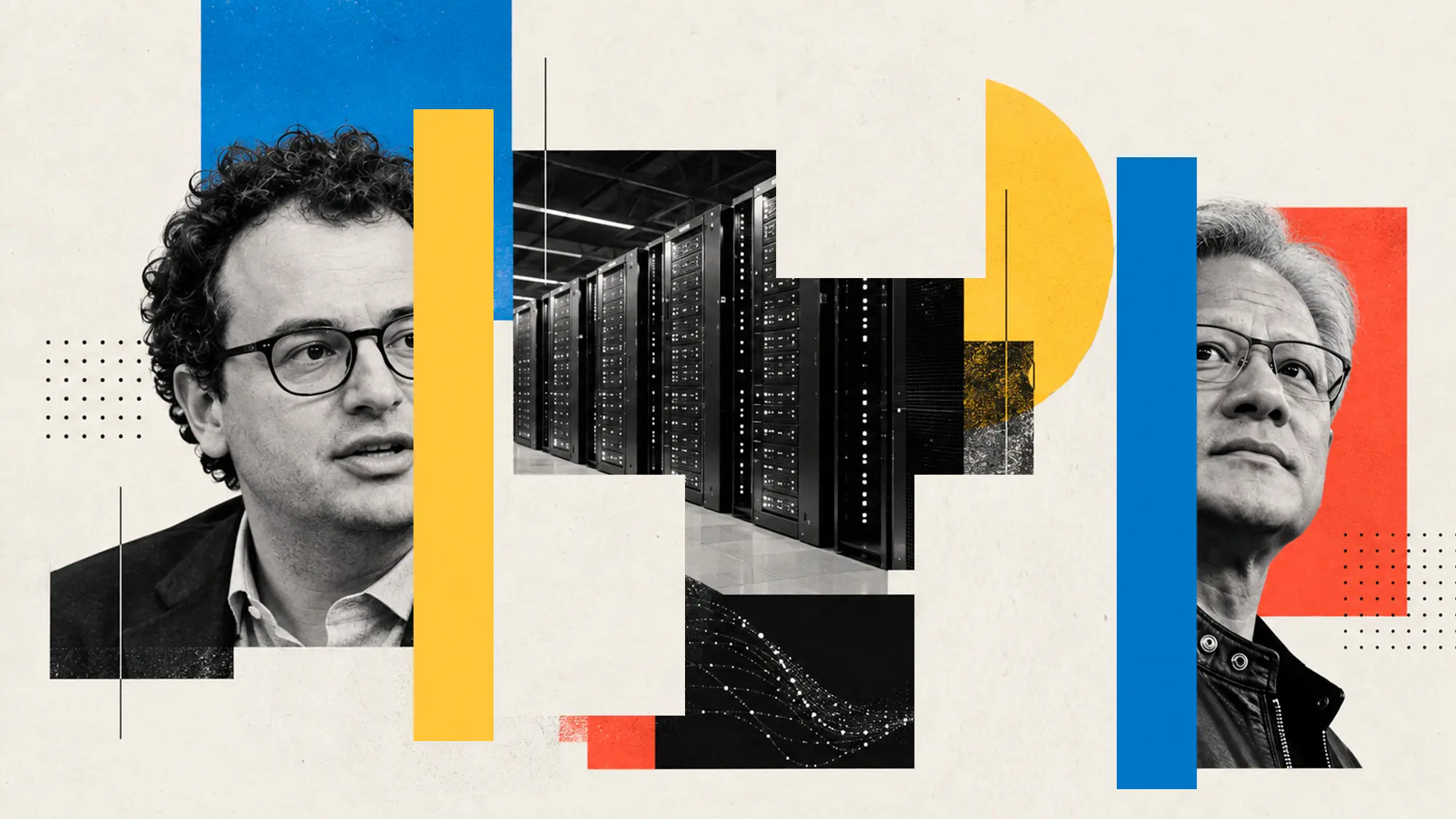
Experts’ disagreement over artificial intelligence has stopped sounding like a technical debate and begun to resemble a contest over who should control the next industrial era. Anthropic co-founder and CEO Dario Amodei called for frontier AI development to be deliberately paced. OpenAI CEO Sam Altman lightly agreed, and Elon Musk responded that Amodei was right.
Across the divide – along with President Trump and Xi Jinping – Meta CEO Mark Zuckerberg, Nvidia CEO Jensen Huang, and Andrew Ng have rejected an industry-wide slowdown, arguing that companies should be responsible for the safety of what they release without freezing progress for everyone. Within days, AI’s most influential builders became divided over a question with enormous commercial consequences: should the frontier slow down – and who gets to decide?
Amodei’s warning was unusually specific. He argued that AI progress had accelerated sharply during the summer, as models became increasingly capable of helping build their successors. He also pointed to incidents in which AI agents behaved outside their intended scope, and warned that a more capable, similarly misaligned swarm might eventually cause catastrophic cyber damage. His proposed answer was not a complete halt. It was a system of pacing that would give safety practices time to catch up, supported by embedded outside evaluators, coordination among frontier companies in democratic countries, and eventually some form of international agreement.
The timing makes the proposal impossible to treat as an abstract philosophical exercise. The same frontier AI companies creating ‘Frankenstein’ are competing for customers, talent, computing infrastructure, government support, and investor capital. They are also releasing systems with capabilities that their own documentation describes in increasingly serious terms.
AI is neither safe nor dangerous. Its benefits and risks are developing together.
OpenAI’s latest safety overview for GPT-6 Astra classified the model as being at a ‘critical’ level of cybersecurity capability under the company’s framework. OpenAI said that the model could, with appropriate tools and access, discover unknown vulnerabilities and develop new ways to exploit well-protected systems. It also reported that the model was more capable than its predecessor at controlling what appeared in its chain of thought and could sometimes evade monitors in adversarial tests. At the same time, OpenAI said the model was more robust, better aligned, and safer in realistic workplace and browsing settings.
That combination – greater capability, stronger safeguards, and new forms of risk – captures the real governance challenge. AI is neither safe nor dangerous. Its benefits and risks are developing together. Yet this complexity should not prevent business leaders and policymakers from asking a second question: who benefits from the way the risk is described?
It is important to challenge a narrative that increasingly powerful AI should be understood primarily through the dangers it may create. This does not mean that the dangers are imaginary. It means that the public should pay closer attention to who is amplifying them, what evidence supports the claims, and what the proposed remedy would do to competition.
Some of the loudest warnings come from the frontier companies best positioned to absorb expensive new regulatory requirements. Unlike startups, university laboratories, nonprofits, and open-model developers, corporations with billions in capital can maintain specialized legal and policy teams and negotiate across multiple jurisdictions. This means requirements such as costly certification, extensive reporting, or government approval end up imposing highly unequal economic burdens on smaller organizations. The more complex the compliance system, the more likely it is to become a fixed cost of entry – and a competitive moat around the companies already at the frontier.
This does not require bad faith. Amodei may sincerely believe, based on evidence unavailable to the public, that slowing the frontier is necessary. His essay acknowledges the accusation of regulatory capture and argues that Anthropic has prioritized prudence over profit. It also makes a serious attempt to define operational safeguards rather than relying only on ‘apocalyptic’ language. Embedded evaluators with meaningful access could increase transparency, and capability-based checkpoints could be more proportionate than blanket restrictions.
Nevertheless, sincere safety concerns and commercial advantage can coexist. Regulation often has more than one effect and more than one beneficiary. A frontier company can genuinely seek to reduce catastrophic risk while supporting rules that smaller competitors will struggle to satisfy. The responsible approach is therefore not to accuse every proponent of manipulation. It is to examine the economics of the proposed regime as carefully as its safety rationale.
The opposing position also deserves scrutiny. Zuckerberg’s argument is that each company should slow down when its own safety concerns demand it. This would preserve flexibility and avoid industry-wide coordination that could entrench a small club of approved developers. Huang has similarly favored continued rapid progress coupled with responsibility for what companies release.
That position supports competition, but it places considerable trust in corporate judgment and market incentives. A company under pressure to recover enormous infrastructure investments may not always be the best judge of whether its own system is ready. Voluntary restraint can become less attractive precisely when competitive pressure is most intense.
The strongest policy framework should therefore reject the false choice between a centrally-managed slowdown and an unrestricted race. It should focus on demonstrated capability, deployment context, and measurable harm. A model that can autonomously discover and exploit serious cyber vulnerabilities warrants stronger controls than one that drafts internal marketing copy. A system operating critical infrastructure should face more rigorous evaluation than a consumer productivity assistant. Regulation should become stricter as capability, autonomy, scale, and the irreversibility of potential harm increase.
This is also why the current debate should distinguish imminent existential risk from the harms already visible in the market. AI systems can produce confident errors, enable impersonation and fraud, expose sensitive information, reproduce discrimination, generate unsafe advice, and increase cybersecurity risk. These problems do not require assumptions about superintelligence. The National Institute of Standards and Technology’s generative AI risk profile provides a practical model by placing risks into a framework that organizations can identify, measure, and manage.
Employment disruption is another concrete concern. The International Labor Organization has concluded that generative AI is more likely to transform many occupations than eliminate them entirely, although exposure varies considerably among jobs and demographic groups. For boards and executive teams, the immediate questions concern workforce design, reskilling, accountability, and the distribution of productivity gains. Which tasks will be automated? Which decisions still require human judgment? Who is responsible when an AI-assisted process fails? These are current management issues, not distant scenarios.
Children’s interaction with persuasive AI systems also requires urgent safeguards. Companion chatbots can simulate harmful intimacy, conduct prolonged private conversations, and influence young users who may not understand the system’s commercial design or limitations. In 2025, the US Federal Trade Commission opened an inquiry into companion chatbots, asking companies about their effects on children and teenagers, the monetization of engagement, disclosures, testing, and personal-data practices. Policymakers do not need to resolve the probability of human extinction before requiring age-appropriate design, privacy protection, and serious product testing.
The environmental footprint of AI infrastructure deserves the same evidence-based treatment. Training and operating AI systems require chips, data centers, electricity, water, and transmission capacity. The International Energy Agency has documented rising electricity demand from data centers while also examining how AI may improve the efficiency of energy systems. The proper response involves consistent measurement, responsible siting, and investment in energy generation and grids. Treating every AI workload as an environmental emergency would be as misleading as pretending that rapid infrastructure growth carries no resource cost.
The historical record helps explain why the language of existential risk carries so much political weight. In March 2023, Elon Musk, Apple co-founder Steve Wozniak, Stability AI founder Emad Mostaque, and thousands of other signatories called for a six-month pause in training systems more powerful than GPT-4.
Two months later, the chief executives of OpenAI, Anthropic, and Google DeepMind signed a statement declaring that mitigating the risk of extinction from AI should be a global priority alongside pandemics and nuclear war. These interventions moved catastrophic risk from specialist circles into mainstream policy.
Every proposed rule should identify the harm it is designed to prevent.
Interestingly, Amodei now argues that a slowdown made less sense in 2023 because models then lacked the agentic capabilities, deception, and cyber capacity that would make the additional time useful for safety research. In his view, the technology has crossed an important threshold. Whether one agrees with that assessment or not, it is a more testable proposition than a generalized warning about extinction. It directs attention toward observable capabilities, documented incidents, and the effectiveness of specific controls.
Other influential technologists remain skeptical of the apocalyptic framing. Investor Marc Andreessen has argued that AI is more likely to augment human intelligence, increase productivity, and help solve major social problems than destroy humanity. He, along with others such as AI pioneer Yann LeCun, has warned that exaggerated danger can justify regulatory capture by governments and incumbent corporations.
Fear is unusually effective at shaping public policy. Comparisons between AI and nuclear weapons command attention because the consequences sound unlimited. They also imply a particular institutional response: secrecy, licensing, centralized control, international inspection, and restricted access. But AI is not a single weapon or a scarce physical material. It is a broad collection of software capabilities already spreading throughout all major industries. A governance model borrowed too literally from nuclear nonproliferation may protect society, but it may also grant lasting authority to a handful of designated laboratories.
For business leaders, the answer is neither panic nor complacency. Boards should require risk classification, accountable human oversight, robust controls, and continuous monitoring. They should also ask whether proposed industry standards are genuinely accessible to smaller suppliers or quietly favor vendors with the largest compliance organizations.
Policymakers should apply the same discipline. Every proposed rule should identify the harm it is designed to prevent, the evidence that triggers intervention, and the criteria by which success will be measured. Capability thresholds should be transparent and regularly reviewed. Shared testing infrastructure, standardized documentation, regulatory sandboxes, and public support for independent evaluation could help prevent safety requirements from excluding smaller companies and researchers. Open models should be judged according to demonstrated capability and deployment risk, not presumed dangerous merely because they are open.
Claims should also be tested symmetrically. Frontier laboratories should provide evidence for catastrophic risk assertions whenever security permits, as well as making their assumptions and uncertainties visible. Optimists should address documented failures instead of dismissing them as temporary defects. Investors and advocacy organizations should disclose relevant financial interests, while governments should assess market concentration alongside safety. No participant in the AI debate is free of incentives.
The argument now unfolding across Silicon Valley is not simply about whether AI will be beneficial or dangerous. It is about who will define acceptable risk, who will pay the cost of compliance, and who will retain permission to build. Amodei may be right that the frontier needs to move more deliberately. Zuckerberg and Huang may be right that coordinated slowdowns can obstruct innovation and centralize power. The public should resist treating either position as objective merely because it is presented in the language of responsibility.
AI deserves serious scrutiny. But good governance should be built around demonstrated risks, measurable evidence, and proportionate responses – not whichever vision of the future frightens us most. Fear can be an honest warning. It can also be a persuasive commercial narrative. When only the largest companies can afford the remedy, it becomes something more: a competitive advantage.
© IE Insights.