Ahmed Aboutaleb, Former Mayor of Rotterdam, Joined Re_Solution Series to Discuss Water Resilience and Urban Innovation

Aboutaleb outlined cuttting-edge water management and adaptive urban design in his talk at the IE School of Architecture and Design
“We are a vulnerable city. We accept the risks, and we know that water will always win,” said Ahmed Aboutaleb, former Mayor of Rotterdam, during his lecture on February 18 at IE Tower, IE University’s technology and sustainable campus in Madrid. The event was part of the IE School of Architecture and Design’s Re_Solution series.
In his talk, Aboutaleb detailed how Rotterdam has embraced its vulnerability to water through cutting-edge engineering solutions, including primary and secondary dikes, water storage systems, and adaptive urban design. He also addressed the city’s efforts to curb CO₂ emissions from its vast port, a crucial step toward sustainable urban development.
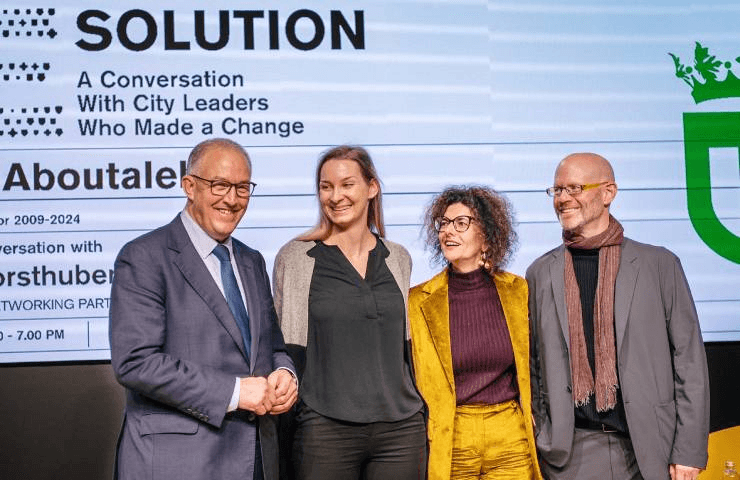 Ahmed Aboutaleb; Cornelia Forsthuber-Aumayr; Cristina Mateo, Vice Dean; David Goodman, Dean of IE School of Architecture and Design.
 A Morocco-born, Dutch-trained engineer, Ahmed Aboutaleb served as Mayor of Rotterdam from 2009 to 2024. Previously, he was State Secretary for Social Affairs and an alderman in Amsterdam. A former journalist, he transitioned to government roles in the 1990s, focusing on multicultural development and economic policies. In 2021, he was awarded the World Mayor Prize for its commitment to equality and social inclusion.
The presentation underscored Netherlands' long-standing expertise in water management, and Rotterdam's deep connection to water, emphasizing its crucial role in the city's identity, development and urban planning. As one of the world’s largest ports, spanning 40 kilometers, Rotterdam serves as a key hub for European industry, handling massive container ships and supplying essential raw materials to sectors such as Germany’s steel and automotive industries.
However, Aboutaleb pointed out that this economic strength also presents challenges, particularly high CO2 emissions -“17% of the Netherlands’ CO2 emissions come from the port of Rotterdam. We know energy transition takes time, but we can’t wait—carbon capture is necessary now”. Additionally, the port's expansion has driven domestic migration and the rapid construction of affordable housing for workers, much of which now requires large-scale renewal, with 34,000 homes slated for transformation.
Regarding Rotterdam’s water management strategy, Aboutaleb highlighted a shift as it moved beyond traditional dike construction to a more adaptive approach that acknowledges the inevitability of rising water levels and the need to work with, rather than against, natural forces. "We are a vulnerable city. We accept the risks, and we know that water will always win", he said, and reminded that " if you build in a dry riverbed, water will claim its former flow whether in 100 or 300 years."
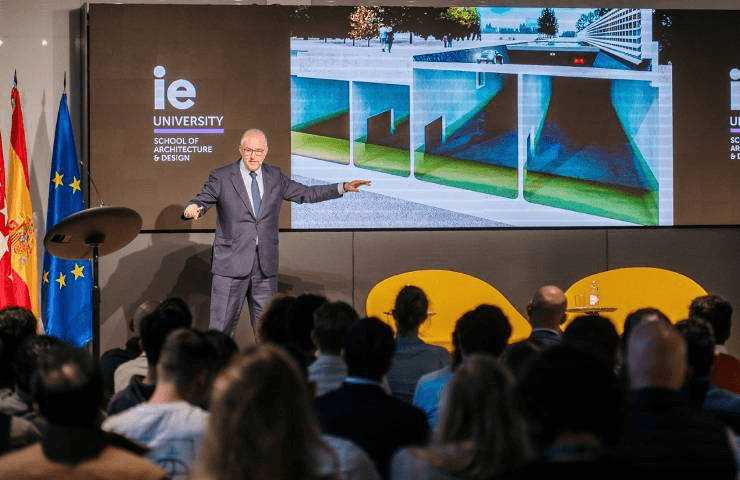
This approach has led to innovative measures such as closing arms systems that automatically activate to relieve pressure on dikes during high water building on elevated ground deploying movable pumping systems, creating water reservoirs outside the city to prevent flooding into urban areas building urban underground basins integrated with parking and green spaces and floating buildings among others. He also underscored the critical role of the water boards, the Netherlands' oldest democratic institution, which oversees water management and funds projects through taxation.
Leadership Lessons
In the second segment of the event, Cornelia Forsthuber-Aumayr, Editor-in-Chief of CityChangers.org and Project and Event Manager of the Urban Future Young Leaders Programme, invited former Mayor Ahmed Aboutaleb to reflect on on the leadership lessons he has gained from his 15 years of managing Rotterdam. Aboutaleb emphasized that effective leadership requires engagement, adaptability, and decisive action. He stressed the importance of making water management compelling and accessible to ensure public involvement while keeping it apolitical to produce consensus and avoid polarization.
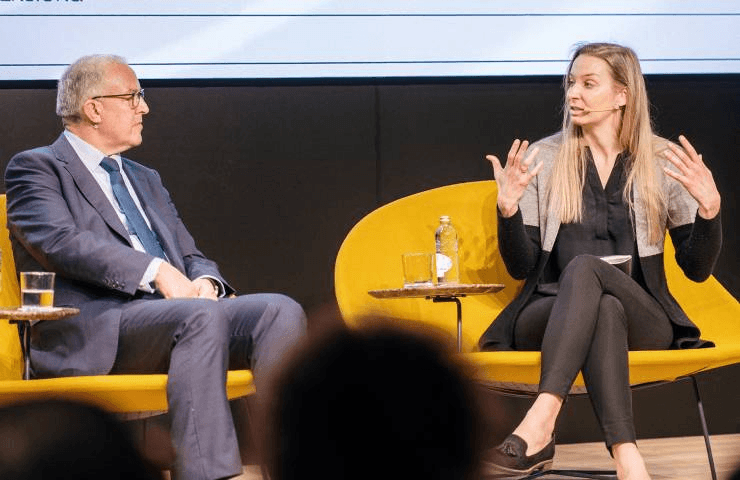
He also advocated that Mayors must take initiative acting locally to address global challenges. Citing a recent decision in Rotterdam, he explained, “We decided to remove 6,000 parking spaces from downtown and replace them with green pedestrian areas and bike lanes. It’s a small step, but it’s something cities can do while urging national leaders to act.”
Acknowledging the limits of local action in solving global issues like climate change, he stressed the importance of small but meaningful steps. “We must recognize that global agreements on climate change are not something we can solve in Rotterdam or Madrid alone", said Aboutaleb. "In urban planning, however, we can make changes—designing sidewalks and asphalt that absorb water, minimizing walking distances to create more green space, and taking every opportunity to build a more sustainable city", he added.
Regarding Rotterdam’s approach to urban planning, Aboutaleb envisions optimizing available land through vertical communities—high-rise buildings that combine commercial, social, and residential functions. He argued that this model not only maximizes land use but also reduces the need for transportation, creating a more efficient and environmentally friendly urban environment. However, legal changes are necessary to fully implement this approach and enable mixed-use development on a larger scale.