Alice Rawsthorn Opens IE School of Architecture and Design’s Lecture Series with a Call to Rethink Design as an Agent of Change

The award-winning critic and writer urged students to embrace design as an attitudinal force for social, political, and ecological transformation.
Madrid, 4 November 2025 - Design is not just about beauty or branding, design is an agent of change. This was the message delivered by Alice Rawsthorn, internationally acclaimed design critic and author, as she opened the IE School of Architecture and Design’s Lecture Series Craft&Care, curated by Professor Grazielle Bruscato.
The 2025-2026 edition of the School’s lecture series invites reflection on how the acts of making, maintaining, and repairing - across architecture, fashion, and design - can serve as transformative practices of attention, commitment, and responsibility. Throughout the academic year, speakers from around the world will explore the resurgence of craft as both a contemporary practice and a vessel of cultural heritage, affirming care as a transversal force that fosters well-being, social cohesion, and ecological sustainability.
Alice Rawsthorn’s opening lecture set the tone for this conversation, weaving together historical insight, critique, and examples from her landmark project Design Emergency co-founded with Paola Antonelli, Senior Curator of Architecture and Design at the Museum of Modern Art of New York.
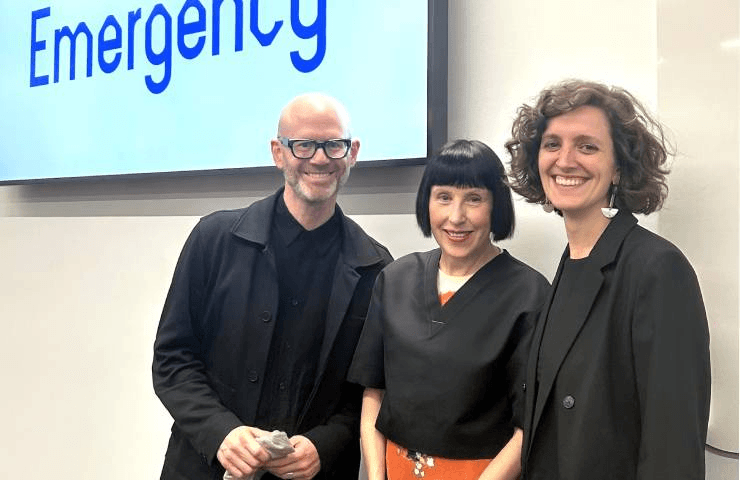 Alice Rawsthorn with David Goodman, Dean of the IE School of Architecture and Design, and Grazielle Bruscato, curator of the School's lecture series.
From Profession to Attitude
Rawsthorn challenged conventional views of design as a consumerist or stylistic practice. “The harsh truth,” she said, “is that most people still see it in its stereotypical guise, as something that blings-up over-priced hoodies and trainers, and produces uncomfortable, unstable chairs for over-priced, so-called ‘designer hotels." Instead, she invited IE University's students and faculty to rediscover design’s deeper purpose: a dynamic, human-centered tool to interpret change and to shape it for the good. “In all its guises, design has always had one elemental role, it is an agent of change that interprets social, political, technological, and ecological transformations to ensure they affect us positively, rather than negatively", she said.
Rawsthorn recalled the early 20th-century avant-garde designer László Moholy-Nagy, who declared, “Design is not a profession but an attitude" - a statement she considers more relevant than ever. She explained how industrialization once confined design to a commercial sphere, while today, “design is experiencing a metamorphosis into the fluid, expansive, open-ended medium Moholy-Nagy described.” Rawsthorn pointed out that this new, "attitudinal design" empowers professionals and citizens alike to engage with global challenges - from inequality to climate breakdown - through creativity, responsibility, and care.
Against the backdrop of what she called an “exceptionally turbulent" global context, Rawsthorn argued that design must reclaim its moral and civic agency. “Design isn’t a panacea for these problems,” she said, “but it can help us address them intelligently and responsibly.” She pointed to the digital revolution as a key enabler of this transformation, allowing designers to mobilize collective intelligence, manage complex data, and use tools like crowdfunding and open-source platforms for societal impact. From the Ocean Cleanup project, which has removed tens of millions of kilograms of plastic from the seas, to the work of Forensic Architecture using digital evidence to expose human rights violations, Rawsthorn illustrated how technology, when guided by empathy and ethics, can amplify the power of design for good.
Craft and Care in Action
Craft, Rawsthorn explained, is being reclaimed both as a means of preserving cultural identity and as a strategy for sustainability. Kenyan-born ceramicist Magdalene Odundo deepens her cultural roots through clay, while Slovak-Dutch designer Peter Bilak and his foundry Typotheque develop typefaces for lesser-represented or endangered languages, safeguarding collective memory. Landscape designers such as Piet Oudolf and Dan Pearson apply traditional horticultural techniques to restore ecosystems and biodiversity. Architects Yasmeen Lari in Pakistan and Marina Tabassum in Bangladesh demonstrate how vernacular construction techniques - using bamboo, lime, or modular flood-resilient housing - can offer sustainable, dignified solutions to disaster relief and housing shortages.
Under the theme of Care, extending from healthcare access to humanitarian design, Rawsthorn highlighted initiatives such as Sehat Kahani, a telemedicine platform connecting Pakistani women doctors to remote patients, and Médecins Sans Frontières’ accessible refugee shelters in Gaza, designed with dignity and inclusivity in mind. She also cited cautionary lessons from design failures, such as post-conflict reconstruction in Afghanistan, where, as she noted, “careless design ignored the local climate and context, leaving half of the new infrastructure useless.”
Throughout the lecture, Rawsthorn underscored that the future of design depends on empathy, collaboration, and precision. She urged students to view design not as an aesthetic pursuit but as a discipline of care, requiring “intelligence, sensitivity, and the courage to work across boundaries.” “If Moholy-Nagy’s ambitious, eclectic vision of design is to be realized,” she concluded, “those clichés must be squashed. The only way to do this is for design, attitudinal and otherwise, to prove its worth in its new terrain.” For Rawsthorn, every thoughtfully executed design project represents “the progress we urgently need to address the complex, intersectional challenges of this turbulent time.”
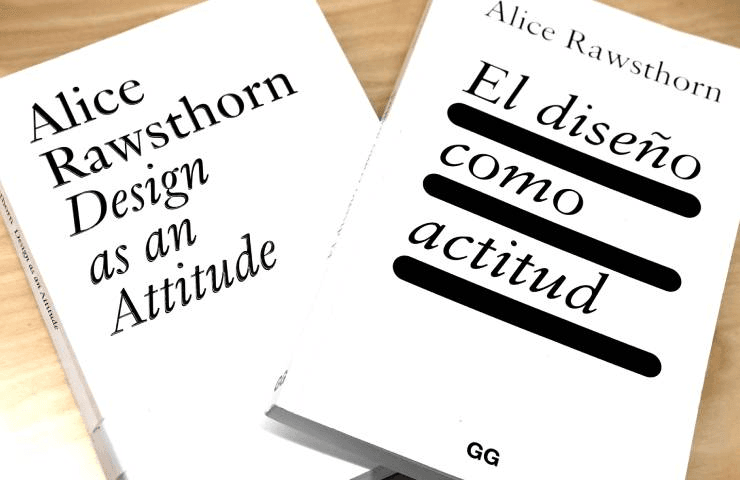
Alice Rawsthorn is an award-winning design critic and author whose books include Design as an Attitude, Hello World: Where Design Meets Life, and Design Emergency: Building a Better Future (co-written with Paola Antonelli). A former columnist for The New York Times, Rawsthorn is also a founding member of Writers at Liberty, sits on the international advisory council of DemocracyNext and served as chair or trustee for institutions such as the Whitechapel Gallery and Arts Council England.