Borja Gómez Martín: "Non-design skills such as negotiation, financial literacy, and systems thinking are essential to enhancing the quality of design"

The IDOM partner and IE School of Architecture & Design professor reflects on collaborative practice, large-scale complexity, and the skills required to work within global design environments.
Madrid, 11 May 2026 – As Partner and Head of Corporate Architecture at IDOM, Borja Gómez Martín operates at the intersection of design, engineering, and global practice. Since joining the firm in 2012, he has worked on major international projects ranging from healthcare infrastructure to large-scale civic and corporate buildings, navigating contexts that demand both technical precision and strategic thinking. Alongside his professional work, he brings this experience into the classroom as a faculty member in the Master in Business for Architecture and Design at IE University.
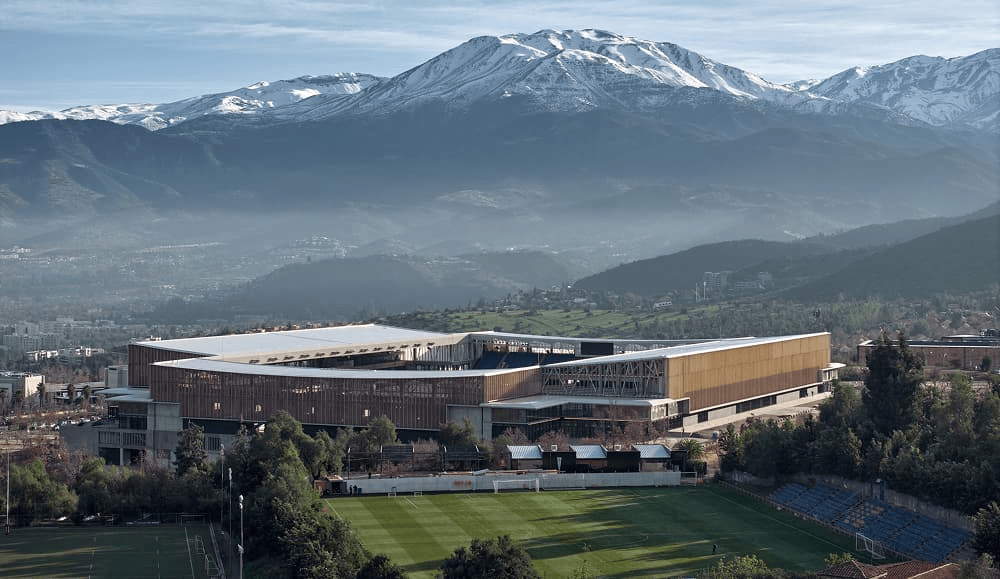
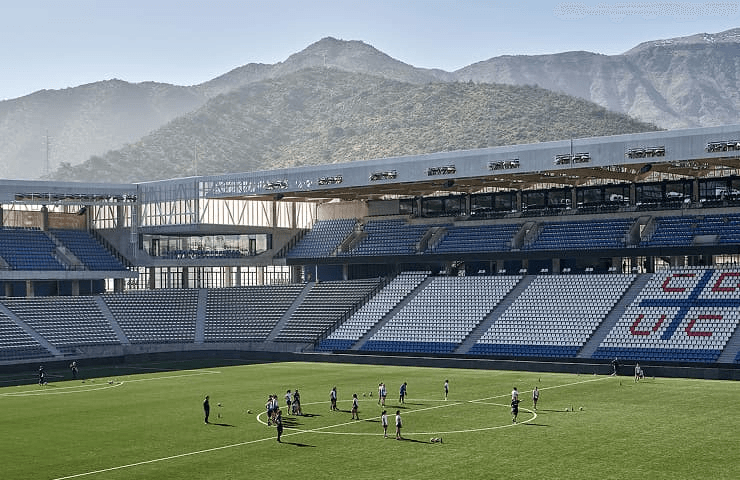
Claro Arena Stadium designed by IDOM
You work within a global multidisciplinary firm. How does this environment shape the way projects are conceived and delivered?
It is absolutely critical. At the very outset of each project, we devote sufficient time to deciding which team is best suited to address the design challenge posed by the client, and who should lead that team. We work on a peer-to-peer basis, with all professionals seated at the same table, encouraging critical contributions from every team member. While ultimately there is one person—or a small group—who takes the final decisions in each case, the outcome is defined by the collective input of all participants. In this context, non-design skills such as negotiation, financial literacy, or systems thinking are essential to enhancing the quality of design within a collaborative process that brings together professionals from different backgrounds.
You led the design of Claro Arena, recently awarded the ArchDaily Building of the Year 2026 in the Sports category. What does this project reveal about the complexity of large-scale architecture today?
For a number of reasons, the Claro Arena project made it possible to integrate the client, industry partners, the contractor, and the design team into a single design forum, with the occasional involvement of other stakeholders such as the local municipality or the neighbouring community. This process enriched the project and enabled the development of unconventional solutions—from construction to the urban scale—with a very low social and environmental impact.
Amid increasing market, regulatory, and geopolitical constraints, what agency does architecture still retain? Can it still operate as a transformative force of our world?
The construction industry accounts for approximately 40% of global emissions, which means that architecture undoubtedly has a powerful capacity to transform the world. A different question, however, is how that transformative capacity is activated so that it truly has impact. In this sense, attentive listening to clients, consultants, and stakeholders—understood as an active process driven by the genuine intention to address a design problem in all its facets—is essential.
As a faculty member at IE University, how do you bring your professional experience into the classroom?
Teaching is an exceptional space for prototyping and reflection. I have been teaching for more than ten years in the Venture Lab of the Master in Business for Architecture and Design, which—as its name suggests—is an excellent laboratory for bringing into the university context the design challenges society faces in their broadest sense—economic, spatial, and technical—in order to analyze them, learn from them, and test alternative approaches.
What advice would you give to young architects entering the profession today?
To sustain an attentive and humble sense of curiosity.
Which skills are most sought after in graduates entering a team at IDOM?
Critical thinking; the ability to incorporate value-adding contributions into a design; the capacity for continuous improvement and progress; the ability to work as part of a team; strong synthesis skills; and, without a doubt, the ability to design strategically.
What kinds of roles do young architects typically take on in their first three to five years at IDOM, and how quickly can they assume responsibility?
They assume responsibility very quickly. During the first three years, we aim to ensure they become familiar with the complete design process and, ideally, gain on-site construction experience. Gradually, they take on responsibility for specific areas within IDOM’s collaborative working environment. Once they are ready and demonstrate internal confidence, they are assigned small projects with full responsibility, supported by a senior architect. This typically occurs around the fifth to seventh year.
Looking ahead five to ten years, which capabilities will define architects who are able to lead complex projects?
Five to ten years may be too short a period to observe real change in a profession with such a long history. The ability to listen and think strategically and synthetically, and to transform complexity into something clear (though not simplistic), will continue to be a fundamental skill.
All photos © courtesy of IDOM
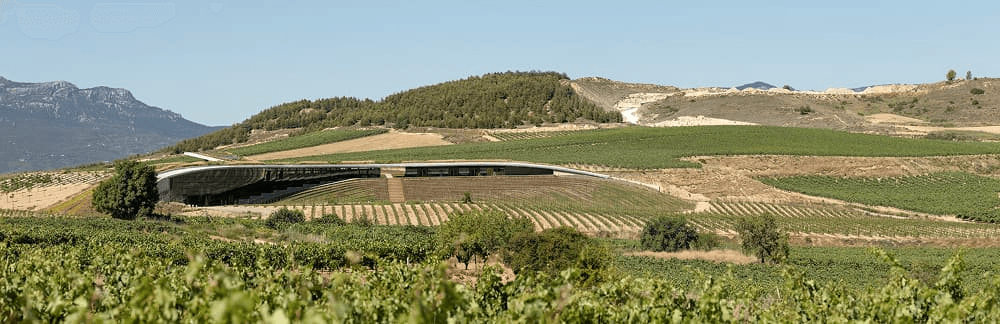 Winery Beronia designed by IDOM