IE University Student Maria Suárez-Pumariega Blanco Receives ARCC King Student Medal for Research on Sustainable Rain Gardens

Her project demonstrates how soil-based rain garden systems can improve stormwater infiltration and urban resilience through a real case study.
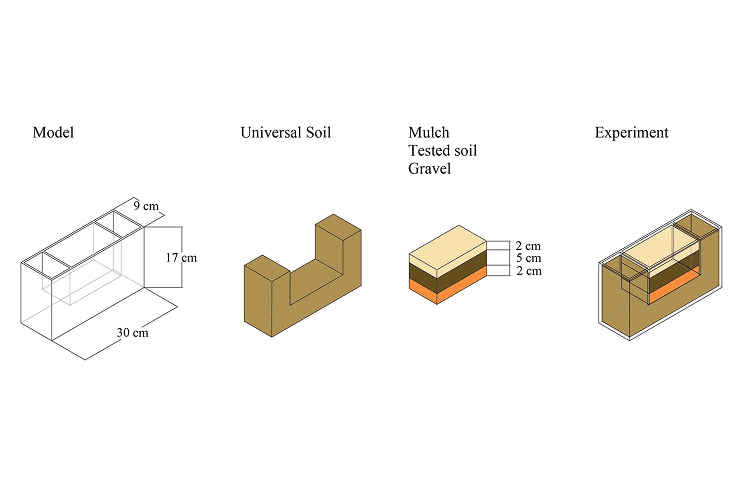
Madrid, 30 October 2025 - Maria Suárez-Pumariega Blanco, an IE School of Architecture & Design's Master in Architecture student, has been awarded the ARCC King Student Medal by the Architectural Research Centers Consortium. This distinction honors outstanding student contributions to architectural and environmental design research and is presented annually to one student from each member institution whose work demonstrates innovation, integrity, and academic excellence.
Suárez-Pumariega Blanco’s research "Integrating Water Infiltration Zones into Urban Landscapes," originated as her undergraduate thesis under the supervision of Associate Professor Matan Mayer. It focuses on soil-based rain garden systems and their potential to enhance stormwater infiltration and promote resilient, sustainable urban design. Through a real case study, her work demonstrates how these green infrastructure solutions can improve urban resilience while contributing to environmental sustainability.
Integrating Water Infiltration Zones into Urban Landscapes
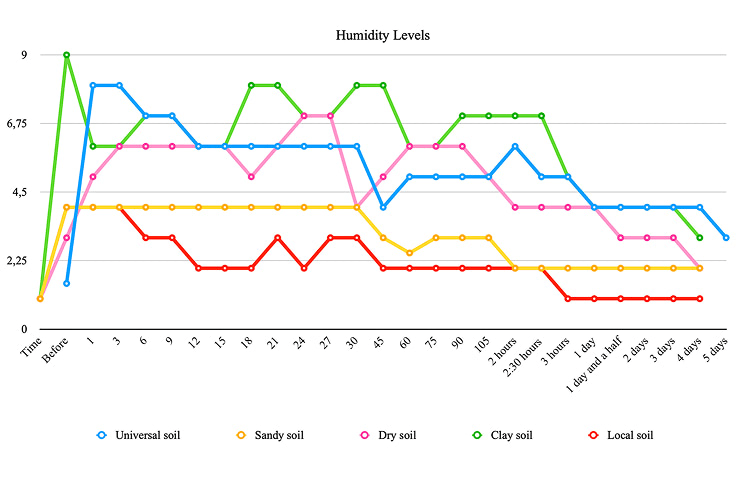
María Suárez-Pumariega Blanco explains: “The project is about understanding how water behaves within the urban landscape and using that knowledge to design smarter, more resilient spaces". Working with the Marbella Club Hotel as a case study, she conducted controlled experiments with five soil types—universal, sandy, dry, clay, and local—to evaluate infiltration and retention capacity under simulated rainfall conditions. "Through a series of soil-based experiments, I explored how different materials influence water infiltration and retention", she adds.
"Based on the data collected, I designed and tested a site-specific rain garden for the Marbella Club Hotel, demonstrating how experimental research can directly inform architectural solutions that merge functionality, sustainability, and design", continues Suárez-Pumariega Blanco. The results led to the development of a layered soil system optimized to enhance infiltration, store stormwater, and reduce flood risk, illustrating how urban stormwater can be reframed from a persistent challenge into a regenerative ecological resource integrated into both landscape performance and spatial design.
Matan Mayer highlights that “Maria’s work is innovative in that it combines both experimental rigor and design sensibility to address a timely challenge in flood-prone areas. It contributes new knowledge to the field of landscape stormwater management and aligns with the core values for the King Medal program".
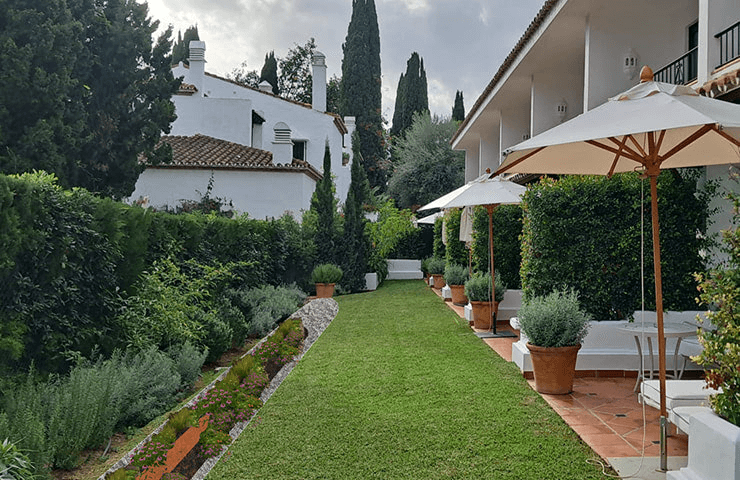
The student's method has been demonstrated through a built test plot at the Marbella Club Hotel, providing a tangible example of resilient landscape design in coastal Mediterranean contexts and illustrating how research-based strategies can support the development of climate-responsive urban environments. By addressing the increasing pressures of extreme rainfall events, urban flooding, and the need for nature-based adaptation strategies, Suárez-Pumariega Blanco's research explores the emerging strategies for climate-responsive design and sustainable urban resilience—issues of growing urgency for cities globally.
*Cover photo: María Suárez Pumariega-Blanco on her Graduation Day at IE University. All other images are from her research project.