Lucca de Souza Vontobel
My name is Lucca de Souza Vontobel, and I’m from Santa Maria, Rio Grande do Sul, Brazil, where I spent my childhood and early teenage years. When I was fifteen, I was invited to represent the Weil Tennis Academy, and I moved abroad—an experience that shaped my independence and changed the way I see the world.
Throughout my life, I was surrounded by artists, but where I come from, art is rarely viewed as a “real” career path. It’s often treated as something you do on the side, not something you build a future from. Even so, my Brazilian roots have always been a source of inspiration for me—Brazil has a way of living with emotion, intensity, and expression, and that energy influences how I create and how I tell stories. Later, when I went to New York for my Entrepreneurial studies, I understood the importance of structure, strategy, and business—but I also realized that it wasn’t enough for me on its own. I’ve always been sentimental and dramatic, and art became my way of translating and externalising what I feel into something visible. Over time, I understood that this isn’t an exclusive experience: life and art move together. Today, I hope my work can connect with people and impact them, in the same way that artists have shaped me—and still shape me—every day.

"Creativity isn’t only in the mind; it lives in the heart. When you speak your truth, you create something real."
Q&A with Lucca de Souza Vontobel

How has your experience been balancing traditional craftsmanship with new fashion technologies (digital tools, virtual fashion, etc.)?
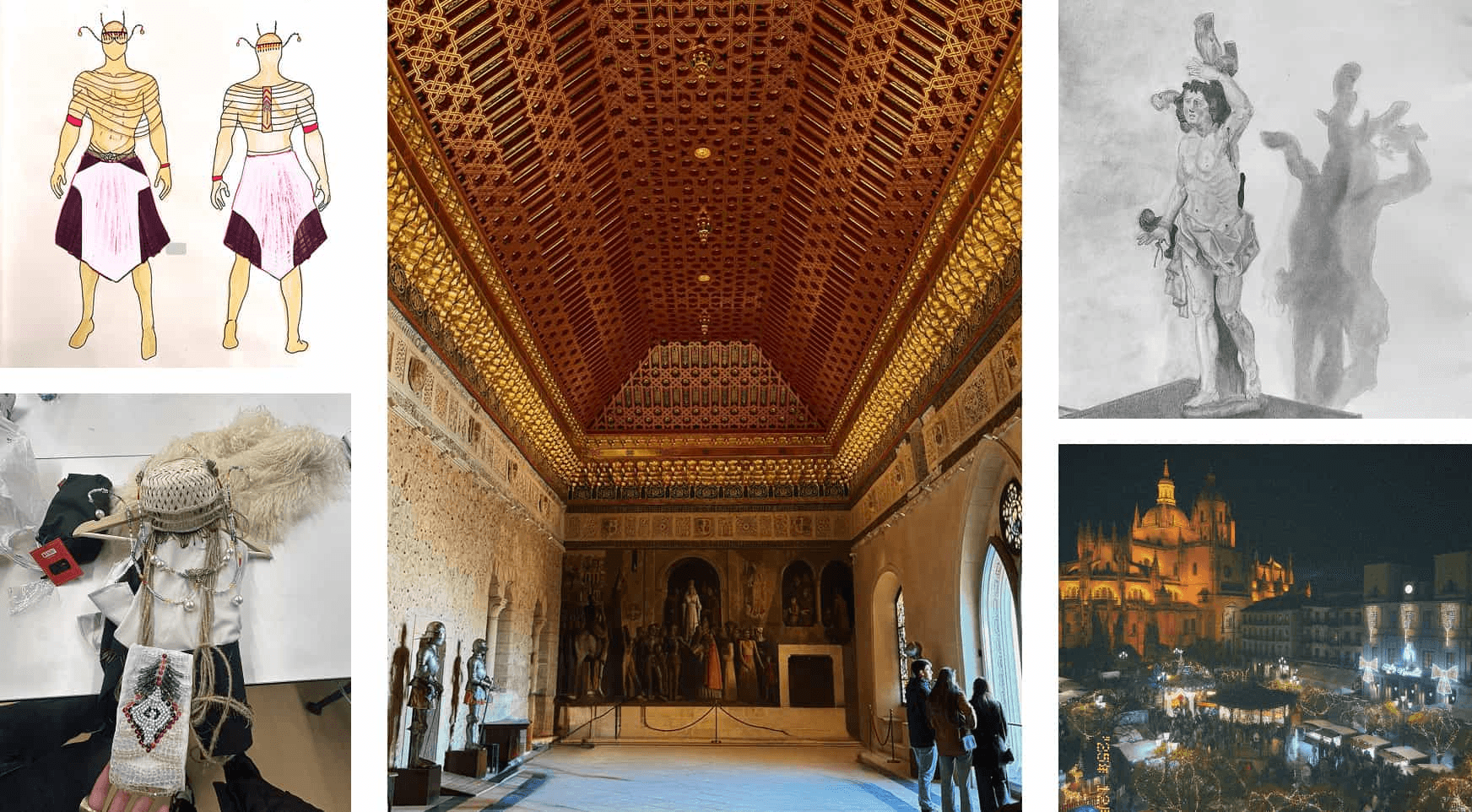
My relationship with fashion and creativity started long before I had a name for it. I come from a family of artistic women and detail-oriented men, and I spent much of my childhood at my grandmother’s house. She has worked with multimedia fine arts her entire life, and growing up around that kind of practice taught me something essential: making is a form of thinking. From a young age, I was constantly creating—experimenting with different materials, techniques, and ways of expressing ideas. What makes my journey a bit unusual is that I never formally studied drawing, painting, or fashion at school. My education wasn’t designed for the creative world—it was shaped more for the stereotypical BBA path. So when I decided to pursue fashion as well and began researching universities, I looked for a place that would take creativity seriously—not only as an aesthetic skill, but as a discipline. That’s what immediately drew me to IE. I was fascinated by how much investment, attention, and importance IE gives to fashion, innovation, and the future of the industry. At IE, I’ve learned that balancing craftsmanship and technology isn’t about choosing one over the other—it’s about using both intentionally. Traditional techniques teach patience, precision, and respect for process. Digital tools, on the other hand, open new possibilities for experimentation, prototyping, and storytelling. My goal is to build a practice where the handmade and the high-tech don’t compete, but strengthen each other—where craft gives meaning and technology gives reach.
Have you participated in any runway shows, exhibitions, or collaborations? What did you learn from those experiences?
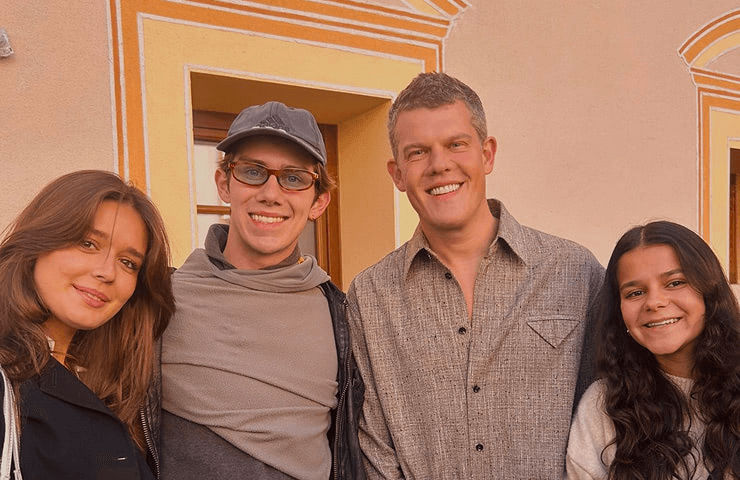
One of the most meaningful experiences I’ve had at IE so far was attending a lecture by Wes Gordon at the School of Architecture and Design. Coming from a smaller city in the interior of Brazil, getting accepted and enrolling at IE already felt like a major achievement. But that moment made me understand something even bigger: being here is not the “win”—it’s the start of a much longer journey. What impacted me most about Wes Gordon wasn’t only his career, but the way he spoke to us. He could have made the event about his own success, but instead he made us feel like we mattered. He didn’t speak like an abstract motivational speaker—he spoke with real belief that students like us will shape what comes next. I left feeling more responsible in the best way: more motivated, more focused, and more confident that fashion has space for people with different backgrounds and perspectives. While I haven’t participated in a runway show in Spain yet, I’m extremely excited because IE is taking us to IFEMA (Madrid Fashion Week) in March, and I’m looking forward to experiencing the industry up close—observing how ideas translate into production, styling, and presentation, and how creative direction becomes a full narrative on the runway.
What’s been the biggest challenge for you so far in the program, and how have you dealt with it?
My biggest challenge has been balancing my Fashion Design degree with a BBA. I genuinely enjoy both, but managing the workload requires a different kind of discipline because the two programs have very different structures. Business courses tend to be more theoretical and cumulative—you learn by reading, practicing, and building understanding over time. Fashion, on the other hand, is intensely practical: sketching, painting, sewing, developing concepts, and producing tangible outcomes. The challenge isn’t only time—it’s switching mindset. One day I need deep focus for analytical work, and the next I need creative flow and hands-on energy. I’ve been learning to deal with this by becoming more intentional with time management: planning ahead, breaking projects into smaller steps, and being honest with myself about how long creative work truly takes. Fashion assignments often require time not only to “do” but to experiment, make mistakes, restart, and refine—so I’m learning to protect that time, while still staying consistent and disciplined in my business coursework.
What advice would you give to someone who is about to start studying Fashion Design at IE?
My advice would be: be proactive, be curious, and use your voice. The Fashion Design degree at IE is new, and that can be used as a strength—because the professors and staff are genuinely open to feedback, and everyone is invested in building the best possible environment for students. Another important point is the faculty. The professors are incredibly experienced, and almost every class comes with real industry insight. If you show interest and take initiative, you can learn far beyond the syllabus—because they bring their professional worlds into the classroom. Finally, I would highlight the network. It’s hard to generalize, but I truly believe that the people around you at IE are one of its greatest strengths. You’re surrounded by students who are ambitious, determined, and passionate about what they do. Being in that environment pushes you to take your own goals seriously. If you stay open, collaborate, and build relationships, you’ll find that IE doesn’t only give you education—it gives you community.