

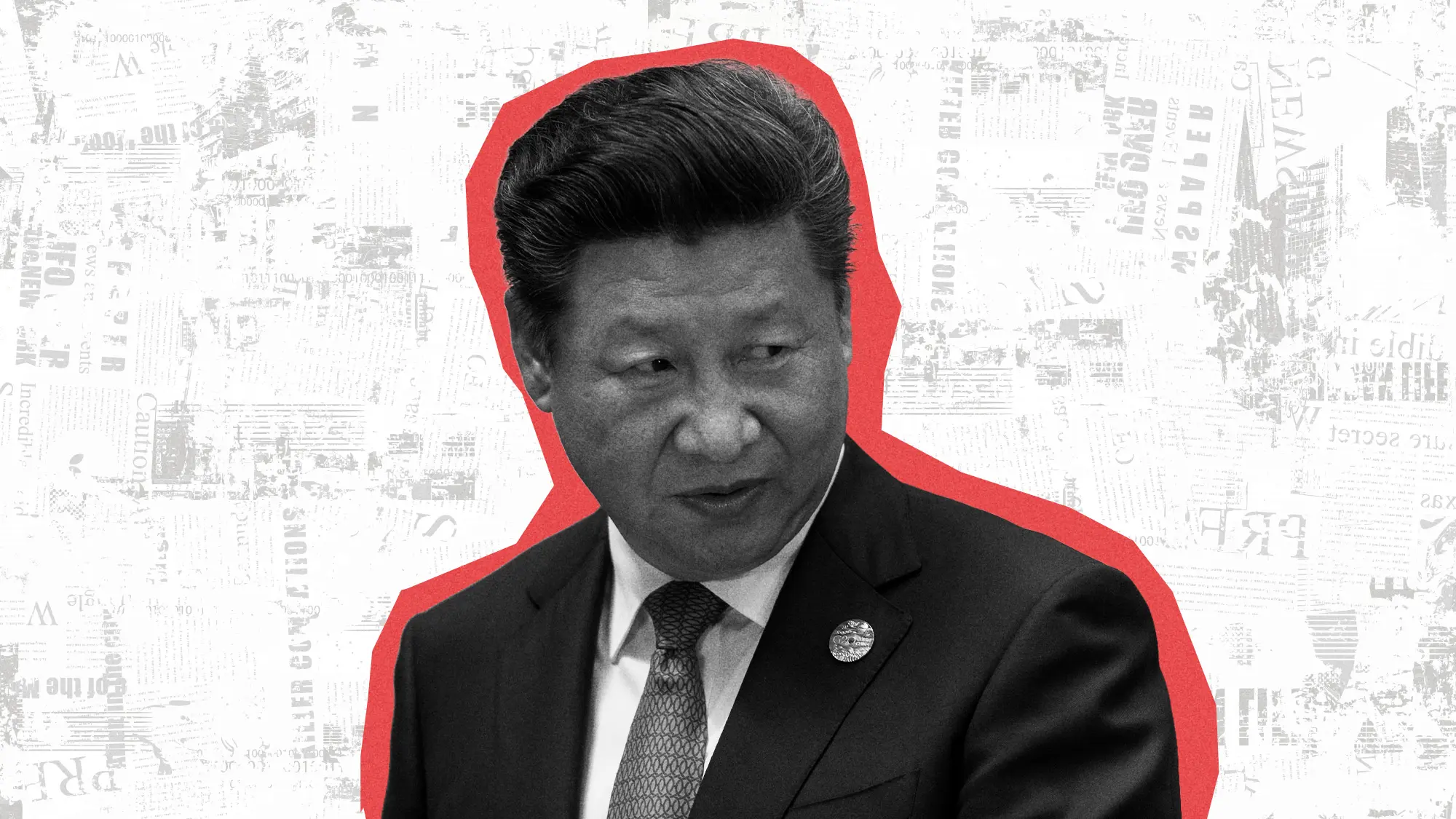
The President of China, Xi Jinping, takes his job very seriously. He does not see himself merely as the leader of a republic. He regards himself as the statesman responsible for restoring his country to what he believes is its rightful place in the world.
For decades, we took it for granted that the most powerful man in the world was the President of the United States.
That assumption made perfect sense. The United States was the world’s largest economy, the dominant military power, the undisputed leader in technology and aerospace, and the guarantor of the Western security order. The energy revolution only reinforced that position, turning the country into the world’s largest producer of oil and natural gas.
However, today, that assumption may no longer hold.
Donald Trump is back in the White House. Vladimir Putin continues to threaten European security. Narendra Modi governs the world’s most populous nation. Yet if we had to identify the one individual most likely to shape the course of the 21st century, our attention would almost certainly turn to China.
That individual is Xi Jinping.
Xi does not simply lead a nation of 1.4 billion people. He presides over the world’s second-largest economy, the largest exporter of goods, the world’s manufacturing powerhouse and, perhaps most importantly, the only country with the ambition and the capacity to challenge the United States simultaneously in technology, industrial production, trade, defense, artificial intelligence, and space.
What sets Xi apart is not simply the size of the country he leads. It is the time horizon that shapes his decisions.
Most Western leaders operate within the constraints of electoral cycles. Their political horizon rarely extends beyond the next election. In some cases, as recent British politics has demonstrated, governments struggle to survive even a single year. Xi, by contrast, thinks in decades.
His overarching goal is what Xi calls the “great rejuvenation of the Chinese nation.” That long-term vision is anchored to a highly symbolic date: the year 2049, the centenary of the founding of the People’s Republic of China. By then, Xi wants China to have become a fully modern, prosperous, technologically self-reliant and militarily powerful nation. The country’s successive Five-Year Plans are not isolated policy documents but milestones within this broader national strategy, translating decades-long ambitions into concrete industrial, technological and economic priorities. Unlike most Western governments, which often recalibrate policy after every election, Beijing seeks to align short-term decisions with objectives that extend across generations.
That ambition helps explain Xi’s accumulation of more personal authority than any Chinese leader since Mao Zedong, the abolition of presidential term limits, the sweeping anti-corruption campaign that has strengthened his control over the Communist Party, the military, and the state. That ambition is also behind his relentless emphasis on technological self-sufficiency, national discipline, and resilience in the face of external pressure.
Xi is convinced that China has entered a defining strategic competition with the United States. In his view, only a nation capable of achieving technological independence will ultimately prevail. For Beijing, technological leadership is not simply an economic objective; it is a matter of national security and geopolitical survival.
No other government is deploying resources on this scale with such strategic focus. China is pouring extraordinary resources into education, semiconductors, artificial intelligence, quantum computing, integrated circuits, robotics, electric vehicles, batteries, advanced nuclear energy, and space exploration. No other government is pursuing technological leadership with the same scale, consistency, and strategic focus.
The consequences are felt far beyond China’s borders. Decisions made in Beijing are increasingly shaping economies, industries, and markets around the world.
If Xi accelerates the production of electric vehicles, European manufacturers feel the pressure. When Beijing ramps up investment in artificial intelligence, Silicon Valley responds. If China restricts exports of critical minerals, global supply chains tighten. And if Xi alters China’s policy toward Taiwan, financial markets across the globe react almost instantly.
Few contemporary leaders wield comparable influence over the global economy, technological competition, geopolitics, and international trade.
Xi’s ambitions also extend well beyond economics and technology. Through the Belt and Road Initiative, China has financed ports, railways, power plants and digital infrastructure across Asia, Africa and Latin America, expanding its geopolitical influence throughout the developing world. Beijing has also sought to position itself as a diplomatic actor, facilitating the rapprochement between Saudi Arabia and Iran and presenting itself as an alternative partner for countries seeking to diversify their economic and diplomatic relationships beyond the Western sphere. Whether these initiatives ultimately reshape the international order remains uncertain, but they illustrate that Xi’s project is not merely about making China richer. It is about expanding China’s influence and redefining its place in the international order.
Yet Xi’s concentration of power also carries significant risks. China’s economy is confronting profound structural challenges. The prolonged crisis in the real estate sector, heavy reliance on imported energy, mounting domestic debt, an expanding stock of non-performing loans, weak consumer demand, and relatively low household incomes all threaten future growth. At the same time, tighter political control over businesses and society could ultimately stifle the innovation that Beijing is trying so hard to foster.
The defining question is whether Xi’s model can reconcile political discipline with economic dynamism. Can a system built on centralized political control continue to generate the creativity, entrepreneurship, and technological breakthroughs needed to sustain long-term economic leadership? The answer could determine not only China’s future, but the global balance of power for decades to come.
That is why Xi Jinping may well be the most consequential leader of our time. Not because he is the most admired. Not because he is the most popular. Nor even because he is necessarily the most powerful.
Instead, it is because no other individual today exerts comparable influence over the forces that are likely to define the decades ahead: global trade, artificial intelligence, advanced manufacturing, the energy transition, military competition, and technological leadership.
The great strategic questions of the 21st century are becoming increasingly clear. Who will lead artificial intelligence? Who will dominate advanced semiconductors? Who will secure access to critical minerals? Who will shape the future of space exploration? And, ultimately, which political and economic model will prove more resilient? Each of these questions, in one way or another, leads back to Xi Jinping.
In 1929, the philosopher Ortega y Gasset published his celebrated essay Who Rules the World? Nearly a century later, we are still asking the same question. Today, however, the answer may no longer lie in Washington. We may have to turn our attention to China: Xi Jinping.
A version of this article was originally published in Spanish in El Debate.
© IE Insights.