The Transatlantic Bridge Conference 2026 calls for integrated responses to interconnected challenges

At the Transatlantic Bridge Conference in Bologna, transatlantic leaders discussed the future of European security, AI governance, economic resilience and trade, democratic legitimacy, and financial stability.
IE University joined fellow partner institutions in co-organizing the 2026 edition of the annual Transatlantic Bridge Conference (TAB), held in Bolonia on May 29–30, 2026. This prestigious annual conference is driven by four leading global institutions: Johns Hopkins University School of Advanced International Studies (SAIS), IE University School of Politics, Economics and Global Affairs, Sciences Po Paris School of International Affairs, and the Yale Jackson School of Global Affairs.
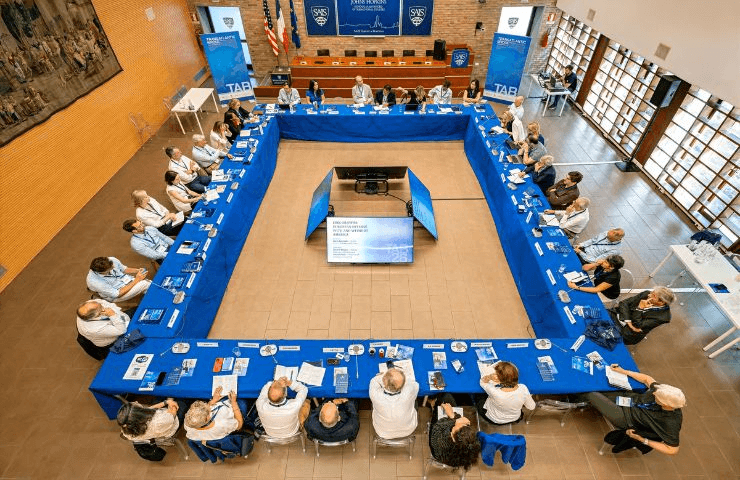
Over two days of discussions, 40 participants from academia, government, journalism, and public policy explored in five working sessions the political, economic, technological, and security challenges shaping the transatlantic relationship and the broader international order.
"The transatlantic relationship remains central to international stability, but it faces growing challenges—from security and economic competition to technological disruption and democratic pressures. Bringing together leading thinkers and practitioners to engage these issues is central to our mission," underlined James B. Steinberg, Dean of Johns Hopkins SAIS.
The keynote discussion, After the Rupture? Rebuilding the Transatlantic Bridge, brought together leaders from the four partner institutions to reflect on the future of transatlantic cooperation. The conversation explored how democratic societies can respond to geopolitical competition, economic fragmentation, technological change, and domestic political pressures while preserving the partnerships and institutions that have underpinned international stability for decades.
According to Enrico Letta, Dean of IE School of Politics, Economics and Global Affairs, "Europe faces an era in which economic resilience, technological capacity, and competitiveness are no longer simply economic objectives—they have become strategic imperatives."
Throughout the conference, participants returned repeatedly to a common theme: today's policy challenges can no longer be understood in isolation. Security, economics, technology, and democratic governance are increasingly interconnected, requiring governments and institutions to develop more integrated approaches to policymaking.
"As the transatlantic relationship faces growing political strain, forums like this help strengthen understanding, build bridges, and promote Euro-Atlantic resilience," stated Arancha González Laya, Dean of Paris School of International Affairs, Sciences Po.
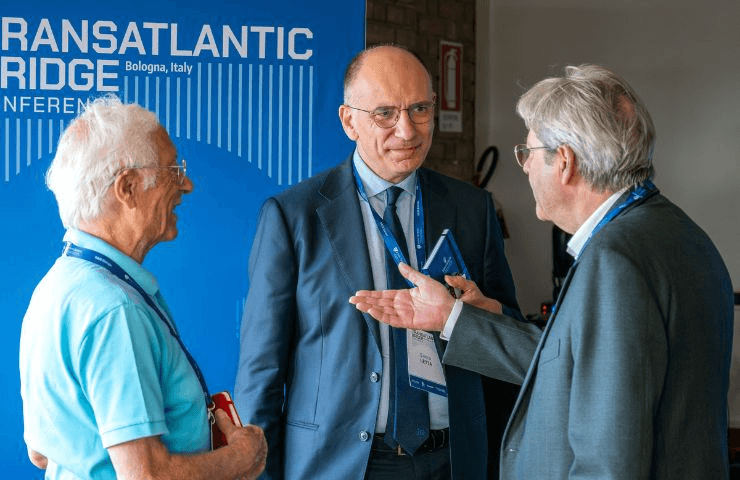
Artificial intelligence emerged as a central topic of discussion. Participants examined how advances in AI are reshaping economic competitiveness, national security, labor markets, and public policy. Discussions also explored the different approaches being pursued by the United States, Europe, and China, as well as the opportunities and challenges democratic governments face in balancing innovation, regulation, and accountability.
"Economic change, security challenges, and technological disruption increasingly shape one another. Understanding those connections is essential to navigating a more uncertain global environment", explained James Levinsohn, Dean of Yale Jackson School of Global Affairs.
Economic resilience and trade featured prominently throughout the conference. Participants discussed the future of globalization, the growing role of industrial policy, and the ways governments are adapting to an international environment increasingly shaped by strategic competition. Particular attention was given to the challenge of balancing economic openness with concerns about competitiveness, technological leadership, and economic security.
The conference also examined the health of democratic institutions and the pressures facing democratic governance. A keynote discussion on the future of politics addressed declining trust in institutions, political polarization, and the relationship between democratic legitimacy and governments' ability to deliver tangible economic and social outcomes.
Additional sessions focused on international finance and Asia's growing influence on the global order. Discussions underscored the extent to which developments in one region increasingly shape political and economic outcomes across the globe.
Across discussions on security, technology, economics, and governance, a common conclusion emerged: the challenges confronting Europe and North America are increasingly interconnected and require sustained cooperation, informed analysis, and long-term strategic thinking.
By bringing together diverse voices from academia, government, journalism, and public policy, the Transatlantic Bridge Conference continues to foster deeper understanding of the issues shaping the future of the transatlantic relationship and global affairs.