IE Sci-Tech announces Master in Financial Technology at MERGE, Hosts Exclusive Tech Summit on Campus

From AI innovation to smart contracts, virtual assets and their security, new business models and regulation, IE Sci-Tech leads the conversation at MERGE announcing the launch of its MFT program and hosting a full day of hands-on FinTech immersion.
This October, Madrid is at the center of Europe’s financial technology map as MERGE 2025—the leading conference on the future of finance and digital infrastructure—takes over the city. Among the week’s headline moments: the official launch of the Master in Financial Technology (MFT) by IE School of Science & Technology (IE Sci-Tech), presented during the main conference by the program’s Academic Directors, Andrew Whitworth and Andrés Alonso.
Dr Andrew Whitworth, adjunct professor at IE Sci-Tech and global consultant on fintech policy, shared the stage with Andrés Alonso, Deputy Director General at the Bank of Spain’s Directorate for Payments and Market Infrastructures and also an adjunct professor at the School. Their joint keynote unpacked the current shift in the financial services landscape—from AI to blockchain and beyond—and set the stage for a new kind of fintech education.
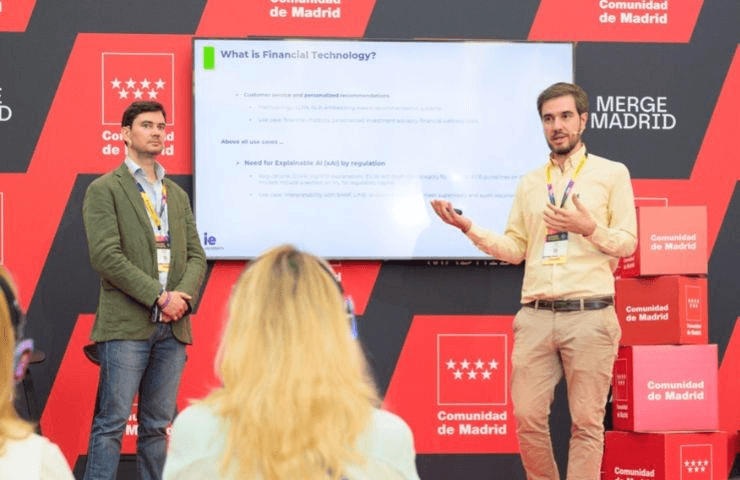
A Master’s Program Built for Convergence
The new Master in Financial Technology addresses a market need that’s no longer theoretical. Finance today is significantly different from before. Traditional players have been unbundled, forms of money have been upgraded and flows move through multi-channel ecosystems, in real time, and increasingly managed through AI-driven models. Regulation and public infrastructure have adapted with these changes.
In response, IE Sci-Tech has launched a unique program: the MFT is an 11-month, full-time, interdisciplinary program based in Madrid, combining technical training with financial ecosystem and policy insight.
The curriculum includes core pillars in:
- FinTech Services (smart contracts, DLT ecosystems, tokenization, virtual assets)
- AI/ML for Finance (generative models, explainability, anomaly detection)
- Cybersecurity, GDPR, cryptography and PQC
- Digital payments, trends and financial infrastructure
- Regulatory technology and innovation frameworks
- Hands-on experience
Students will engage in tech labs, data challenges, startup projects, and work closely with the School's ecosystem partners-including top firms in the industry like Ripple, N26, Trade Republic, GetNet, tech giants like Google, Microsoft, IBM or Infosys, and regulators.
"Changes to financial markets today are based on innovation in technology. These new techs allow new business models but can also challenge existing policy frameworks", said Whitworth during the launch. "We built this program to reflect that cross-over—because the future of finance needs people who can write code, understand financial markets and navigate the policy landscape."
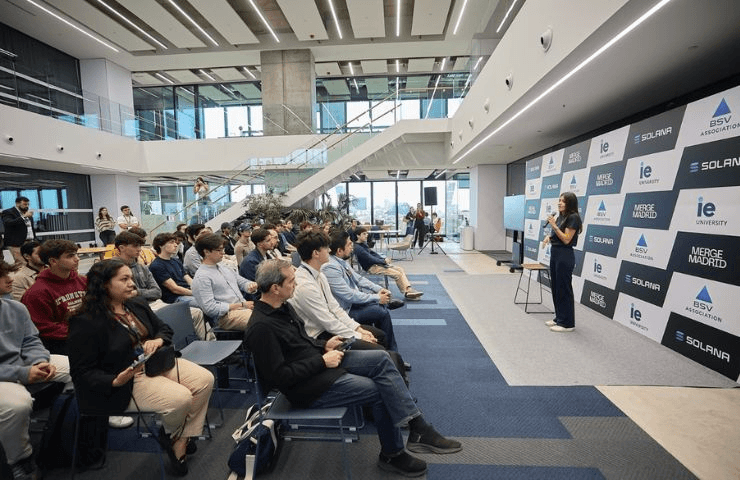 When MERGE Came to Campus
As MERGE unfolded across Madrid, IE University exclusively hosted the Tech Summit Friday, opening its doors to developers, students, and ecosystem professionals.
The day, curated and delivered by IE Sci-Tech, offered two main learning pathways: morning sessions offered a practical introduction to blockchain development—covering architecture, tools, smart contracts, and ecosystem comparisons—led by engineers from Santander, Vottun, Metlabs, BSV, and Solana.
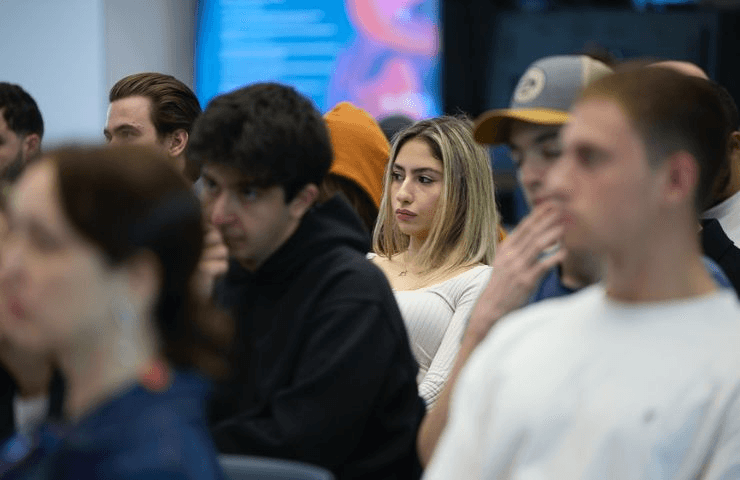
The afternoon shifted to an advanced technical track, with rapid-fire talks on topics like scalability, cross-chain security, ZK proofs, and AI-blockchain convergence. Parallel sessions included a BSV developer workshop and a Solana project showcase.
Running in parallel, the Advanced Blockchain Series featured fast-paced 20–30 minute tech keynotes. Topics ranged from Layer-2 scalability and cross-chain bridges, to ZK-proofs, account abstraction, oracles, and the implications of quantum computing on blockchain security.
Q&A with Prof. Andrew Whitworth
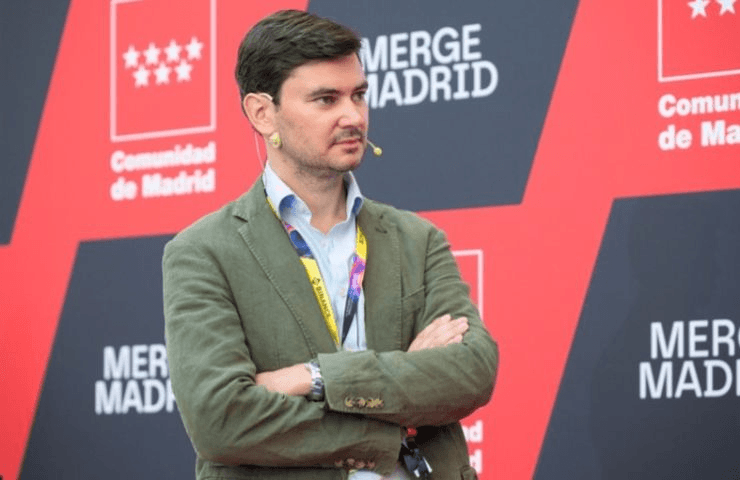
Q: What differentiates IE’s approach to fintech education?
Whitworth: We are multidisciplinary by design. Students learn to navigate the emerging technologies, systems and policies that are shaping finance—from AI, to blockchain design and regulatory models. It’s a systems-level view, not just coding, financial economics or compliance alone.
Q: Why launch this program now?
Whitworth: Timing. We’re at an inflection point where institutions and startups alike are rebuilding financial services around AI, blockchain and wider techs. The next decade belongs to those who can bridge code, capital, and compliance.
Q: What excites you most about the current moment in fintech?
Whitworth: The crossover between disciplines. You’ve got data scientists founding fintechs, lawyers learning Solidity, and banks running zero-knowledge proofs. That interdisciplinarity is exactly what our program is designed to foster.
To learn more about the new Master in Financial Technology and the truth about Fintech as a whole (including AI, crypto, and everything in between) visit the full, in-depth interview with Vice Dean of Postgraduate Programs, Guillermo de Haro, at Uncover IE.