IE Sci-Tech Tackles Risk Research in the Age of Climate Uncertainty

The VIG-IE Insurance & Tech Lab gains visibility at international climate-insurance conference as new tools and ideas reshape the future of insurability.
As climate change redefines risk across nearly every sector, the insurance industry finds itself at a turning point. From rising mortality during heatwaves to more frequent environmental disasters, the future of insurability is being rewritten - often faster than models can keep up.
It’s in this context that the VIG-IE Insurance and Tech Lab, a joint initiative between IE School of Science & Technology and Vienna Insurance Group (VIG), is carving out its role. Launched under the IEX Research Xcelerator, the Lab explores how climate dynamics, emerging technologies, and new data tools can reshape life and health insurance for the decades ahead.
The Lab’s work was featured this month at the Climate Change and Insurance 2025 (CCI25) conference in Edinburgh- a growing international forum that brings together actuaries, insurers, and researchers at the frontiers of modelling and risk management.
A Shared Agenda: Climate, Data, and Insurance Innovation
The IE team contributed to the conference’s core discussion: how to build insurance systems that can withstand climate shocks and support long-term resilience. The School’s current research, which combines climate science, data science, and actuarial thinking, is part of a broader strategy to help insurers evolve from reactive to proactive risk managers.
Rather than simply forecasting premiums or payouts, today’s questions are deeper: How does chronic exposure to high temperatures or air pollution affect life expectancy? Can models account for population adaptation or public health interventions? And how do we make climate-informed insurance products affordable and sustainable?
These are not only technical questions. They are also social and economic, and they’re exactly the kinds of challenges the IE-VIG partnership seeks to address, within the framework of IE Impact Xcelerator, a strategic platform accelerating the development and implementation of science- and technology-driven solutions in key sectors such as health, climate, energy, and finance.
Making Climate Risks Tangible
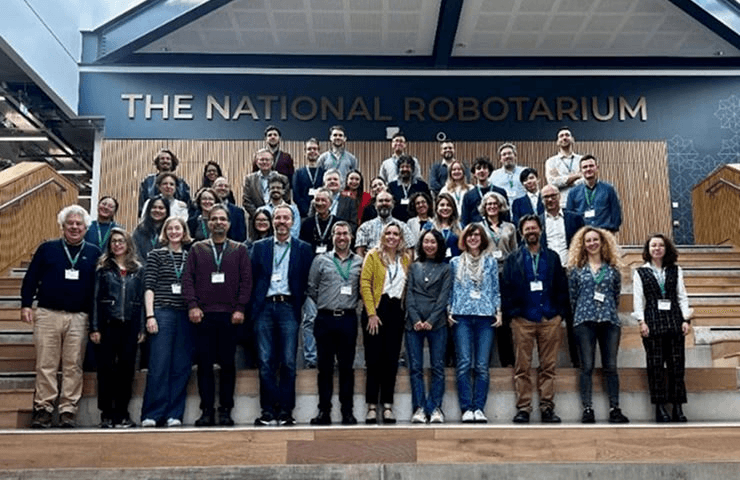
David Gómez-Ullate, Vice-Dean of Research at IE Sci-Tech and Director of the IE Datalab and Carmen Boado-Penas, Professor of Actuarial Science at Heriot-Watt University are both co-leading this research project with Vienna Insurance Group, with the aim of quantifying the impact of climate change in life insurance products in over more than 30 European countries. Prof. Boado-Penas was also the main organizer of the CCI 2025 conference in Edinburgh that brought together more than 65 experts in this field.
Representing IE Sci-Tech at the conference, IE Sci-Tech researcher Daniel Precioso shared a preview of ongoing work that translates climate variables - like temperature, humidity, and pollution - into life expectancy forecasts and sick leave trends. The team is working across multiple future scenarios and aims to provide actionable insights for both insurers and public policy. These include climate-adjusted life tables and tools to help insurers better manage uncertainty and long-term commitments.
In future phases, the Lab will explore forecasting of extreme events and modelling how populations adapt over time, using advanced machine learning techniques and new sources of data.
From Lab to Policy Table
The VIG-IE Insurance and Tech Lab is co-chaired by Ikhlaq Sidhu, Dean of IE Sci-Tech, and Klaus Mühleder, Head of Opportunity Management at VIG. It is designed to go beyond academic publishing and to act as a global hub for collaborative research, industry partnerships, and actionable recommendations in insurance and resilience.
"The insurance industry is facing challenges it didn’t anticipate just a decade ago," said Vice-Dean Gómez-Ullate. "We’re combining different areas of expertise - climate, health, data - to help the industry respond to these shifts".
Climate Risk as a Systemic Risk
While the IE contribution focused on life and health insurance, the broader CCI25 conference also tackled climate tipping points, ageing populations, and the use of climate indices in actuarial dashboards. As the organizer of the conference, Prof. Boado-Penas played a key role in bringing together academic and professional communities into deeper dialogue, a goal aligned with the mission of the IEX Research Xcelerator.
Tools for a Resilient Future
As the Lab enters its next research cycle, the emphasis is on building tools that can make climate risk visible, measurable, and ultimately manageable for insurers and society alike.
In a sector where models often lag behind reality, the work happening at IE Sci-Tech is helping push the boundary forward not only through theory, but through practical tools designed to meet the risks of tomorrow.
To find out more, keep an eye for IEX news or even join an IEX Gateway Specialization – for more info contact impact.xcelerator@ie.edu.