Testing Segovia’s Water Systems, One Fountain at a Time

A cross-disciplinary field study mapped water quality across public sources, revealing how local systems vary within a single city.
Students from the Bachelor in Environmental Sciences and Sustainability from the IE School of Science & Technology and IE University’s IE Impact Humanities courses carried out a distributed water sampling project across Segovia, using the city as a living laboratory to examine how water quality varies between public and natural sources.
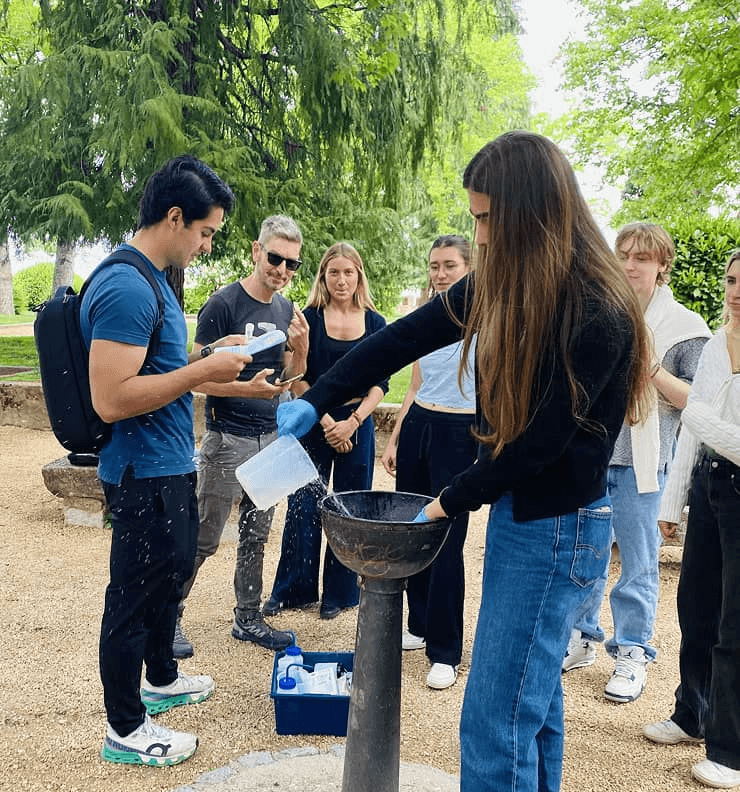
Public fountains are a visible part of Segovia’s urban infrastructure, but the systems behind them, including source, treatment, infrastructure and exposure to contamination, are rarely examined outside municipal controls. The project focused on testing how these systems perform across everyday locations, from fountains used for drinking to nearby natural waterways.
Working in mixed teams, students collected samples from 8 sites across the city. Sampling included six public fountains, the Eresma River, and an irrigation channel, locations that reflect both managed and unmanaged water systems.
What was measured
Students were trained to assess a set of environmental indicators commonly used in water quality monitoring. These included pH, turbidity, conductivity, dissolved oxygen, chlorine, heavy metals, nitrates, and the presence of E. coli.
Each parameter captures a different aspect of water conditions. Coliforms, and specifically E. coli bacteria indicate contamination from waste sources and are a direct signal of potential health risk. Measures such as turbidity and dissolved oxygen reflect broader environmental dynamics, including sediment levels and biological activity.
For some participants, the process reintroduced scientific practice in a direct way. "It was an engaging activity… it helped me reconnect with a part of myself I hadn’t thought about in a while," said Alina.
Sampling the city as a system
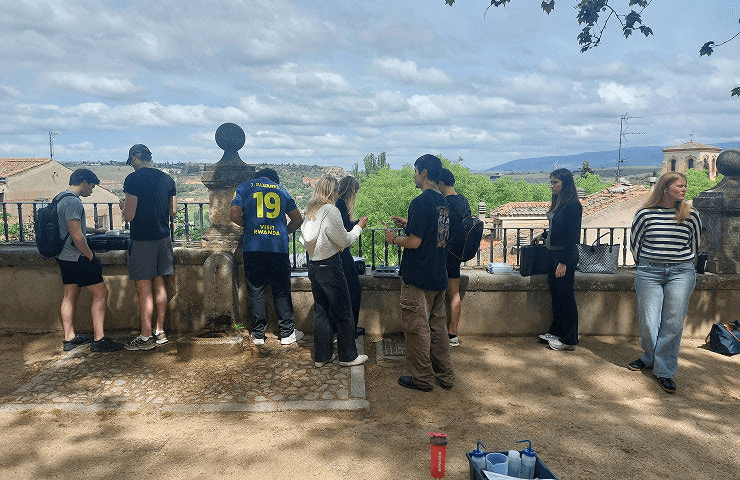
The fieldwork produced a distributed dataset, with measurements taken simultaneously across different parts of Segovia. This approach captures local variation that is often missed in centralized monitoring.
BESS students supported the process by guiding sampling techniques and ensuring consistency across teams. At the same time, they explained how each measurement relates to environmental conditions on the ground. "An expert student guided us on measurements and helped open my eyes to certain local sewage problems affecting biodiversity and stream health," said Beatrice.
The collaboration between disciplines was visible in how students approached each site, combining technical measurement with attention to how water is used and accessed across the city.
What the data shows
Results varied depending on the type of water system.
All six public fountains tested met potable water standards. The samples showed no evidence of contamination at levels that would restrict use, suggesting that treated and managed sources remain reliable for consumption.
In contrast, coliform bacteria were detected in both the Eresma River and the irrigation ditch. This could indicate contamination typical of surface water systems exposed to agricultural runoff or urban sewage discharge. In these cases, the water is probably not suitable for consumption or recreational use without treatment.
Although the dataset is limited in time, it highlights how water quality can shift significantly between managed infrastructure and open environmental systems within a small geographic area.
For students, contributing to this dataset added a different dimension to the work. "It was an eye-opening experience to see how community efforts can contribute to protecting shared resources," said Jenna.
Extending observation through participation
Projects of this kind sit between formal monitoring and everyday infrastructure. Municipal systems provide periodic and standardized checks, but they rarely capture variation across multiple locations at the same moment.
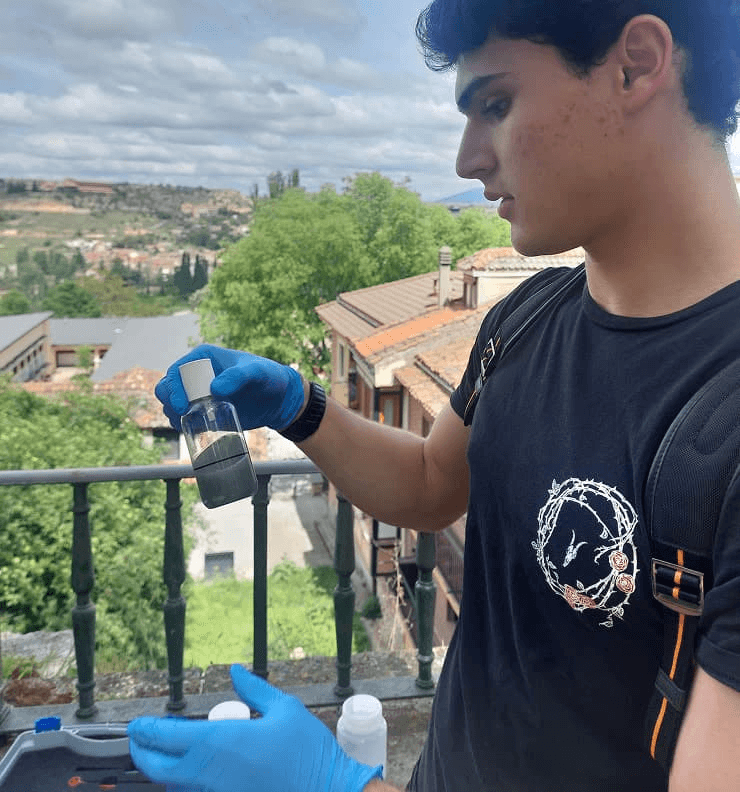
By contrast, distributed sampling allows for a more localized view of how water moves through the city and where it is exposed to risk. Treating Segovia as a living laboratory makes those systems visible - as infrastructure, and as environments shaped by use, maintenance, and external pressures.
For participants, that visibility has a practical dimension. "Eco-anxiety is real… but there is something powerful about putting your boots on the ground and doing the work alongside a community that cares," said Santiago.
While the dataset remains limited in scope, it points to a gap between regulated water systems and the conditions experienced across the wider environment. Expanding this type of observation could help build a more detailed understanding of how water quality is distributed across the city and where further attention is needed. Meanwhile students leave with a clearer sense of how local infrastructure operates, how environmental risks are identified, and how different ways of thinking can be combined to understand them.