Uliana Torkunova on Trust, Iterations and Mindset at the Tech Venture Bootcamp

From idea to prototype, IE students explored how collaboration and experimentation drive real-world tech solutions.
19 teams spent 12 days turning concepts into prototypes, testing ideas and refining them with support from peers and an exceptional board of mentors, experienced entrepreneurs, industry executives, and leading researchers. Then, participants prepared during those 12 days to pitch their venture ideas to a panel of experts, receiving constructive feedback to improve their pitches and business models. The Tech Venture Bootcamp focuses on what it takes to turn an idea into a viable tech venture. "The Tech Venture Bootcamp represents the future of higher education: interdisciplinary, experiential, connected to industry, and focused on solving real problems," said Robert Polding, Assistant Vice Dean of Computing and Data Science and academic advisor of the program. "It’s been incredible to watch our campus transform into a vibrant hub of innovation and collaboration."
An environment for experimentation
From October 2nd to 13th, the Tech Venture Bootcamp took over IE Tower and Area 31 at María de Molina, welcoming students, executives, developers and entrepreneurs to explore scalable tech solutions through experimentation and collaboration.
Early sessions helped participants connect with their teams and explore real-world problems that would shape their solutions and prototypes. Workshops on business narratives, AI and circular economies challenged them to translate technical concepts into solutions that users could understand and trust. Additionally, mentoring and feedback sessions helped teams adjust and refine their ideas before their final presentation to the panel.
Overall, 72 students spread across 19 teams participated. They developed business ideas spanning social media, HealthTech, EdTech, FinTech and sustainability-focused GreenTech. On the final day, the teams presented their startups to an audience of peers, mentors and an outstanding panel of experts.
Lessons in venture building
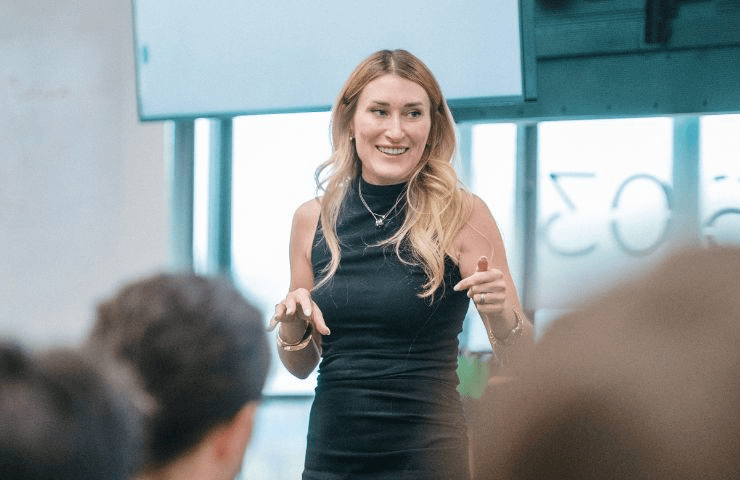
Torkunova explained that trust shapes the way that users relate to a product and also gives founders confidence in their own ideas. She described how sustainable solutions will only scale when they are reliable, accessible and easy to use. "If we don’t create trust in sustainable solutions, we won’t achieve change," she said. Her words underlined how at its core, a solution must address a real need in a way that earns users’ confidence.
From idea to MVP without code
Her first venture illustrates this approach. She started with a clear idea of the problem she wanted to fix, something that users genuinely experienced difficulty with: finding parking. With that in mind, she was able to develop a solution that addressed this real need.
To test the concept, she relied on just a calendar and email to manage bookings. This simple approach allowed her to validate the idea before any coding or app development. "Creativity starts where resources are limited," she explained. The Bootcamp’s focus is on learning through experimentation, testing ideas, and refining solutions, which is all demonstrated in the story of Uliana’s venture.
Torkunova also highlighted the importance of mindset and developing the confidence to speak up and push beyond your comfort zone. "Don’t put limits on yourself. Don’t be afraid of anything," she advised. Technical skills alone are not enough to succeed as an entrepreneur; soft skills often matter more. "You have to believe in yourself, build a personal brand and find the right people to talk to."
Winners and runners-up
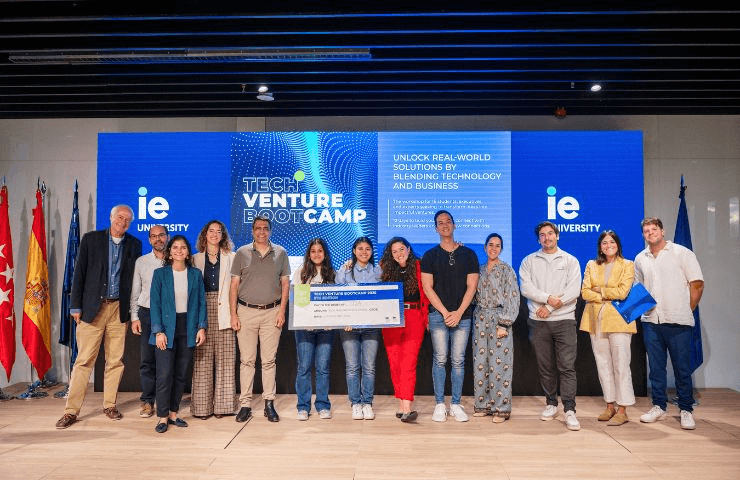
On the last day, teams presented their prototypes and the judges then identified the top six ideas. The semi-finalists each delivered a five-minute pitch, presented an in-depth product demo and answered questions from the judges. Finally, the winners were announced:
- RYZA—a simple, easy-to-use circular fashion AI tool that helps consumers repair, upcycle, donate and recycle clothing—took first place for the best overall project in terms of tech, business model, growth potential and impact. The team also delivered a stand-out presentation.
- DION—a pre-production framework that revolutionizes filmmaking without disrupting the creative process—came second, showing a balanced performance across all categories.
- UtopiaLabs—an AI-driven platform that creates digital personas to model human behavior, providing reliable foresight that helps new products and marketing campaigns succeed—was in third place, also excelling in each evaluation category.
RYZA also won the first-ever Sustainable Impact Award, an initiative that aims to build synergies between tech and sustainability. The team will receive mentorship from entrepreneurship and sustainability experts to continue building on their idea, as well as a Certificate in Applied Sustainable Innovation at the end of the process.
From iteration to impact
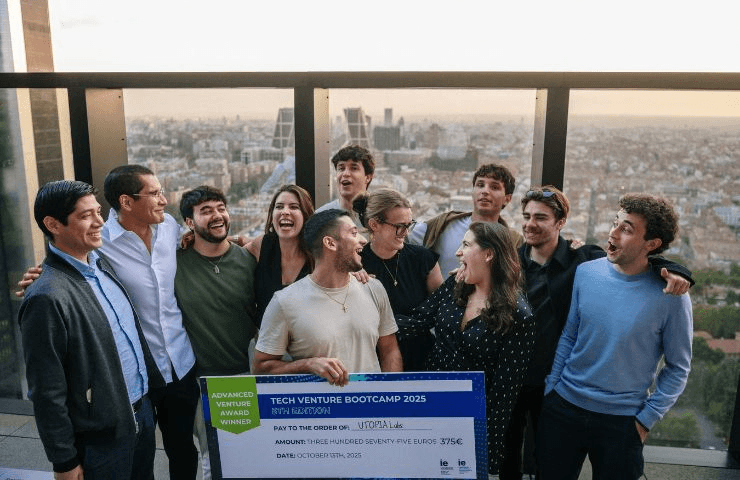
The Bootcamp concluded with Dean Ikhlaq Sidhu closing the day and recognizing the efforts of everyone involved. He highlighted the value of hands-on experiences and learning by doing. Teams learned to test ideas, adjust in response to feedback, and refine their solutions in response to real-world challenges.
As Torkunova highlighted in her keynote speech, while knowledge is important, practical experience and the right mindset are critical to making it as an entrepreneur. After all, she noted, "Success is just persistence." Creating a practical and reliable solution requires trust in both the idea and the team, along with the persistence to overcome challenges.