- Home
- Alumni News
- Where People Meet Purpose: Ie Alumni Leading Hospitality Forward
Where People Meet Purpose: IE Alumni Leading Hospitality Forward

From student housing to luxury resorts, IE alumni bring cultural intelligence and experience design to one of the world’s most people-driven industries.
The global hospitality industry—valued at over $4 trillion and supporting more than 300 million jobs worldwide—guides people through moments of transition. Travelers move between destinations, careers, and life stages as hospitality leaders thoughtfully design the guest’s journey. Data show that emotional connection—not just functional service—drive satisfaction and loyalty. So, industry leaders now invest in personalization, cultural awareness, and service because at its core, hospitality centers on how people feel about their experience.
This human-centered, globally oriented mindset aligns naturally with IE alumni, who develop similar capabilities in diverse, high-transition environments. Having learned to navigate multicultural settings, adapt across contexts, and build meaningful connections, they are well prepared to contribute to an industry where shaping experiences defines success.
At IE University, a growing number of IE students and alumni are forging their way in the hospitality sector. In 2025, 57 IE graduates joined the hospitality sector, representing a 36% increase since 2023. Meet some of the IE Alumni who are changing the hospitality sector:
Frank Uffen: The Social Hub, The Class Foundation
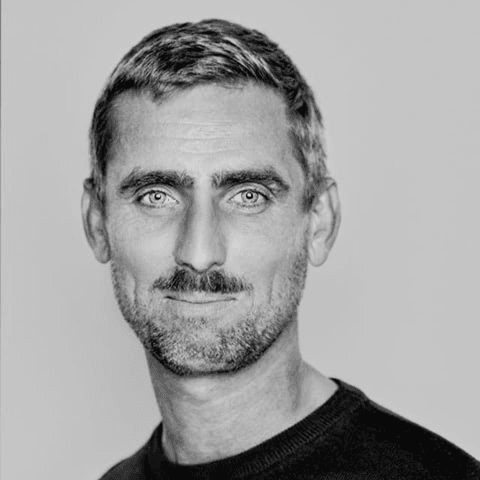
Frank Uffen, an IE University International MBA graduate (2007), has built a reputation that extends well beyond traditional hospitality leadership. As a key force behind The Social Hub, he has helped pioneer "hybrid hospitality"—a model that blends accommodation, work, and community to redefine how people live, connect, and learn in urban spaces.
"For me, the most profound realization was discovering the transformative power of a truly international community," said Uffen. "Before IE, I hadn’t fully grasped how much you can learn from a workgroup composed of six different cultures and six distinct professional backgrounds."
Now known as The Social Hub, a trailblazer in student accommodation, the concept began in 2010 as The Student Hotel—born from a shared, disruptive belief between founder Charlie MacGregor and Uffen: students deserved better. At a time when the internationalization of higher education was accelerating rapidly, they recognized an opportunity to redefine the sector—shifting it from "boring and functional" lodging to aspirational spaces designed to foster connection, community, and shared experience.
The first hotel—an immediate success—opened in Rotterdam, where its community spaces were embraced not only by guests, but also by locals, travelers, and freelancers. This led to its rebranding as The Social Hub, a name that better reflects its sense of connectedness.
It now operates in eight European countries, with over 21 locations and more than 10,000 rooms.
As a B Certified Corporation, they went a step forward, with a focus on social impact, they spend 1% of their annual revenue to support university students through immersive learning initiatives and scholarships. This year, the foundation supported 109 students, of whom two are IE students in partnership with the IE Foundation.
"I have always been driven by a desire to ‘do the right thing’ through the lens of urban development," said Uffen. "I learned that real impact happens when you successfully align policy goals with private interests."
This philosophy underpins his work, including The Class Foundation, which he also co-founded with Charlie MacGregor to address challenges in student housing. Now Europe’s largest student housing network, it focuses on research to help students access accommodation.
On the topic of equitable housing, Uffen pointed to Madrid as a key challenge—a city that attracts talent but is becoming increasingly unaffordable without stronger supporting infrastructure.
"Companies must move beyond just providing a room," said Uffen. "Meaningful impact happens when hospitality companies stop seeing themselves as landlords and start seeing themselves as ecosystems for growth."
Uffen said he believes that despite the digitalization craze, the hospitality landscape is the "human" profession.
"As work and learning become increasingly digital, the value of facilitating real, physical human connection skyrockets," said Uffen.
"I believe ‘Hospitality thinking’ will become a critical skill in sectors beyond hotels–from asset management and housing to education; it is the ultimate service-oriented mindset."
Sergio Zertuche Valdés: Palladium Hotel Group
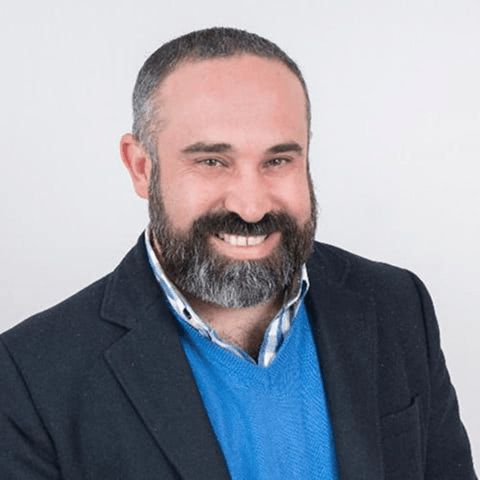
Sergio Zertuche Valdes has spent 18 years at Palladium Hotel Group, joining the team about a year after graduating from his first IE Masters, an MBA in 2006. He began his journey with Palladium in the Caribbean, where he would go on to spend six years, building his expertise on the region.
"I always say this is an industry of people—it’s by people, for people," said Zertuche. "We’re all singing the same song: the same rooms, the same restaurants, the same pools; the difference is how you sing it—the passion, the culture, the way you bring it to life."
Palladium Hotel Group is a chain that was founded in the 1960s in Ibiza. Over the years, the company has expanded into different luxury resorts and hotels around the world. In 2020, the group became Palladium Gestion S.L., separating its real estate branch and hotel operation from its original organizational structure.
Their portfolio today includes, but is not limited to, Grand Palladium Hotels & Resorts, TRS Hotels, BLESS collection Hotels, Hard Rock Hotel Ibiza, and even holding the European license for the Hard Rock Hotels.
In 2008, Zertuche was the Legal Representative and Chief Financial Officer. He has since moved up the ranks, working as the Chief Sales & Marketing Officer and serving as a board member.
"We were lucky to join Palladium at a pivotal moment, during a generational transition. Our current president, who studied the MBA with us, selected a small group of trusted classmates to help lead the company’s future. Today, around seven of us from IE hold key leadership roles within Palladium Hotel Group, including the president, the CEO, and other senior executives."
Zertuche oversees the marketing mix for a portfolio of around 40 hotels across six countries, a significant undertaking. His second master’s, the IE Master in Sales, Distribution, and Marketing Operations (2016), prepared him for the complexities of modern markets.
He illustrated the industry's complexities with the launch of the Hard Rock Hotel in Tenerife, a destination more associated with classical music than rock & roll. The hotel challenged the island’s identity, reinforcing his view that demand is not given—it is created.
"You came for classical music, but let me show you rock & roll," said Zertuche.
Today, the CS&MO role goes beyond branding and positioning. It is a holistic, business-driven function requiring a deep understanding of revenue management, distribution, marketing behavior, and current events.
This shift comes as travelers arrive having already experienced their trips through social media, with expectations shaped in advance—making "Instagrammability" a key factor. In a VUCA environment, rapidly adapting to change and optimizing pricing has also become central to the role.
"In hospitality, every year tells a different story—and your success depends on how you react to what you can’t control."
Eduardo Moreiro: Rosewood Hotels & Resorts
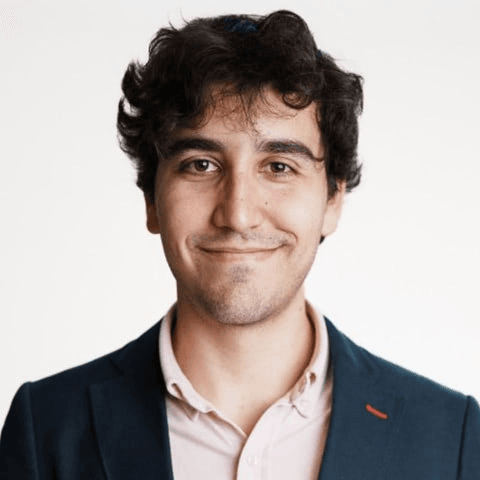
Eduardo Moreiro graduated from IE only last year with a Bachelor's in Business Administration, and yet, he has recently completed his 10th month working for Rosewood Hotels & Resorts in Madrid, famously one of the most prestigious hotel groups in the world.
"People often talk about consulting, investment banking, and those kinds of jobs as the intense ones, but in a hotel—especially in a luxury hotel—you realize how fast everything moves," said Moreiro. "A guest waiting one minute can be a real problem, so you need to be good, and you need to be quick."
He attributes his current role in part to last year’s IE Hospitality Day, where he was recruited—an event Moreiro returned to this year as a panelist himself. Originally brought on to Rosewood as a marketing intern, he now works full-time as a Reservations Sales Agent. The role requires close attention to clients—guiding them, tracking their needs and expectations—while simultaneously driving sales.
Said proactivity is a skill he credits to IE’s emphasis on entrepreneurship. Through various initiatives and clubs, IE encourages an innovative, creative mindset that helps professionals keep pace in the hospitality industry.
"My profile is quite uncommon in this sector, as I didn’t study tourism or attend a traditional hospitality school," said Moreiro. "But I developed a set of soft skills that are transferable across industries—and in hospitality, they’re especially valuable."
Before Rosewood, Moreiro’s primary interest was working in the commercial area, regardless of sector. However, entering hospitality shifted his perspective, and he quickly came to understand why it is often described as one of the happiest industries in the world.
He found in hospitality, energy matters. An employee’s lack of enthusiasm is transmitted to guests; authenticity may be faked once or twice, but people eventually notice. What guests respond to most is consistency—consistency in effort, attitude, and, by extension, energy.
It is no wonder Moreiro highlights the meticulous teamwork, coordination, and communication required in the role. Every department impacts the guest experience, even if subtly, creating a domino effect. Rosewood, operating in the ultra-luxury segment, allows no room for mistakes, with attention to detail at the forefront of its standards.
"Guests notice everything, and expectations are not just about meeting standards anymore, but exceeding them—surprising people, creating memorable stays," said Moreiro. "And that’s not easy to do every day, in every part of the hotel."
When asked about the future of the industry, Moreiro pointed to hyper-personalization as a key trend, where algorithmic support enables tailored experiences to become the norm—if it isn’t already. Regardless, with IE alumni involved, the future looks bright.
"I’d say hospitality is an industry of energy, teamwork, and speed," said Moreiro.
"It’s demanding, but if you like people, like fast-paced environments, and want to be in a place where every detail matters, it can be incredibly rewarding."