IE University hosts The Political Economy of International Organization (PEIO) Annual Conference for the first time

The IE School of Politics, Economics and Global Affairs welcomed 120 participants from top-ranked universities, including Harvard, Oxford and the London School of Economics to examine political economy issues related to international organizations.
IE University welcomed leading scholars from around the world as it hosted, for the first time, the 18th Annual Conference of The Political Economy of International Organization (PEIO) from January 29 to 31 in its Segovia campus. The 2026 edition brought together 120 participants representing many of the world’s top universities, including Stanford, Harvard, Princeton, Oxford, the London School of Economics, UC Berkeley, and Georgetown, among others.
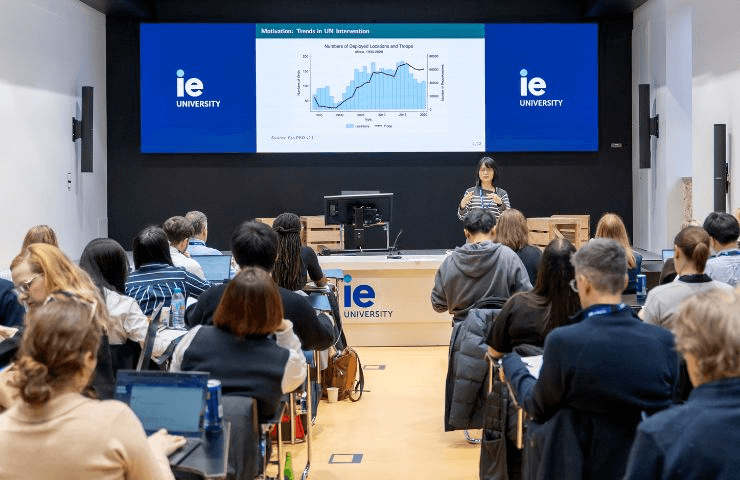
The conference convened economists and political scientists to examine political economy issues related to international organizations, international trade, and geoeconomics. Over three days, participants presented and debated cutting edge research on topics such as foreign aid and trade, UN institutions and peace, global order and geopolitics, strategic competition, public opinion, climate finance, international law, and multilateral development finance.
"It was an honor for the IE School of Politics, Economics and Global Affairs to host PEIO 2026 in our Segovia campus, bringing one of the leading international academic conferences in international political economy and international organizations to Spain for the first time," stated Nikitas Konstantinidis, Associate Professor of International and Comparative Political Economy at the IE School of Politics, Economics and Global Affairs.
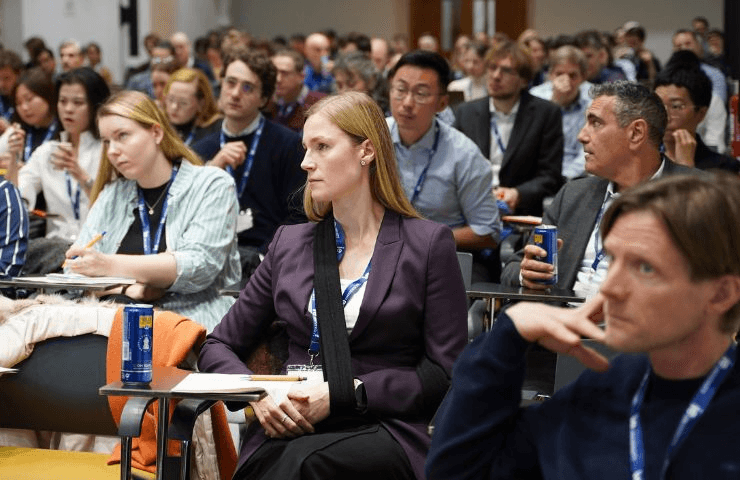
He also emphasized the significance of IE University’s role as host. According to him, bringing PEIO to IE University for the first time underscores the strength and visibility of the university’s research in political science. "The program’s breadth and the participation of top scholars from mostly Europe and North America underscore IE University’s consolidation as a leading European hub for cutting-edge research in political science and international political economy," he concluded.