- Home
- We Are Law School
- News
- Start Of The 2024-2025 Academic Year For The Advanced Legal Programs At Ie Law School
Start of the 2024-2025 Academic Year for the Advanced Legal Programs at IE Law School

With Ignasi Belda, Director of the National Agency for Artificial Intelligence Oversight.
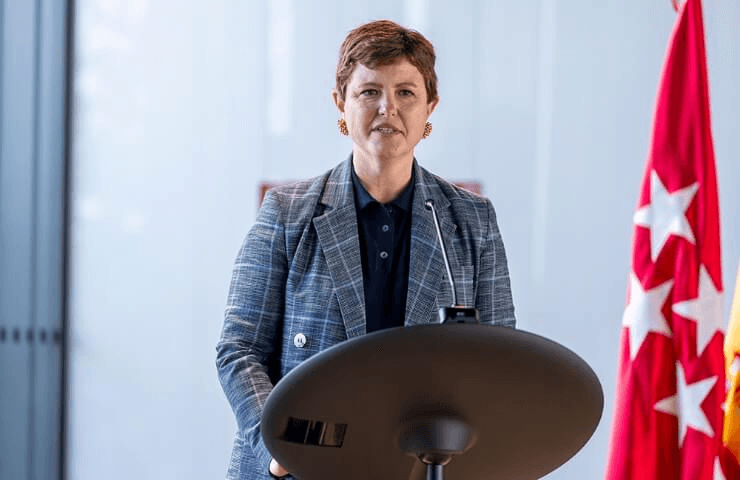
On Wednesday, October 30, the opening ceremony for the Advanced Legal Programs of IE Law School took place at the IE Tower. María Serrano, Executive Director of these programs, inaugurated the event and expressed her gratitude to attendees, as well as to professors and speakers.
Soledad Atienza, Dean of IE Law School, presided over the ceremony, highlighting an anticipated enrollment of over 430 students from 62 different nationalities in these programs. Atienza also underscored IE Law School’s commitment to the responsibility of legal professionals in the implementation of Artificial Intelligence (AI) for the benefit of society. To this end, she emphasized that through the ‘AI and the Law Initiative’, the school integrates AI-related content at every stage of its curriculum, promotes AI-centered legal research, and fosters dialogue with legislators, industry professionals, and the general public.
National Agency for Artificial Intelligence Oversight
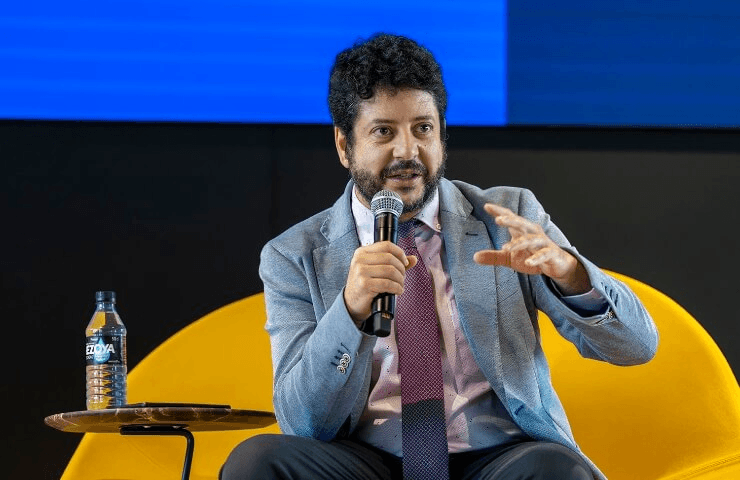
Following the opening, Ignasi Belda, Director of the National Agency for Artificial Intelligence Oversight (AESIA), delivered a lecture focusing on the agency's functions and responsibilities, which center on AI oversight and certification within our country. Under the Ministry of Digital Transformation and Public Administration, it will ensure the responsible use of AI in Spain and compliance with European regulations.
European AI Regulation
During his speech, Belda referred to the Artificial Intelligence Regulation (EU) 2024/1689, in effect since August 1, 2024, and a pioneering effort in AI regulation on a global scale. Belda emphasized the complexity of the regulation, whose framework revolves around two key principles: classifying AI applications according to their risk level and upholding the fundamental requirement that only a human may act as the “judge” of another human.
Belda explained that the legislators did not aim to regulate specific AI technologies, given their rapid evolution, but instead established categories of applications based on their risk levels, granting the regulation greater flexibility in its application (acceptable risk, medium or medium-high risk, and no or low risk).
Creation of a think tank
In addition to overseeing AI applications and certifying products and companies, Belda highlighted the agency’s third objective: creating a think tank to lead and coordinate social debate on AI in Spain. This think tank will provide first-hand insights to help inform government policy decisions based on the impact of AI on society, businesses, the educational sector, and more.
The event concluded with a Q&A session where attendees raised topics such as the regulation of autonomous vehicles, the application of AI in the banking sector, the development of General Purpose Artificial Intelligence (GPAI), the role of AESIA in overseeing electoral processes and controlling fake news, as well as the use of sandboxes for experimentation and innovation.