IE School of Politics, Economics and Global Affairs launches a new Master in Public Policy

The new program is designed to shape policymakers to navigate complexity in global environments and lead across sectors.
IE School of Politics, Economics and Global Affairs has announced the launch of its Master in Public Policy, a forward-looking program designed to equip future policymakers with the analytical, strategic, and leadership skills needed to drive meaningful change in an increasingly complex global landscape. The 10-month program integrates a global perspective on governance, economics, and technology, empowering students to build data-driven, ethical, and sustainable solutions.
The Master in Public Policy was presented at the event "Shaping Public Policy: Global Leadership for a Changing World," hosted by Enrico Letta, Dean of IE School of Politics, Economics and Global Affairs, with distinguished leaders including José Manuel Durão Barroso, Former President of the European Commission, former Prime Minister of Portugal, and Distinguished Fellow of IE School of Politics Economics and Global Affairs; Clément Beaune, France’s High Commissioner for Strategy and Planning; and Connie Hedegaard, former European Commissioner for Climate Action.
The discussion explored today’s global policy challenges, the role of leadership in shaping the future, and the need to prepare a new generation of public leaders capable of integrating evidence, ethics, and innovation into policymaking.
Opening the event, former Prime Minister of Italy Enrico Letta emphasized the significance of launching the Master in Public Policy at such a pivotal moment for Europe and the world. He stressed that public policy now requires innovative approaches, new forms of cooperation, and a stronger understanding between public and private sectors. "In the private sector, understanding how the public sector makes decisions is often challenging, and policymakers benefit from deeper insight into how businesses operate. These bridges define the space where we can move forward together," Letta said.
Letta also emphasized that Europe faces significant economic, demographic, and political shifts that create the conditions for new approaches and meaningful opportunities. Reflecting on the European context, he noted that the single market captures both the complexity and the potential of this moment. "We need a narrative, a mobilization, and clear timelines to succeed," he concluded.
Public policy, more necessary than ever
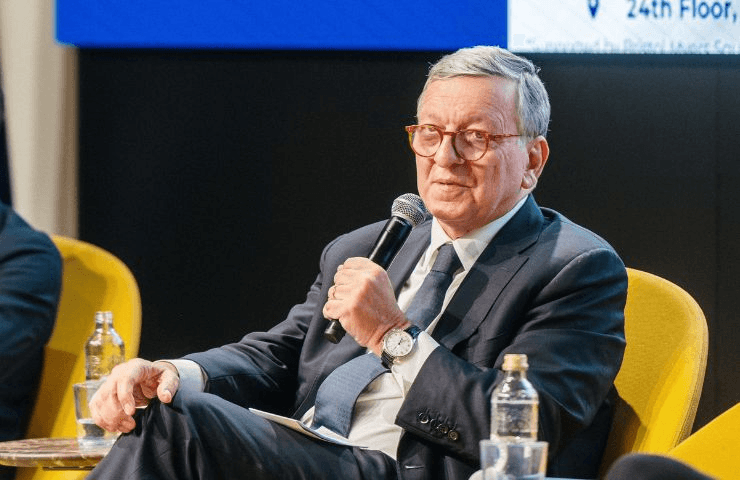
"Public policy is more necessary than ever," José Manuel Durão Barroso agreed, stressing that today’s world is more polarized, unpredictable, and globally interconnected, pointing to the invasion of Ukraine as a key example of the challenges ahead. He emphasized that countries cannot face global crises alone: "We need more Europe. Despite nationalism and protectionism, European integration continues."
Barroso also highlighted the need to train leaders capable of embracing change, understanding and translating scientific and technological advances into public policy. The program, he noted, "is well positioned to educate leaders who can bridge public and private sectors, foster diversity, and strengthen democratic resilience."
Reflecting on the policy priorities ahead, Connie Hedegaard emphasized that climate and sustainability remain central to every major policy challenge. "All our challenges—defense, competitiveness, economic resilience—are interconnected with sustainability and climate. We need to embed this thinking into every strategy," she said.
Hedegaard underscored the need to simplify regulation, strengthen cooperation between the public and private sectors, and work more effectively across different policy levels.
Closing the panel, Clément Beaune underlined the increasing complexity of global policymaking. "We will need more public policy experts from all disciplines," he said. From AI to trade and geopolitical tensions, Beaune highlighted that the next generation of public leaders will operate in an environment that requires adaptability, responsibility, and a deep understanding of global interdependence. "Young, educated people will have a crucial role in shaping how we respond to these challenges," he added.
Master in Public Policy
Combining analytical rigor with hands-on experience, the Master in Public Policy equips students with the skills to lead across sectors, from government and international organizations to private companies and NGOs. With a strong focus on impact and innovation, the curriculum includes immersive learning experiences, practical policy labs, simulations, and capstone projects developed in collaboration with public and private partners. Students can also tailor their learning journey through one of three specializations: Environment, Energy & Sustainability; Digital Transformation; and European Union Affairs.
"Public policy is at the core of the big issues shaping the world: AI, climate, and geopolitics. These are dynamic challenges happening precisely at the intersection of governments, companies, and global institutions. Our Master in Public Policy prepares a new generation of leaders to master that intersection," highlighted program director Iván Stola.
Starting in September 2026 and delivered in Madrid, the program provides continuous engagement with senior practitioners, international experts, and mentors from across sectors, inspiring students to think globally and lead with purpose.