- Home
- We Are Law School
- News
- Hernán Vales Leads A Debate On Indigenous Rights With Ie Law School Jessup Team
Hernán Vales leads a debate on indigenous rights with IE Law School Jessup Team

The Chief of the Indigenous Peoples and Minorities Section at the UN Human Rights Office engages in a discussion with students on the Jessup Moot Court 2026 case.
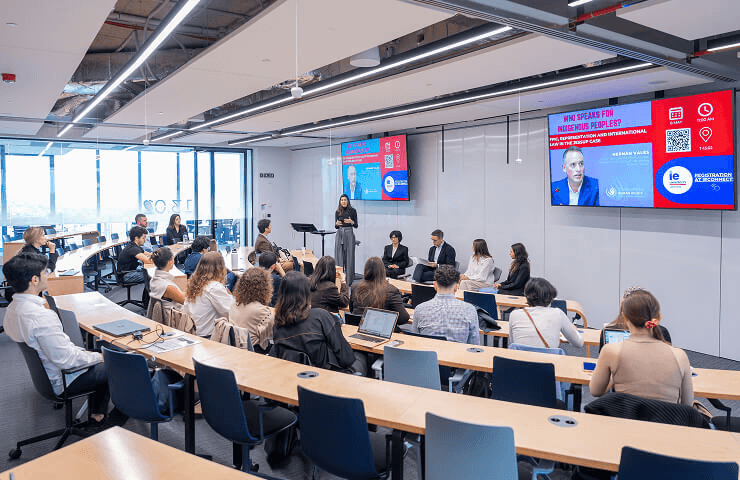
On May 8, IE Law School hosted Hernán Vales, Chief of the Indigenous Peoples and Minorities Section at the UN Human Rights Office, for a discussion on Indigenous rights and their representation in international law.
Inspired by the Jessup Moot Court 2026 case, the event allowed students and experts to delve into the legal and ethical challenges surrounding Free, Prior, and Informed Consent (FPIC) and its application in projects impacting Indigenous communities’ sacred sites and traditional lands.
The Jessup Case: International Law in Practice
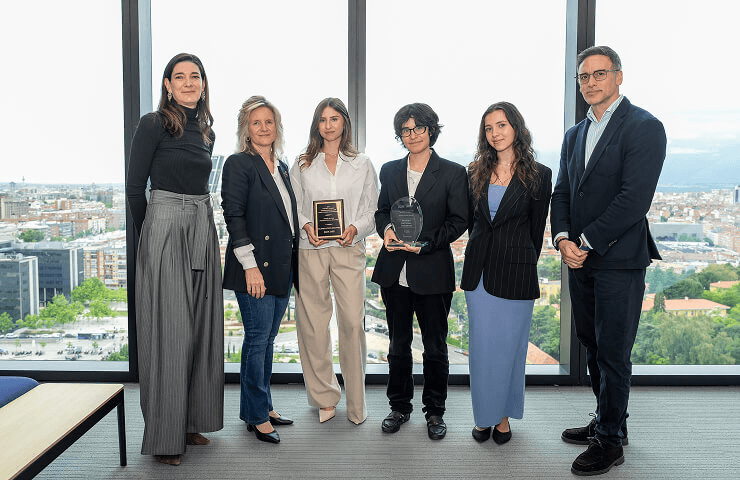
Prior to the event, IE Law School students who competed in the Jessup Moot Court met with Dean Soledad Atienza to showcase the award they earned after securing a spot among the top teams in the world at the prestigious international competition in Washington. The session then moved on to a presentation of the Jessup case, emphasizing the legal and ethical challenges it addresses and its importance in the field of international law.
Hernán Vales highlighted FPIC as a key mechanism to ensure that affected communities have a voice in decisions directly impacting their lands, traditions, and cultural survival.

Challenges in Representing Indigenous Communities
The discussion addressed critical topics such as consulting uncontacted Indigenous peoples, the role of corporations in consultation processes, and the complexities of representing transboundary Indigenous communities. It also explored the tension between national security interests and Indigenous rights, highlighting the need for collaborative solutions that respect human rights while addressing strategic priorities.
The event featured a virtual intervention by Professor Dwight Newman, co-author of the Jessup case, who explained how the problem was designed to reflect real-world issues faced by Indigenous communities in international law. Newman emphasized the spiritual connection Indigenous peoples have with their lands as a crucial aspect of the case.
IE Law School as a Space for Global Legal Analysis
The session concluded with a lively debate led by students and a Q&A session that explored technical and practical aspects of Indigenous rights in international law.
The visit by Hernán Vales and the discussion on the Jessup case reaffirm IE Law School’s commitment to training legal professionals capable of addressing the most complex challenges in international law.


