- Home
- We Are Law School
- News
- Lawtomation 2026: Expert Voices To Shape The Future Of Law And Technology
Lawtomation 2026: Expert voices to shape the future of law and technology

IE Law School’s Lawtomation Centre will convene leading scholars to discuss digital law, AI governance, and regulatory innovation at one of Europe’s top forums for law and technology.
The IE Law School’s Jean Monnet Centre of Excellence for Law and Automation (Lawtomation) has unveiled the keynote speakers for the fifth edition of IE Lawtomation Days, one of Europe’s leading forums exploring the intersection of law and technology. Under the theme Redesigning Law in the AI Age: From Legacy to Legitimacy, this year’s conference will bring together globally renowned scholars shaping the future of digital law, AI governance, and regulatory theory.
Keynote Speakers
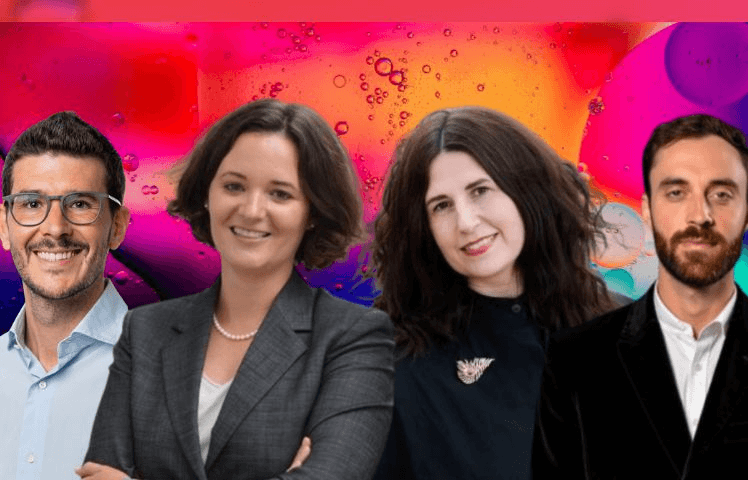
- Eduard Fosch-Villaronga (Leiden University): Associate Professor and Director of Research at the eLaw Center for Law and Digital Technologies. Fosch-Villaronga’s research focuses on the legal and regulatory implications of robotics and AI, particularly in healthcare, governance, diversity, and privacy. He is an ERC Laureate and recipient of prestigious grants such as the ERC Starting Grant and NWO-VIDI Grant.
- Margot Kaminski (University of Colorado): Moses Lasky Professor of Law and Director of the Privacy Initiative at Silicon Flatirons. Kaminski specializes in information governance, privacy, and freedom of expression, with recent work centering on AI law and the First Amendment. She is co-authoring a leading casebook on AI law and has twice been awarded the Fulbright-Schuman Grant for comparative research in Europe.
- Ida Koivisto (University of Helsinki): Professor of Public Law, whose expertise includes the digitalization of public administration, general administrative law, and legitimacy strategies for public authority. Her work explores how digital technologies reshape the relationship between public institutions and individuals. She is the author of The Transparency Paradox (Oxford University Press, 2022).
- Thibault Schrepel (Vrije Universiteit Amsterdam): Associate Professor of Law at the Amsterdam Law & Technology Institute and Faculty Affiliate at Stanford University's CodeX Center. Schrepel founded the Computational Antitrust project, which collaborates with over 65 antitrust agencies worldwide. In late 2025, he was awarded a €2 million ERC Consolidator Grant to fund ATLANTIS (2026–2031), a project developing a legal framework for computational antitrust.
About the Conference
Marking its fifth anniversary, IE Lawtomation Days has established itself as a flagship initiative in the field of law and technology. Over the years, it has welcomed more than 500 participants, fostering rigorous intellectual debate and cross-disciplinary collaboration.
This year’s edition addresses a defining question: how can legal systems adapt to remain effective, coherent, and normatively grounded in an era of rapid technological transformation?
The conference will explore how legal norms are translated into standards, operationalized through compliance mechanisms, litigated in courts, and embedded into technical and organizational frameworks. As Europe transitions from regulatory innovation — with initiatives such as the AI Act, Digital Services Act (DSA), Digital Markets Act (DMA), and the Platform Work Directive — to implementation and enforcement, the emphasis is shifting from rule-making to rule-adjusting.
The event will feature keynote speeches, panel discussions, and opportunities for dialogue among scholars, practitioners, and policymakers. Known for its rigorous academic focus and collegial atmosphere, IE Lawtomation Days continues to foster meaningful connections and thought leadership in the field.
Call for Submissions
The conference invites two types of submissions:
- Individual abstracts (maximum 500 words).
- Fully formed panels (4–5 speakers with a 500-word panel description).
Submissions must be in English. Suggested themes include AI regulation and governance, platform power, competition and digital markets, democracy and accountability, international law and technology, labor and automation, sustainability, and the future of legal education and the profession.
Proposals can be submitted here.
Practical Information
Location: IE University Tower (Caleido), Paseo de la Castellana 259E, Madrid, Spain.
Registration fee: €60 for PhD candidates and postdoctoral researchers · €100 for other participants. The fee includes meals, coffee breaks, and a social dinner on the first evening.
Special arrangements: Available for participants from non-OECD countries.
For inquiries: Carla Viezma: carla.viezma@ie.edu or Isabel Garcés: isabel.Garces@ie.edu