- Home
- We Are Law School
- News
- The Legal And Tax Challenges Of Trusts In Spain
The legal and tax challenges of trusts in Spain

Juan Carlos Olarra, professor at IE Law School and managing partner at LEXINTER ABOGADOS, analyzes this legal figure in a recent academic article.
Juan Carlos Olarra, professor of Financial Accounting at IE Law School and managing partner at LEXINTER ABOGADOS, recently published an article in the prestigious journal Trusts & Trustees by Oxford University Press, titled Trusts and Spanish law in 2026: institutional indifference as a method of legal non-engagement. In this article, he examines the complex relationship between Spain and trusts, a legal concept rooted in the Anglo-Saxon legal tradition. In this interview, Olarra reflects on the challenges posed by this institution, its relevance in the international context, and how he incorporates these topics into his teaching at IE Law School.
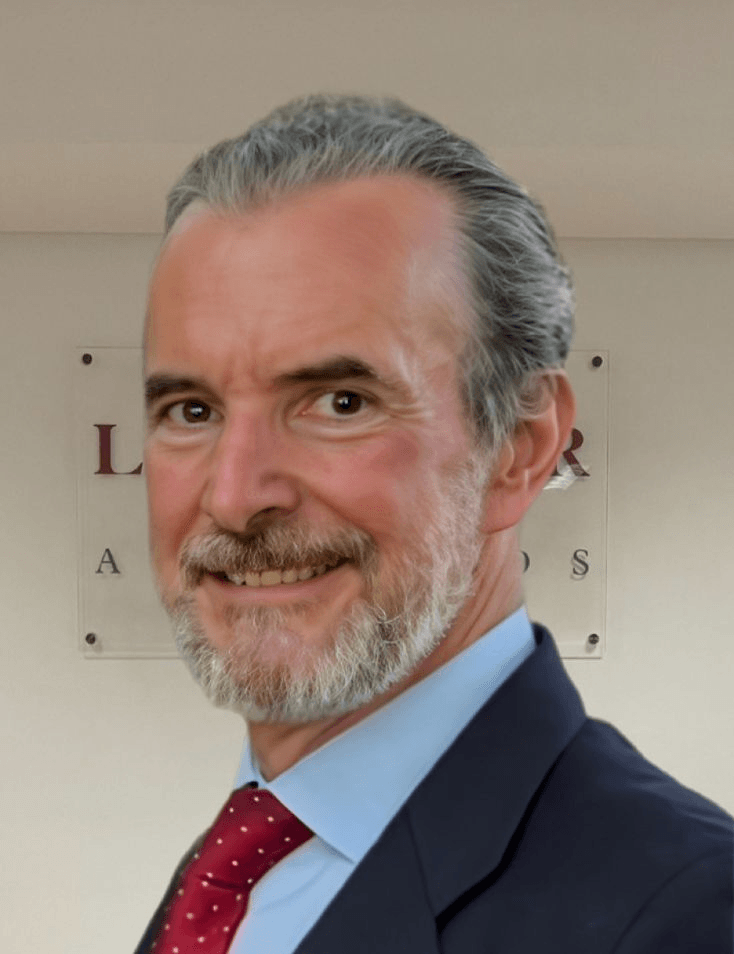 Juan Carlos Olarra
In your article, you point out that Spain has a complex relationship with trusts. For those unfamiliar with this concept, could you explain what a trust is and why it presents such challenges from a legal and tax perspective?
"It’s a complex matter to explain briefly. A trust is a legal institution, part of patrimonial law, which has its roots in the Anglo-Saxon legal system. Essentially, it involves separating part of a person’s assets and transferring them into the legal ownership of another person, who then administers them for the benefit of one or more third parties. Trusts are frequently used, though not exclusively, as estate-planning tools."
What academic and professional circumstances led you to investigate this topic?
"From the very beginning of my professional practice, which has focused on international corporate and wealth-planning structures, I often encountered situations involving trusts that needed to produce some effect in Spain. I soon identified the difficulty of dealing with what felt like a legal ‘alien’—not only unfamiliar but, on the rare occasions it is considered, often viewed with suspicion and associated with fraudulent purposes. My professional interest led to the need for in-depth study."
With the increasing mobility of capital and wealth, do you think the problem you describe in your article will worsen?
"Without a doubt, it is already happening. Cross-border successions and wealth planning that involve multiple countries are now commonplace, making it essential to seek solutions that do not rely on mere ignorance, in every sense, of this institution. This is essentially the thesis of the article."
As a professor of Financial Accounting at IE Law School, how do you integrate these topics such as international taxation and wealth-planning structures?
"Accounting is a language that allows us to interpret economic information and, consequently, understand the legal structure of various corporate and patrimonial constructions we encounter in our work. The trust, due to its richness of nuances, is an ideal object for developing this exercise, and I believe that, for a lawyer’s professional practice, it is far more valuable for future lawyers to learn how to reason through legal problems."